


China’s Silicon Valley: Inside Hangzhou’s Tech Revolution
A Historic City Embracing a Digital Future
Nestled along China’s eastern coast, Hangzhou has long been celebrated as one of the nation’s most beautiful and historically significant cities. Yet today, this ancient metropolis is earning an entirely new reputation that has little to do with its storied past and everything to do with its innovative present. Known increasingly as China’s Silicon Valley, Hangzhou has transformed itself into a powerhouse of technological innovation, entrepreneurship, and digital ambition. The city has become synonymous with groundbreaking success stories, most notably Alibaba, the e-commerce giant that has reshaped global retail, and more recently DeepSeek, an artificial intelligence firm whose breakthroughs have sent shockwaves through the international tech community. As tensions between China and the United States continue to escalate, particularly in the realm of technology and trade, Hangzhou has found itself at the center of a global conversation about innovation, competition, and the future of the digital economy. What makes this city particularly fascinating is not just the success of its companies, but the palpable energy and optimism that radiates from its entrepreneurs, who see this moment as China’s time to shine on the world stage.
The Spirit of Innovation and National Pride
Walking through the ultra-modern complexes of Hangzhou, you can feel the excitement in the air. The city’s tech entrepreneurs don’t just talk about business metrics and market share—they speak with genuine passion about what this moment means for their country. Grace Zheng, who has been with AI glasses creator Looktech since its founding, captures this sentiment perfectly when she says, “We have the talents, we have the environment, and we have the full supply chain, even though we have a challenging environment. It’s our time.” Her words are met with enthusiastic agreement from fellow entrepreneurs like Jia Dou, whose company Wuli Coffee creates sophisticated, automated commercial coffee machines. “I think it’s our time to show and battle with other foreign countries,” Dou adds with confidence. When asked whether China could actually win this technological battle, the answer comes without hesitation: “Of course.” These aren’t empty boasts born of nationalism—they’re reflections of real experiences in an ecosystem that seems designed for success. The entrepreneurs share remarkable stories of local support that would be hard to imagine in many other places. Estate agents in Hangzhou reportedly spend hours finding perfect laboratory spaces for startups, offering their services for free. The local government actively courts tech companies with generous grants and incentives, creating an environment where innovation isn’t just encouraged but actively nurtured. As one entrepreneur puts it, “Hangzhou says we’ll provide the sunshine and the water, you go ahead and grow.”
The Ecosystem Behind the Success
The woman who perhaps understands Hangzhou’s tech ecosystem better than anyone is Zhang Jie, an entrepreneur herself and the founder of a thriving “incubator” for startups. Having invested in and mentored numerous young companies, Zhang brings both passion and analytical insight to understanding what makes this city special. Her explanation points to several key factors that create Hangzhou’s unique advantage. First, there’s the sheer scale of human capital available: “In China, we have more than 10 million university and college students graduating. Then we’re talking about at least five to six million engineers with college education background. So with such a large group of young and intelligent people with a good environment, a favorable environment for entrepreneurship, I’m sure there will be even greater companies coming in the future.” But it’s not just about numbers. Hangzhou benefits from a distinctive combination of factors that many observers consider its “secret sauce.” Unlike much of China, the city maintains relatively light-touch local regulation when it comes to tech innovation. This is coupled with the presence of Zhejiang University, widely regarded as one of the most business-oriented and free-thinking universities in the country. This combination creates fertile ground for the kind of risk-taking and creative thinking that drives breakthrough innovation. Zhang reports an unprecedented surge in entrepreneurial activity, with more young people approaching her with business ideas in the last quarter than at any previous time. Her optimism is striking: “They are already companies [in China that will] probably be greater than Apple, right?” she says with a laugh. Given the trajectory of companies emerging from this ecosystem, her confidence may well be justified.
The DeepSeek Moment That Changed Everything
Of all the companies to emerge from Hangzhou, none has captured global attention quite like DeepSeek. When this AI firm unveiled its latest open-source AI model earlier this year, it didn’t just impress—it stunned the international tech community. DeepSeek’s claim that it had developed AI capabilities comparable to Western competitors but at a fraction of the cost sent shockwaves through the industry and sparked intense debate about the future of AI development. The impact of this announcement has been so significant that people now talk about the “DeepSeek moment”—a watershed event that dramatically boosted confidence within China’s tech sector while forcing the rest of the world to reassess their assumptions about Chinese innovation. This wasn’t just another incremental improvement or successful product launch; it represented a fundamental challenge to the prevailing narrative about technological leadership and the resources required to achieve it. The significance of DeepSeek’s achievement wasn’t lost on China’s leadership. In February, the company’s founder, Liang Wenfeng, along with other tech bosses, received a prestigious invitation to a symposium with President Xi Jinping and his top team. The photo opportunities and handshakes with the president marked a dramatic shift from the regulatory crackdowns that tech companies had faced just a few years earlier. Technology is now being positioned as a fundamental pillar of China’s future economy, receiving repeated emphasis in official government communications. This high-level recognition signals just how central tech innovation has become to China’s strategic vision.
Navigating the Challenges of a New Trade War
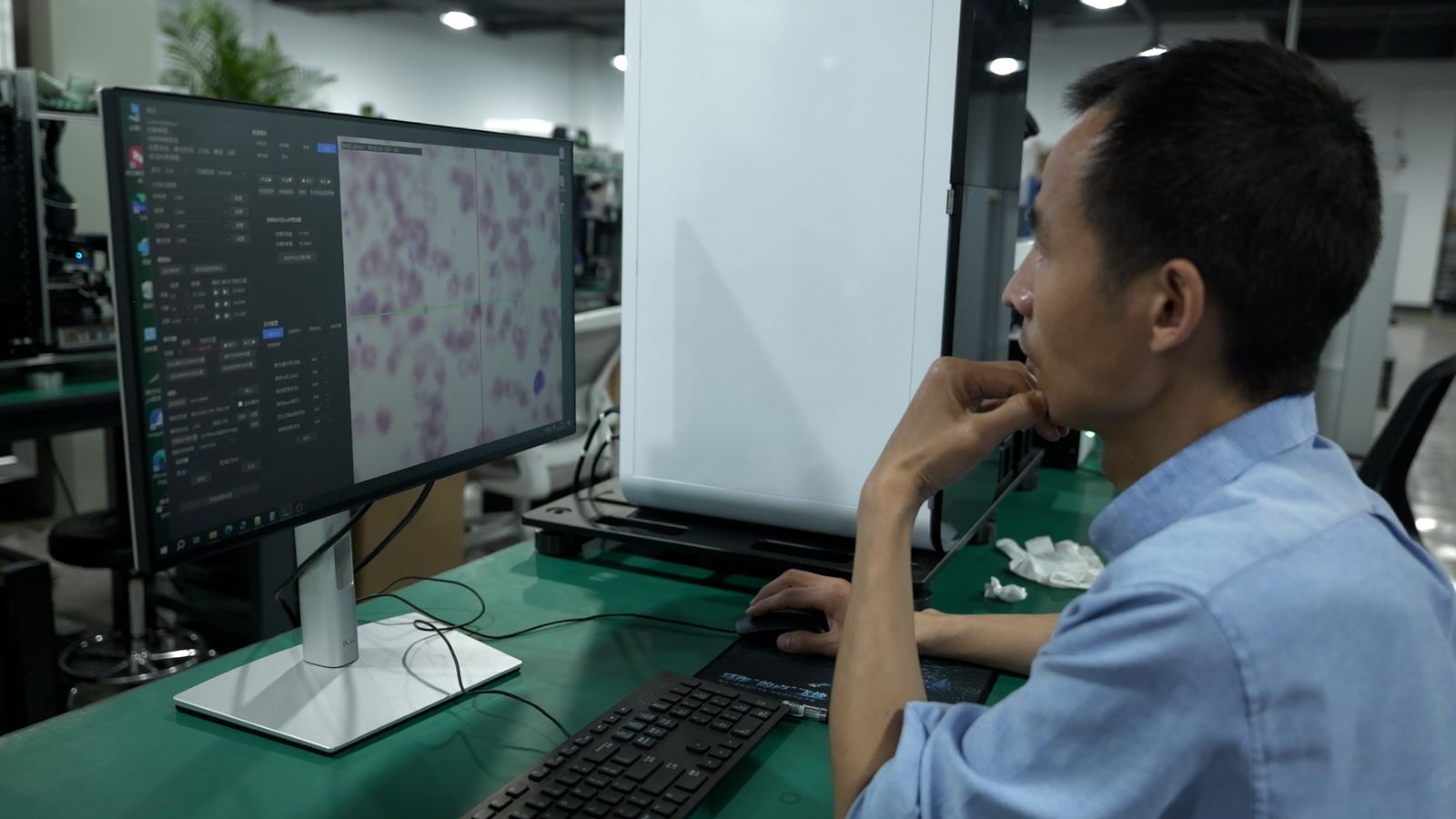
Yet the celebration of these achievements unfolds against a backdrop of increasing international tension. What China views as inspiring innovation, the United States increasingly sees as a competitive threat requiring containment. President Donald Trump has moved to intensify restrictions on China’s tech sector, including expanded export controls on advanced semiconductor chips. These measures aim to limit China’s access to the cutting-edge components that power AI and other advanced technologies. The businesses in Hangzhou are acutely aware of this escalating trade war. For companies that export to America, the impact could be severe. Yet remarkably, most entrepreneurs express confidence in their ability to weather the storm. Dr. Song Ning exemplifies this resilient attitude. His company, Diagens, uses artificial intelligence to revolutionize medical diagnostics, reducing the time required for chromosomal screening from 30 days to just four. He’s also developing WiseDiag, a sophisticated medical chatbot with advanced diagnostic understanding for patient use. While Diagens actively pursues business in over 35 countries, the company has temporarily paused its pursuit of American customers. But Dr. Song doesn’t view the trade restrictions with despair—instead, he sees them as ultimately futile and possibly even beneficial. “Competition is a good thing… it makes us all stronger,” he explains. “I do not think by limiting the scientific and technological progress of China or other countries, Trump will be able to achieve his goal. I think it is a false premise. Information is so developed now, each country has very smart people, it will only force us to have more tech innovation.” This perspective—that restrictions will ultimately drive rather than hinder innovation—is widely shared among Hangzhou’s tech community.
The Road Ahead: Challenges and Opportunities
Despite the defiance and optimism of individual entrepreneurs, the broader economic reality cannot be ignored. The trade war between the United States and China will inevitably leave significant gaps in China’s economy, and tech firms, regardless of how advanced they become, cannot yet fill all those holes on their own. The road ahead will require not just innovation but also economic resilience and strategic adaptation. The export markets that Chinese tech companies have relied upon may become harder to access, requiring pivots toward domestic consumption and alternative international partnerships. Nevertheless, the innovation happening in Hangzhou is undeniably rapid and increasingly sophisticated. The city has created an ecosystem where talented engineers, supportive government policies, world-class universities, and entrepreneurial ambition converge to produce remarkable results. Whether it’s AI that rivals Western models at lower costs, automated coffee machines that could transform commercial food service, or medical diagnostics that could save countless lives through faster screening, Hangzhou’s innovations are diverse and impactful. There’s no doubt that the technological advances emerging from this Chinese Silicon Valley will leave their mark on the world. The question is not whether Hangzhou’s tech sector will be significant, but rather how the global technology landscape will be reshaped by the innovations coming from this historic city on China’s eastern coast. As the world watches, Hangzhou stands as a testament to how quickly a city can transform itself and how powerfully a combination of talent, ambition, and supportive infrastructure can drive technological progress—even in the face of significant geopolitical headwinds.