


Global Markets Rally as Trump Administration Signals Potential Trade War De-escalation
Wall Street and Global Markets Show Strong Recovery
After weeks of turbulent trading and steep declines, global financial markets experienced a significant upturn following hints from the Trump administration that it may be willing to soften its aggressive stance on trade tariffs, particularly with China. The rally began on Wall Street, where both the Dow Jones Industrial Average and the technology-heavy Nasdaq Composite closed Tuesday’s trading session with impressive gains of 2.7%, completely reversing the losses suffered just a day earlier. This market optimism wasn’t confined to American shores—it quickly spread across the globe like wildfire. Asian markets, which opened following the positive US session, enthusiastically followed suit, with Hong Kong’s Hang Seng index climbing 2.4%. European markets also caught the wave of optimism, with London’s FTSE 100 jumping more than 1.2% at the opening bell, led by Asia-focused banking giants HSBC and Standard Chartered. The US dollar, which had been battered by trade war concerns in recent weeks, strengthened considerably, gaining at least a cent against major currencies including the British pound. Futures trading suggested that Wall Street’s momentum would continue, with investors anticipating further gains when markets reopened.
Treasury Secretary Signals Possible De-escalation with China
The catalyst for this dramatic market reversal came from US Treasury Secretary Scott Bessent, who spoke at a private JPMorgan event on Tuesday evening. According to a transcript obtained by the Associated Press, Bessent struck a surprisingly conciliatory tone regarding the escalating trade conflict with China, suggesting that a “de-escalation” was on the horizon. His comments were particularly significant given the severity of the current situation—US tariffs on Chinese goods have skyrocketed to an eye-watering 145%, with China retaliating with duties of 125%. This tit-for-tat escalation had sent shockwaves through global markets and raised serious concerns about a potential global economic slowdown. Bessent told his audience that “neither side thinks the status quo is sustainable,” acknowledging what many economists and business leaders have been saying for weeks. However, he tempered expectations by noting that serious peace negotiations hadn’t yet begun in earnest and that any resolution would likely take considerable time to materialize. His words, though cautious, were enough to give investors hope that the worst of the trade war might be behind us, or at least that both sides recognized the need to find a path forward.
President Trump Confirms Lower Tariffs Coming for China
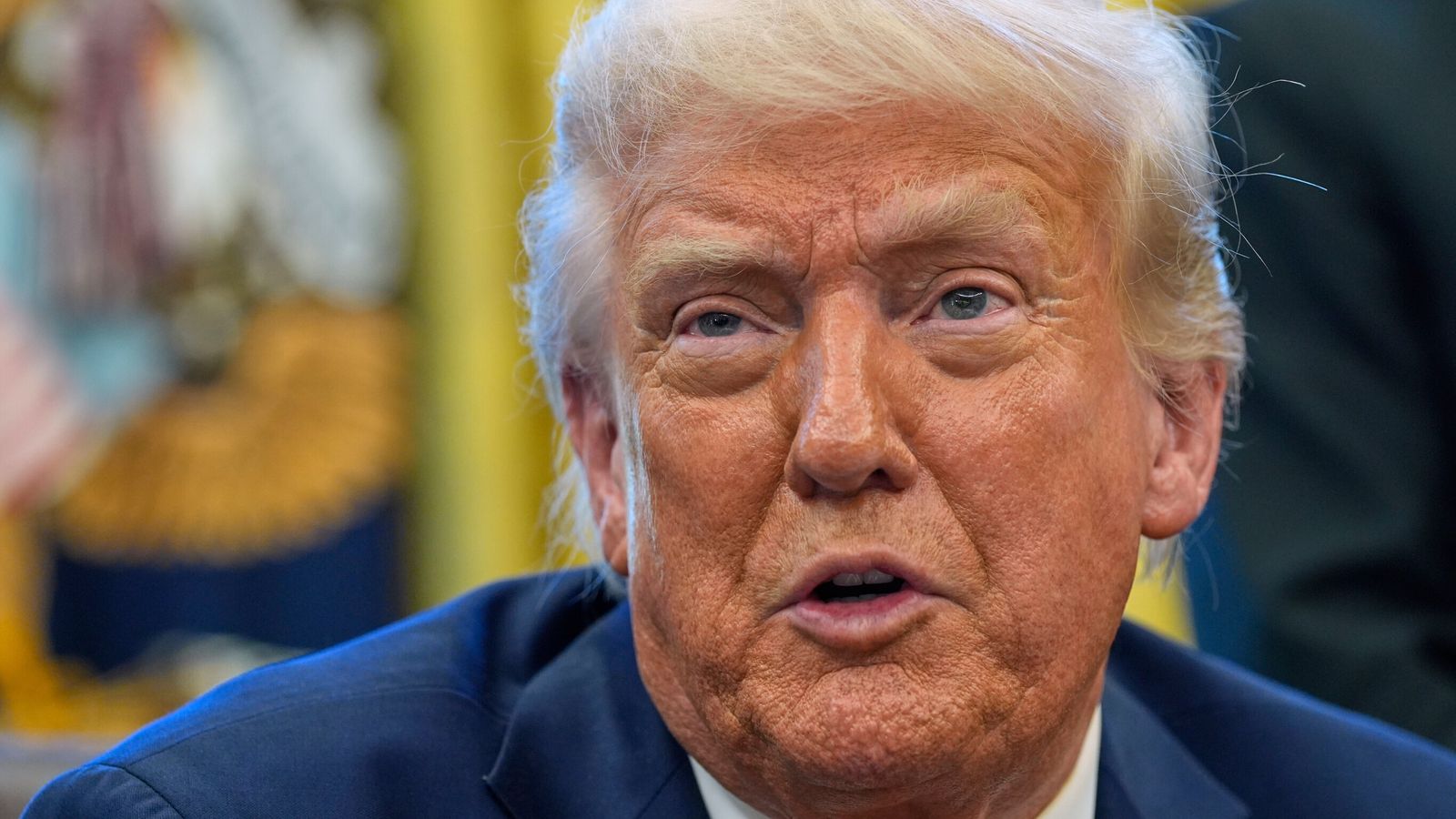
President Trump himself added fuel to the market rally when he spoke with reporters and confirmed that the final tariff rate on Chinese goods would come down “substantially” from the current 145% level. “It won’t be that high, not going to be that high,” Trump stated emphatically, adding optimistically, “We’re doing fine with China… we’re going to live together very happily and ideally work together.” This represented a notable shift in tone from the president, who had previously insisted that tariffs were “making America rich” and showed little willingness to compromise. However, Trump’s comments came with important caveats that investors should note. He gave no indication whatsoever that he plans to ease the broader tariffs imposed on other trading partners around the world, including the United Kingdom, which currently faces 25% tariffs on automobiles, steel, and aluminum imports, along with a wider 10% “baseline” tariff on other goods. This means that while the situation with China may be improving, many countries—including America’s traditional allies—continue to face significant trade barriers that could impact global commerce and economic growth for the foreseeable future.
Federal Reserve Chair’s Job Safe Despite Earlier Threats
In another significant development that helped calm market nerves, President Trump also walked back what appeared to be a threat made just last week to fire Federal Reserve Chair Jerome Powell. The apparent conflict between the president and the central bank chief had raised serious concerns about the independence of the Federal Reserve, a cornerstone of American economic stability. Powell, whom Trump himself nominated for the role back in 2017, has maintained that the administration’s protectionist trade policies have created substantial uncertainty about economic growth and pose a real threat of higher inflation. These assessments clearly irritated the president, who has been calling for interest rate cuts to stimulate the tariff-affected economy, while the Federal Reserve has held steady, citing the very trade uncertainties that Trump’s policies created. In his comments to reporters, Trump definitively stated: “I have no intention of firing him.” Financial analysts and market observers widely interpreted this statement as a deliberate attempt to reassure markets that the independence of America’s central bank—a critical institution for maintaining economic stability and investor confidence—was not under threat. This assurance was particularly important given the already fragile state of market confidence.
Cautious Optimism Amid Ongoing Economic Concerns
Despite the positive market movements and encouraging rhetoric from administration officials, financial analysts are urging caution and perspective. The reality is that markets still have a considerable distance to travel before recovering the value lost since the trade war began escalating. The Nasdaq Composite, despite Tuesday’s strong gains, remains down nearly 16% for the year so far—a staggering loss of value in such a short period. US government borrowing costs also remain elevated, reflecting ongoing concern about America’s fiscal situation and economic outlook. Adding to the cautious mood, the International Monetary Fund released significantly downgraded forecasts for global economic growth on Tuesday, citing trade tensions and policy uncertainty as major factors. Michael Brown, senior research strategist at Pepperstone, captured the prevailing mood among many investors when he noted that “participants understandably remain jittery.” He pointed out that both US Treasury bonds and the dollar—traditionally considered safe havens during times of economic stress—have had their reliability called into question by recent events. Brown also highlighted the enormous trade uncertainty that continues to linger over markets and the global economy.
The Long Road Ahead for Trade Negotiations
Perhaps most tellingly, Brown reminded investors of the gap between the Trump administration’s ambitious promises and the reality on the ground. The administration had promoted a concept of “90 deals in 90 days”—suggesting that trade agreements with various countries could be rapidly negotiated and finalized. However, as Brown pointedly noted, the current score stands at “0 deals in 14 days,” which, as he dryly observed, “doesn’t quite have the same ring to it.” This sobering reality check underscores that while the recent comments from Bessent and Trump may have provided temporary relief to battered markets, the actual work of negotiating complex trade agreements with China and other nations remains ahead. Trade negotiations of this magnitude typically take months or even years to complete, involving countless hours of detailed discussions on everything from tariff schedules to intellectual property protections to enforcement mechanisms. The process requires compromise, patience, and sustained political will from both sides—qualities that have been in short supply during the current administration. While the markets may have rallied on hope and improved rhetoric, investors and businesses around the world will be watching closely to see whether these words translate into concrete actions and actual agreements that can provide a stable foundation for international trade and economic growth moving forward.