


Russia’s Windfall: How the Iran-U.S. Conflict is Filling Moscow’s War Chest
An Unexpected Beneficiary of Middle East Turmoil
When tensions between the United States, Israel, and Iran escalated into open conflict, few anticipated that Russia would emerge as one of the primary financial winners. Yet according to analysts speaking with CBS News, that’s exactly what has happened. As Iranian retaliatory strikes have effectively paralyzed crude oil shipments through the strategically vital Strait of Hormuz—a narrow waterway through which roughly a fifth of the world’s oil passes—global energy prices have shot upward. This surge in oil prices, combined with a temporary easing of U.S. sanctions on Russian energy exports, has created a perfect financial storm that’s pouring billions of dollars into Moscow’s coffers at a time when Western nations have spent years trying to economically isolate Russia over its invasion of Ukraine.
The situation presents a bitter irony for American policymakers: a U.S.-involved conflict is directly enriching one of America’s principal adversaries. The U.S. Treasury, attempting to prevent global energy markets from spiraling into chaos, issued a 30-day waiver on sanctions that had been imposed on Russian energy sales. Treasury Secretary Scott Bessent defended the decision as a “narrowly tailored, short-term measure” designed to “promote stability in global energy markets,” while insisting it wouldn’t provide significant financial benefits to the Russian government. However, both independent analysts and Russian officials themselves are telling a very different story—one in which Moscow is experiencing a financial renaissance that could sustain its war machine in Ukraine for months or even years longer than previously anticipated.
The Numbers Tell a Stark Story
The financial impact on Russia has been nothing short of dramatic. Before the waiver eased U.S. sanctions, Russian crude oil had been trading at a significant discount of 10 to 20 percent compared to international benchmark prices like Brent crude. This discount reflected the risk and complications associated with buying Russian oil under the sanctions regime—buyers demanded lower prices to compensate for potential legal troubles and logistical challenges. However, according to Luke Wickenden, a Europe-Russia Energy and Sanctions Analyst at the Centre for Research on Energy and Clean Air, that discount has now “completely vanished,” with Russian oil trading at essentially the same level as Brent crude. This price normalization alone represents a massive windfall for Moscow, but it’s only part of the story.
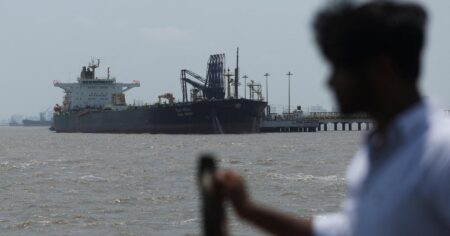
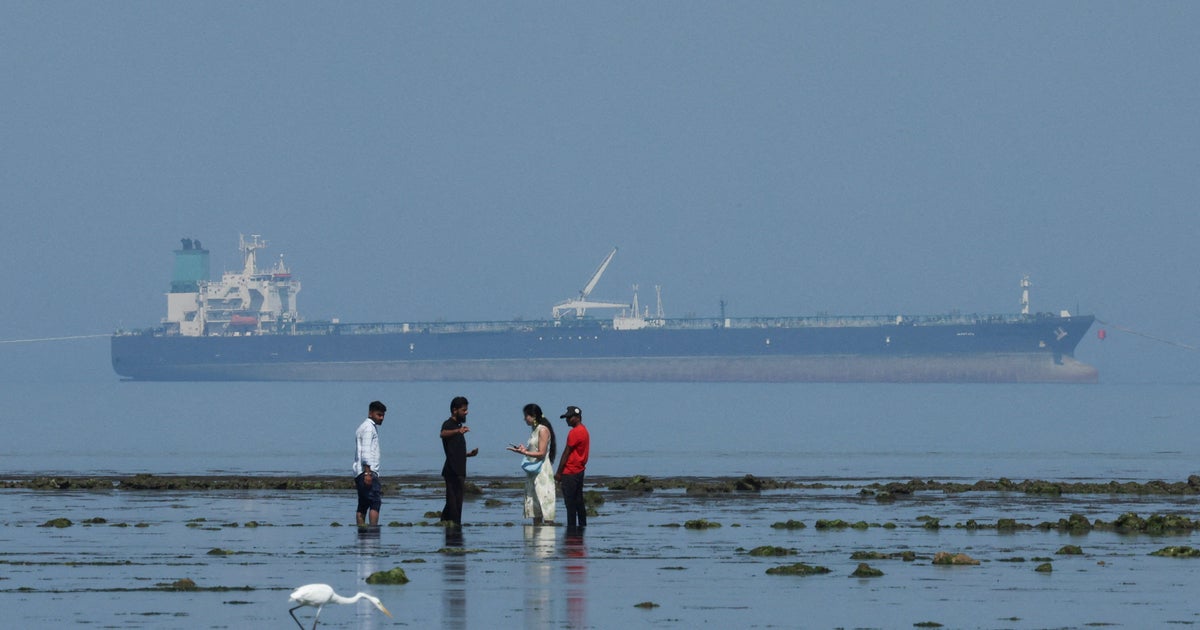
The waiver has also incentivized major oil-importing nations to dramatically increase their purchases of Russian crude. China, already a major buyer of Russian energy, has increased its imports by 22 percent compared to the previous month. Brazil has ramped up its Russian oil purchases by 32 percent. Most dramatically, Singapore’s imports of Russian oil have nearly tripled. These aren’t small adjustments—they represent fundamental shifts in global energy trade patterns that are funneling cash directly to Russia’s state-owned energy companies and, by extension, to Vladimir Putin’s government. Analysis from the Centre for Research on Energy and Clean Air shows that during the first two weeks of the Iran conflict, Russia’s average crude oil export earnings reached an estimated $230 million per day—a staggering 26 percent increase over February’s daily average before hostilities began. When you multiply those daily figures over weeks and months, the sums become truly eye-watering.
The Kremlin hasn’t been shy about acknowledging these windfall profits. Dmitry Peskov, the Kremlin’s longtime spokesman, stated plainly that “we’re talking about additional revenue for our oil companies, which sell oil and petroleum products and are guided by the current price environment.” He added, with barely concealed satisfaction, that “company revenues mean increased budget revenues.” In other words, the money flowing to Russian energy giants like Rosneft and Gazprom is directly filling the Russian government’s treasury. Ukrainian President Volodymyr Zelenskyy has been even more blunt about the implications, warning that these boosted profits could give Putin “more confidence that he can continue the war” in Ukraine. According to Zelenskyy, Russian intelligence suggests that Western sanctions and Ukrainian strikes on Russian energy infrastructure had created a deficit of more than $100 billion for Russia in 2024 alone—a massive financial burden that was genuinely constraining Moscow’s war-making capacity. Yet in just two weeks of the Middle East conflict, Russia has made approximately $10 billion, and if the conflict continues for two to three months with elevated energy prices, it could completely offset an entire year’s worth of sanctions-induced losses.
The India Factor and Shifting Trump Administration Policies
The situation becomes even more complex when examining the Trump administration’s approach to India, the world’s second-largest buyer of Russian fossil fuels. Earlier this month, Treasury Secretary Bessent announced another 30-day waiver specifically allowing Indian refiners to continue buying Russian oil. The stated rationale was identical to the broader waiver—keeping oil flowing into global markets amid Middle East instability. However, this decision represented a significant policy reversal. Just the previous year, the Trump administration had imposed a 25 percent tariff on imports from India specifically because of its large-scale purchases of Russian oil, viewing New Delhi’s energy relationship with Moscow as problematic and deserving of economic punishment.
The about-face reveals the difficult balancing act facing American policymakers. On one hand, there’s a genuine desire to maintain pressure on Russia for its invasion of Ukraine and to punish countries that enable Moscow’s economy. On the other hand, there’s an equally pressing need to prevent global energy prices from spiraling out of control, which would harm American consumers and potentially trigger worldwide economic recession. The administration has apparently concluded that in the current crisis, keeping energy markets stable takes precedence over maintaining maximum economic pressure on Russia. Whether this calculation is correct—and whether the long-term costs outweigh the short-term benefits—remains hotly debated among foreign policy experts, economists, and lawmakers.
Intelligence Community Concerns and Political Implications
The situation has not gone unnoticed by America’s intelligence establishment, though their public commentary has been notably cautious. When Senator Mark Kelly asked Director of National Intelligence Tulsi Gabbard whether Russia had indeed gained billions of dollars from rising oil prices and the pause on U.S. sanctions, her response was remarkably noncommittal. She acknowledged only “that is what has been reported” before deflecting the question to the secretaries of treasury and energy—a dodge that suggests either uncertainty about the intelligence or reluctance to publicly confirm uncomfortable facts. CIA Director John Ratcliffe was similarly evasive, claiming he was “not an economist” and therefore wouldn’t attempt the calculations, though he did acknowledge that “sometimes there are decisions made that will benefit adversaries at the same time policymakers think that it will benefit the American people.”
These carefully worded responses from intelligence chiefs suggest the administration is acutely aware that the policy creates politically problematic optics. After all, for years, U.S. and European leaders have insisted that economic sanctions are a cornerstone of the Western response to Russian aggression, that cutting off Moscow’s revenue streams would eventually force Putin to the negotiating table or at least severely constrain his military options. Now, as a direct result of American decisions—both the choice to engage militarily in the Middle East and the choice to ease sanctions to manage the resulting energy crisis—Russia is experiencing what one analyst called “a lifeline” just when sanctions were finally beginning to bite hard. For critics of the administration, this represents either profound policy incoherence or a troubling indication that short-term domestic political concerns about gas prices are taking precedence over long-term strategic competition with Russia.
Expert Analysis: Game-Changer or Temporary Relief?
Not all analysts agree on the strategic significance of Russia’s oil windfall. Ian Bremmer, founder of the influential Eurasia Group political risk research firm, offered a more measured assessment in his conversation with CBS News. While acknowledging that the financial boost gives Russia greater “flexibility” in prosecuting its war, Bremmer argued it’s unlikely to be a “gamechanger” for Moscow’s overall strategic position. His reasoning centers on Russia’s demonstrated willingness to absorb truly staggering costs in pursuit of its objectives in Ukraine. With over one million casualties over four years of war—a figure that includes both killed and wounded—Russia has shown that Putin’s regime is willing to sacrifice its population on a scale rarely seen in modern warfare. Similarly, the Russian people have endured severe economic hardship, including loss of access to Western goods, services, and financial systems, without generating sufficient domestic pressure to alter Putin’s course.
From this perspective, the question isn’t whether Russia can afford to continue the war, but whether anything short of complete state collapse would force Putin to stop. If the regime has been willing to continue fighting despite massive casualties and a $100 billion deficit, would an extra $10 or $20 billion really change the strategic calculus? Bremmer suggests probably not—the limiting factors on Russian military capacity are more likely to be equipment, manpower, and industrial production capacity rather than pure financial resources. Nevertheless, Bremmer and others acknowledge that the situation remains deeply problematic for U.S. policy. As Bremmer put it, “given the fact that the Russians are a principled enemy of the United States and its allies around the world, the fact that America’s war of choice in Iran ends up directly helping the Russians, both indirectly and directly, as a consequence of choices of the Trump administration, that is what I think has people bent out of shape.” The phrase “war of choice” is particularly significant—it distinguishes this conflict from scenarios where America might be responding to direct attacks or defending treaty allies, emphasizing that the decision to engage militarily with Iran was discretionary, making the benefits to Russia a self-inflicted wound.
Looking Ahead: Long-Term Strategic Implications
The current situation raises profound questions about the coherence and sustainability of Western strategy toward Russia. For years, the United States and European Union have worked to construct an elaborate sanctions architecture designed to progressively weaken Russia’s economic foundation and its capacity to sustain military operations. This architecture included restrictions on financial transactions, technology transfers, and most importantly, energy exports—Russia’s primary source of government revenue. The strategy was showing signs of working, with Russia’s economy contracting, its access to advanced technologies severely limited, and its ability to fund military operations increasingly constrained.
Now, through a combination of Middle East instability and policy decisions intended to manage that instability, much of that progress has been temporarily reversed. If the Iran conflict continues for months, as many analysts expect, Russia could receive financial relief sufficient to sustain its war effort through 2025 and beyond. This creates a strategic paradox for the Trump administration: success in its Middle East objectives—whatever those might ultimately be—may come at the cost of prolonging Russian aggression in Ukraine and undermining years of painstaking sanctions work. For European allies who have borne significant economic costs from reducing their own dependence on Russian energy, the sight of other nations freely buying Russian oil at premium prices while the U.S. provides explicit permission may generate resentment and questions about American leadership and commitment to the Ukrainian cause. The situation demonstrates how in our interconnected global economy, conflicts in one region can have profound and unexpected consequences halfway around the world, and how policy decisions made for one set of reasons can undermine other equally important strategic objectives.