

The Washington Post Faces Historic Layoffs: A Third of Its Newsroom to Be Cut
A Devastating Blow to American Journalism
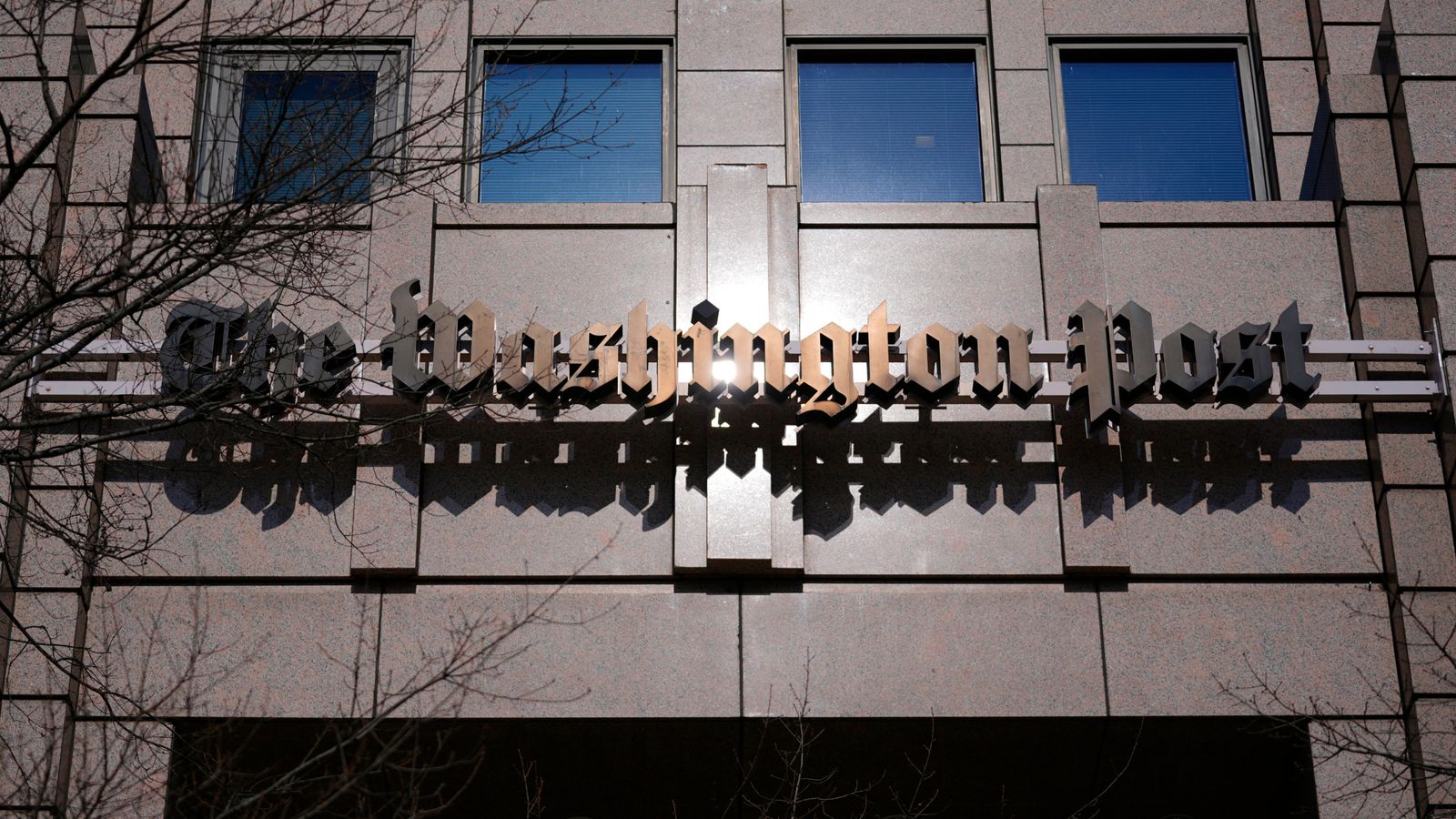
The Washington Post, one of America’s most storied and respected newspapers, has announced plans to lay off approximately one-third of its workforce in what marks one of the most significant downsizing efforts in the publication’s illustrious history. The decision, which had been the subject of industry rumors for weeks, was officially confirmed to employees during a video conference held on Wednesday. In a move that many found impersonal and jarring, staff members subsequently received emails with subject lines that bluntly informed them whether their positions were being eliminated or retained. This approach to delivering such life-altering news has drawn criticism from media observers and employees alike, who felt the method lacked the dignity and respect that such consequential decisions warrant. The layoffs will impact nearly every section of the newsroom, fundamentally reshaping an institution that has been a pillar of American journalism for more than 145 years.
The scale and scope of these cuts represent more than just numbers on a balance sheet; they signify a profound transformation in how one of the nation’s premier newspapers will operate moving forward. Among the most notable casualties of this restructuring are the complete elimination of the sports section, the closure of several foreign bureaus that have provided crucial international coverage, and the termination of the newspaper’s dedicated books coverage. The decision to shutter the sports department is particularly striking, as sports journalism has long been considered an essential component of any comprehensive news organization. Similarly, the closure of foreign bureaus, including the entire Middle East operation, raises serious questions about the Post’s ability to maintain its reputation for comprehensive global coverage. These cuts suggest a fundamental reimagining of what the Washington Post will be in the future, moving away from its traditional role as a newspaper of record that covers all aspects of news and culture.
Management’s Justification and the Changing Media Landscape
Executive editor Matt Murray addressed the staff in a note that attempted to frame the painful decision within the context of the newspaper’s long-term survival. He characterized the move as necessary to establish a stronger foundation for the publication and to better adapt to the rapidly evolving technological landscape and shifting reader habits that have fundamentally transformed the media industry over the past decade. In his communication to employees, Murray acknowledged the difficulty of the situation while arguing that the Post “can’t be everything to everyone” in the current media environment. This statement reflects a strategic pivot away from comprehensive coverage toward a more focused approach, though critics argue this undermines the very essence of what has made the Washington Post an indispensable institution in American public life.
Murray also pointed to specific metrics that influenced the decision-making process, noting that “our daily story output has substantially fallen in the last five years.” This decline in productivity, he suggested, indicated inefficiencies in the current organizational structure. Furthermore, he addressed concerns about the newspaper’s editorial approach, stating: “And even as we produce much excellent work, we too often write from one perspective, for one slice of the audience.” This criticism of the Post’s editorial stance is particularly noteworthy, as it appears to align with broader criticisms from conservative voices who have long argued that mainstream media outlets exhibit liberal bias. Whether this represents a genuine attempt to broaden the newspaper’s appeal or a capitulation to political pressure remains a subject of intense debate. The timing of these layoffs, coming just days after the Post announced it would scale back coverage of the 2026 Winter Olympics due to mounting financial losses, underscores the severity of the financial challenges facing the organization.
Voices of Dissent and Industry Reaction
The announcement has triggered a wave of criticism from both current and former employees, as well as prominent figures in the journalism community. Claire Parker, who served as the newspaper’s Cairo bureau chief, took to X (formerly Twitter) to announce her redundancy along with all of the newspaper’s Middle East correspondents and editors. In her post, she expressed confusion and frustration, saying it was “hard to understand the logic” behind eliminating an entire regional coverage apparatus, particularly given the Middle East’s ongoing geopolitical significance. Her sentiment has been echoed by many others in the journalism community who view the closure of foreign bureaus as a particularly shortsighted decision that will leave American readers with fewer sources of authoritative international reporting.
Perhaps the most stinging criticism came from Martin Baron, who served as the Post’s first editor under Amazon founder Jeff Bezos’s ownership. Baron, whose tenure is remembered as a period of journalistic excellence and institutional integrity, didn’t mince words in his assessment of the current situation. He described what is happening at the Post as “a case study in near-instant, self-inflicted brand destruction,” placing the blame squarely on Bezos’s shoulders. This is particularly significant coming from Baron, who initially praised Bezos’s acquisition of the newspaper and his investment in digital journalism. Margaret Sullivan, a respected journalism professor and former columnist for both the Post and The New York Times, described the layoffs as “devastating news for anyone who cares about journalism in America and, in fact, the world.” She emphasized the Washington Post’s historical importance across multiple domains, stating: “The Washington Post has been so important in so many ways, in news coverage, sports and cultural coverage.” These reactions from journalism luminaries underscore the symbolic significance of these layoffs beyond their immediate impact on those losing their jobs.
The Bezos Factor and Questions of Ownership
Jeff Bezos, the Amazon founder who purchased the Washington Post in 2013 for $250 million, has maintained a conspicuous silence on the layoffs, declining to comment on the dramatic restructuring of the newspaper he owns. Throughout most of his tenure as owner, Bezos has adopted a largely hands-off approach to the Post’s editorial operations, allowing the newsroom considerable independence in its journalistic decisions. This distance was seen as crucial to maintaining the publication’s credibility and editorial integrity. However, this relationship appeared to shift during the 2024 US presidential election when Bezos intervened to block the Post’s editorial board from publishing an endorsement for Kamala Harris, Donald Trump’s rival in the race. This unprecedented intervention shocked many observers and raised questions about whether Bezos’s ownership would remain as benign as it had initially appeared.
The current layoffs have intensified scrutiny of Bezos’s stewardship of the newspaper and raised broader questions about billionaire ownership of major media institutions. While Bezos’s initial investment helped the Post modernize its digital operations and expand its reach, the current financial struggles suggest that even the resources of one of the world’s wealthiest individuals may not be sufficient to overcome the fundamental challenges facing legacy media organizations. Critics point out that Bezos, whose personal wealth exceeds $200 billion, could easily absorb the Post’s losses without noticeable impact on his fortune, raising questions about his commitment to sustaining the newspaper as a public service rather than simply as a profitable business venture. The fact that the layoffs were not immediately prominently featured on the Post’s own website or social media accounts – at 8pm UK time, there was no mention on the paper’s homepage or media index page – has also raised questions about transparency and the newspaper’s willingness to report on its own institutional crisis with the same rigor it applies to other organizations.
Historical Context and the Post’s Legacy
To fully appreciate the significance of these layoffs, one must understand the Washington Post’s place in American journalism history. The newspaper is perhaps best known for its coverage of the Watergate Scandal in the early 1970s, when reporters Bob Woodward and Carl Bernstein’s dogged investigative work uncovered the Nixon administration’s crimes and cover-ups, ultimately leading to President Richard Nixon’s resignation in 1974. This watershed moment in American journalism established the Post as a fearless watchdog institution willing to hold even the most powerful officials accountable. The Watergate coverage came to symbolize journalism at its finest – speaking truth to power, defending democratic institutions, and serving the public interest regardless of political consequences or personal risk.
Beyond Watergate, the Washington Post has consistently distinguished itself through comprehensive coverage of national politics, international affairs, and cultural developments. The newspaper has won dozens of Pulitzer Prizes and has been home to some of the most influential journalists in American history. Its editorial page has shaped national conversations on critical issues, and its reporting has broken numerous stories of national and international importance. The decision to eliminate entire coverage areas and bureaus threatens this legacy and raises fundamental questions about what role, if any, comprehensive daily newspapers will play in American civic life moving forward. For many journalism observers, these layoffs represent not just the downsizing of one newspaper but a symbolic moment in the ongoing contraction of professional journalism in America.
The Future of News and Democratic Accountability
The Washington Post layoffs must be understood within the broader context of the crisis facing American journalism. Across the country, newspapers have been closing or dramatically reducing their operations, creating “news deserts” where communities lack access to professional local reporting. The business model that sustained journalism for generations – primarily reliant on advertising revenue – has been fundamentally disrupted by digital technology and the rise of social media platforms that capture advertising dollars while producing little original journalism. Even well-resourced national publications like the Washington Post have struggled to find sustainable economic models in this new environment, despite investments in digital subscriptions and multimedia content.
The implications of this contraction extend far beyond the media industry itself. Robust, independent journalism serves essential democratic functions: holding powerful institutions accountable, investigating corruption, informing public debate, and giving voice to those who might otherwise go unheard. When newspapers eliminate foreign bureaus, Americans lose independent sources of information about international events, becoming more dependent on government sources or foreign media outlets. When investigative reporting teams are cut, corruption and abuse of power are more likely to go undetected. When comprehensive coverage is replaced by narrower, more targeted reporting, the shared factual basis necessary for democratic discourse erodes further. The Washington Post layoffs, therefore, represent not just an economic story or a media industry story, but a development with profound implications for American democracy and civic life. Whether this represents a necessary adaptation to changing times or a tragic abandonment of journalism’s democratic mission remains to be seen, but the decision will undoubtedly reshape one of America’s most important news institutions for years to come.