


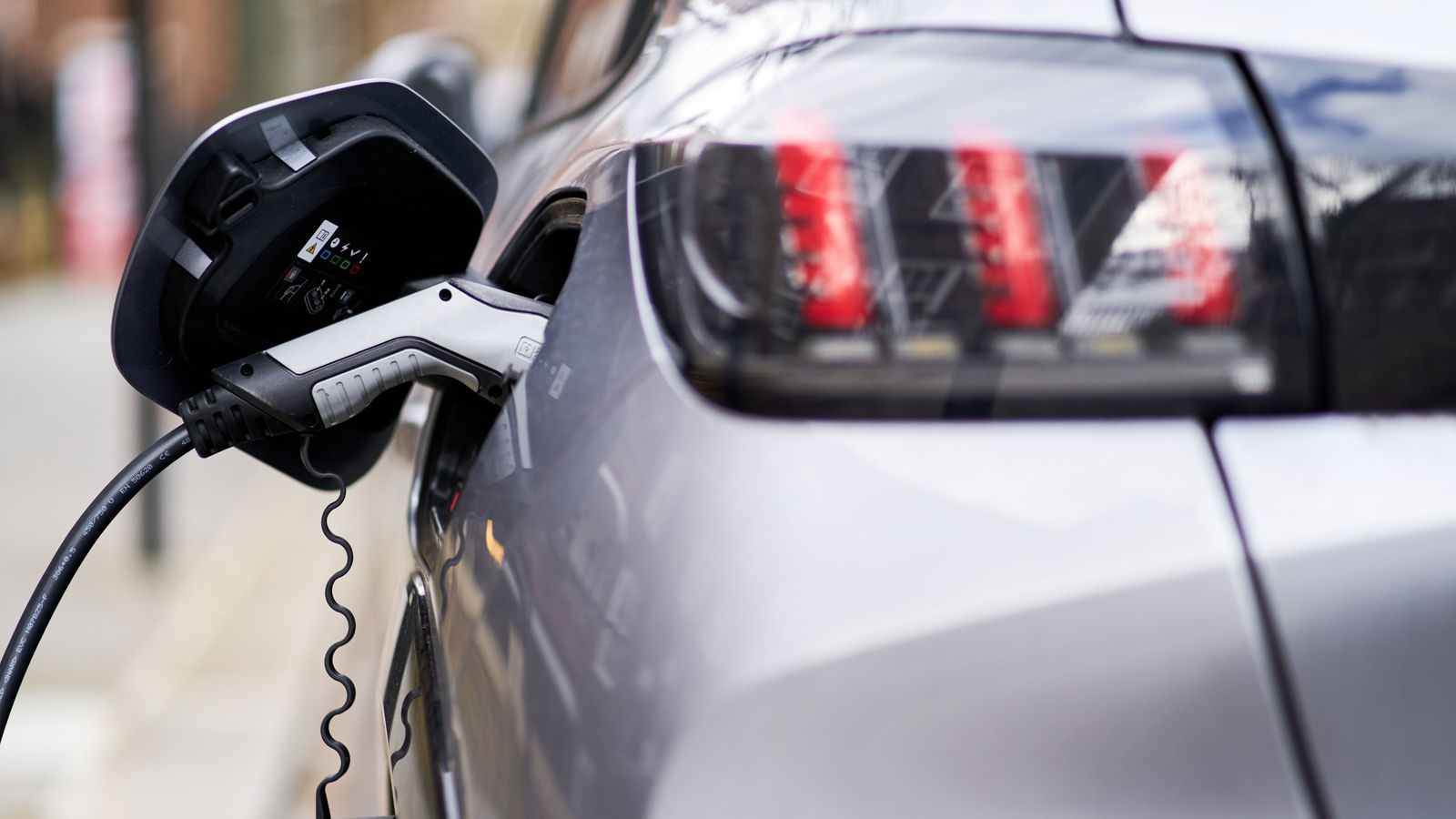

UK Government Reviews Electric Car Sales Quotas Amid Industry Challenges
A Flagship Green Policy Under Scrutiny
The UK government is taking a fresh look at one of its most ambitious environmental initiatives – the electric car sales quotas that were supposed to drive the nation toward a greener future. This review comes at a particularly challenging time for the automotive industry, with 2025 marking the lowest vehicle production numbers the country has seen since 1952. That’s a statistic that tells quite a story – we’re talking about production levels not seen in over seven decades, which has understandably raised alarm bells across government departments and manufacturing boardrooms alike. Ministers are now carefully examining the zero emission vehicle (ZEV) mandate with an eye toward potentially making significant changes to how it operates.
If the government decides to ease back on these quotas, it would represent a notable shift in direction from one of Labour’s cornerstone environmental policies, particularly championed by Net Zero Secretary Ed Miliband. When Labour came to power in 2024, they introduced this mandate with considerable fanfare and conviction. The policy requires car manufacturers to meet increasingly demanding annual quotas for zero-emission car and van sales, all building toward an ambitious goal of completely banning new petrol and diesel car sales by 2030. The targets are designed to progressively tighten year after year, reaching 100% by 2035, with substantial financial penalties for any manufacturers who fail to meet their obligations. For context, the 2026 target sits at 33%, while 2025 required 28%, and 2024 was set at 22%. These aren’t small incremental changes – they represent significant year-on-year increases that manufacturers are struggling to meet.
Government Acknowledges Industry Pressures
A government spokesperson struck a cautiously optimistic tone when addressing the situation, acknowledging to Sky News that “we recognise manufacturers are facing challenges, but we’ve shown we are adaptable before, and are beginning conversations to inform the planned review of the ZEV mandate, to be published by early 2027.” This statement attempts to walk a delicate line between maintaining commitment to environmental goals while showing sensitivity to the real-world difficulties facing the automotive sector. The spokesperson also highlighted what they see as the positive aspects of the current situation, emphasizing that “it has never been easier or cheaper to own an EV, especially against the backdrop of high and fluctuating prices at the pumps.” They pointed to the government’s electric car grant as evidence of support that’s helping boost sales for manufacturers, adding that “industry is on track to meet its 2025 targets.”
Looking at the numbers, there are certainly some bright spots in the data. One in four new cars sold last year was zero emission, representing a 25% increase compared to the previous year. That’s a substantial jump that shows consumer appetite for electric vehicles is definitely growing. However, the broader production picture tells a more complicated story. Car production overall fell by 17% in February compared with the same period in 2025, according to new figures published recently. Even more concerning for the green transition, production of battery-electric, plug-in hybrid, and hybrid cars also declined by 3% to 26,629 units. These figures suggest that while demand for electric vehicles may be increasing, the overall health of the UK automotive manufacturing sector is struggling under current conditions.
Political Tensions and Industry Consequences
The political opposition hasn’t missed the opportunity to criticize what they see as policy missteps. The Conservatives have attacked the government for launching “yet another review” and issued stark calls for ministers to “face reality and ditch their misguided net zero zealotry that has left hard-working families footing the bill.” Richard Holden, the Conservative shadow transport secretary, framed his party’s alternative approach by saying: “Under Kemi Badenoch, the Conservatives have a plan ready to go, led by innovation and consumer choice rather than an ideological direction set by Ed Miliband. The government should adopt the Conservatives’ plan ASAP.” This criticism highlights the deeply divided political landscape around environmental policy, with what Labour sees as necessary climate action being characterized by opponents as ideological overreach that’s hurting ordinary people and businesses.
Labour’s ambitions remain remarkably bold despite these challenges. The government aims to have 1.3 million vehicles manufactured annually by 2035 – which would represent nearly double the number of cars and vans produced last year. That’s an extraordinary target given current production trends, and it raises legitimate questions about whether the pathway between current reality and future aspirations is viable without significant policy adjustments. The manufacturing sector has been vocal about the financial pressures they’re experiencing. The ZEV mandate has been identified as a major contributor to the recent production decline, with manufacturers facing a hefty penalty of £12,000 for each car they fail to sell in meeting their quota requirements.
The Financial Reality for Manufacturers
These penalties have created a challenging economic environment that’s forcing manufacturers into difficult decisions. To meet their quotas, many have been offering substantial discounts on electric vehicles, effectively taking financial losses to avoid even larger penalty payments. According to the Society of Motor Manufacturers and Traders (SMMT), these discounting practices have cost carmakers an estimated £10 billion over just the first two years of the mandate. That’s an enormous sum that’s eating into profitability and raising serious questions about the long-term sustainability of current business models. The situation is made even more complicated because these aren’t companies operating in a vacuum – they’re competing in global markets where different regions have different regulatory frameworks and incentive structures.
Interestingly, while manufacturers have been forced to discount heavily to stimulate electric vehicle purchases, the government simultaneously removed some buyer incentives that had been helping support demand. Last April saw the government end the vehicle excise duty exemption for electric vehicles, and they announced plans for a “pay-per-mile” road tax specifically targeting EVs beginning in 2028. From a policy perspective, this creates something of a contradictory message – pushing manufacturers hard to sell more electric vehicles while simultaneously making those vehicles less financially attractive to potential buyers. Critics argue this approach is creating an environment where manufacturers bear all the risk and cost of the transition while consumers are given fewer reasons to make the switch.
Policy Adjustments and International Pressures
The government has already made some modifications to the ZEV mandate in response to various pressures, particularly international trade developments. Last April brought significant changes after President Donald Trump imposed 25% import tariffs on cars and car parts entering the United States, which alongside the European Union represents one of the UK’s largest export markets. In response to these trade headwinds, the government adjusted its approach by allowing hybrid vehicles to be sold until 2035 rather than being phased out earlier. They also exempted small manufacturers from the 2030 deadline for ending new petrol and diesel car sales, recognizing that smaller producers face different challenges than major multinational automotive corporations. Additionally, the government provided carmakers with more flexibility in how they meet the ZEV targets, acknowledging that a one-size-fits-all approach wasn’t working effectively across the diverse manufacturing landscape.
These adjustments demonstrate that the government is capable of pragmatic policy evolution when faced with changing circumstances, which may offer some hope to manufacturers calling for further revisions. The review now underway will need to balance multiple competing interests: the urgent need to reduce carbon emissions and meet climate commitments, the economic health of a strategically important manufacturing sector, the competitiveness of UK producers in global markets, consumer affordability and choice, and the pace of charging infrastructure development that makes electric vehicle ownership practical for more people. Finding the right balance won’t be easy, particularly in the current political environment where environmental policy has become deeply polarizing. The fact that this review is happening at all suggests the government recognizes the current approach may need recalibration, but whether resulting changes will satisfy both industry demands and environmental advocates remains to be seen. With publication of the review findings expected by early 2027, manufacturers and environmental groups alike will be watching closely to see whether the government’s electric vehicle strategy gets refined or fundamentally reconsidered.