


India Reports Nipah Virus Outbreak as Asian Nations Heighten Border Surveillance
Authorities Confirm Containment of Deadly Virus Cases
Indian health authorities announced Tuesday that they have successfully contained an outbreak of the Nipah virus after confirming two cases in the eastern state of West Bengal since December. The development has prompted several Asian nations to implement stringent health screening measures and enhanced airport surveillance for travelers arriving from India, marking a precautionary response to a pathogen that carries a significantly higher fatality rate than the coronavirus pandemic that recently gripped the world.
According to India’s Health Ministry, comprehensive contact tracing efforts have been implemented, with officials identifying and quarantining 196 individuals who may have been exposed to the virus. In what appears to be encouraging news, all identified contacts have tested negative for the infection. While the ministry refrained from releasing specific details about the two confirmed patients, officials emphasized that “the situation is under constant monitoring, and all necessary public health measures are in place.” This measured response reflects lessons learned from previous outbreaks and demonstrates India’s growing capacity to manage emerging infectious disease threats through rapid detection, isolation, and monitoring protocols.
Understanding the Nipah Virus Threat
The Nipah virus represents one of the more concerning zoonotic diseases—infections that jump from animals to humans—in modern public health. First identified during an outbreak in Malaysia in the 1990s, the virus naturally resides in fruit bats and can spread to humans through multiple pathways, including contact with infected pigs, consumption of contaminated food products (particularly date palm sap), or through direct human-to-human transmission. What makes Nipah particularly alarming to health officials is its devastating clinical presentation and the absence of specific medical countermeasures. Patients infected with the virus typically experience severe symptoms including high fevers, convulsions, and persistent vomiting. In severe cases, the infection can progress to encephalitis—inflammation of the brain—leading to coma and death.
The medical community’s concern is amplified by the fact that no vaccine currently exists to prevent Nipah virus infection, nor are there specific antiviral treatments available to combat the disease once contracted. Healthcare providers can only offer supportive care, which focuses on managing complications, maintaining vital functions, and keeping patients as comfortable as possible while their immune systems fight the infection. Perhaps most sobering is the virus’s estimated fatality rate, which ranges between 40% and 75% according to the World Health Organization—a mortality rate that far exceeds that of COVID-19, which typically kills less than 1% of those infected in most populations. This stark difference in lethality explains why even a small number of cases triggers significant public health responses across multiple countries.
Regional Response and Enhanced Screening Measures
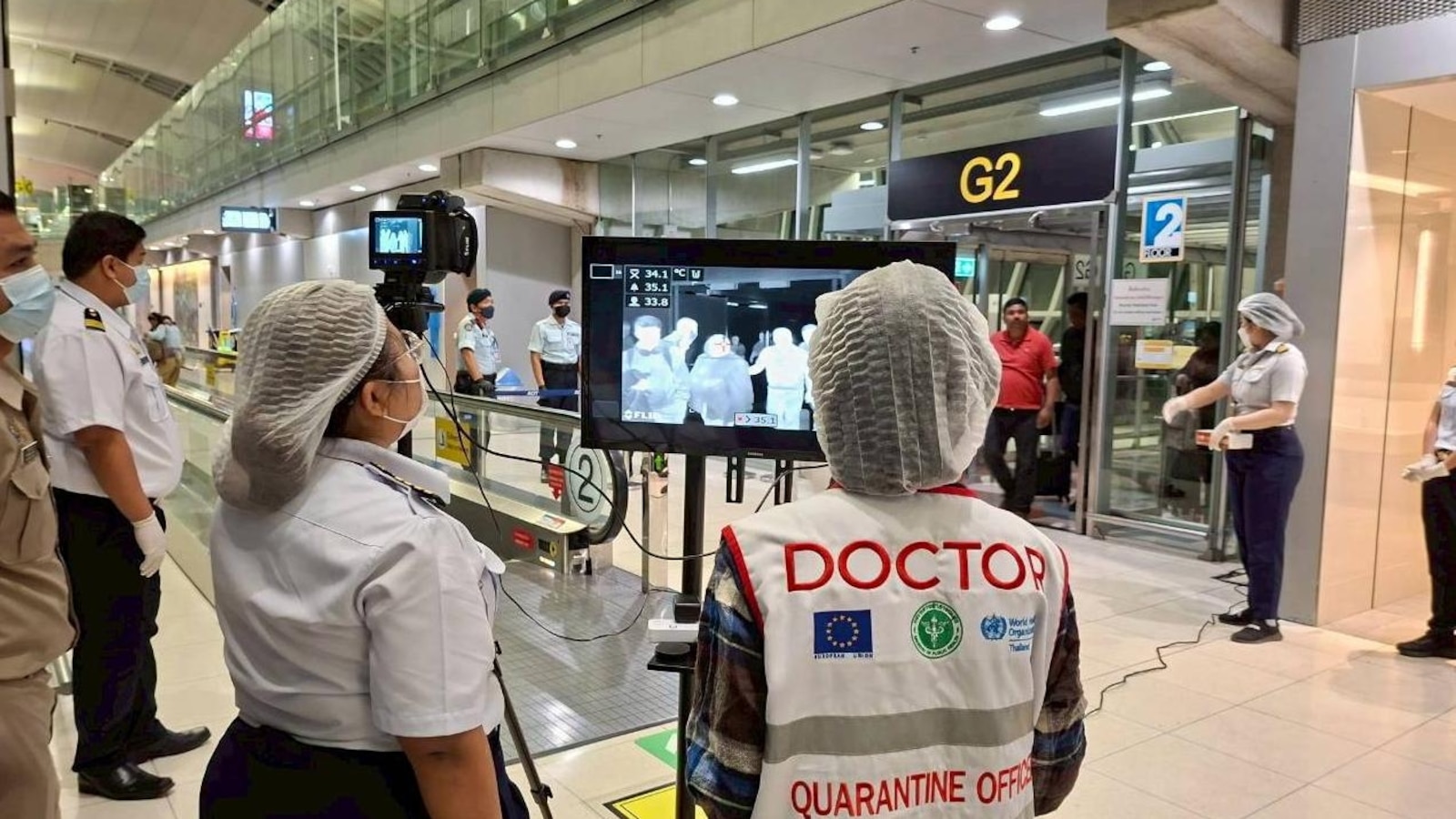
While no cases of the Nipah virus have been reported outside India, neighboring countries and regional partners have moved swiftly to implement precautionary measures at their borders. Indonesia and Thailand have increased screening protocols at major international airports, implementing comprehensive health monitoring systems that include mandatory health declarations for incoming passengers, temperature checks using thermal imaging technology, and visual monitoring for signs of illness among travelers. Thailand’s Department of Disease Control specifically noted that thermal scanners have been installed at arrival gates dedicated to direct flights originating from West Bengal at Bangkok’s Suvarnabhumi Airport, one of Southeast Asia’s busiest aviation hubs.
Myanmar’s Health Ministry has taken an even more cautious approach, officially advising its citizens against nonessential travel to West Bengal and urging anyone who must travel to the region to seek immediate medical attention if they develop any symptoms within 14 days of their journey. Building on infrastructure developed during the COVID-19 pandemic, Myanmar has intensified fever surveillance at all airports for passengers arriving from India, while simultaneously ensuring that laboratory testing capacity and medical supplies are adequately stocked and ready for deployment should cases be detected. Vietnam’s Health Ministry issued directives on Tuesday calling for strict food safety practices—particularly important given that Nipah can spread through contaminated food—and instructed local authorities to increase monitoring at border crossings, healthcare facilities, and within communities, according to reports from state media outlets.
China, sharing a border with India and maintaining significant travel and trade connections, announced it was strengthening disease prevention measures in border regions. State media reports indicated that health authorities had initiated comprehensive risk assessments and enhanced training programs for medical staff who might encounter infected individuals, while simultaneously improving monitoring systems and testing capabilities to ensure rapid detection of any cases that might cross into Chinese territory. These coordinated regional responses demonstrate the interconnected nature of public health in our globalized world and reflect the international community’s determination not to be caught unprepared by emerging infectious disease threats.
Historical Context and Previous Outbreaks
India is no stranger to Nipah virus outbreaks, with the country experiencing multiple incidents over the past two decades. West Bengal, the state where the current cases were detected, previously reported Nipah outbreaks in 2001 and 2007, giving local health authorities some historical experience in managing the disease. More recent cases have largely been concentrated in the southern state of Kerala, which faced a major outbreak in 2018 that claimed at least 17 lives and tested the region’s healthcare infrastructure. That outbreak prompted significant improvements in surveillance systems, contact tracing capabilities, and isolation facilities across India’s healthcare network.
The sporadic nature of Nipah outbreaks—appearing in different regions at different times—presents unique challenges for public health officials. Unlike endemic diseases that circulate predictably within populations, Nipah emerges unpredictably when humans come into contact with infected animal reservoirs, making prevention difficult and requiring constant vigilance from health surveillance systems. The virus’s presence in fruit bat populations, which are widely distributed across South and Southeast Asia, means that the threat of future outbreaks remains constant. These bats play crucial ecological roles as pollinators and seed dispersers, making their elimination neither practical nor desirable. Instead, public health strategies focus on reducing human exposure to bat excretions, improving food safety practices, and maintaining rapid response capabilities to contain outbreaks when they occur.
Looking Forward: Preparedness and Global Health Security
The swift containment of this latest Nipah outbreak and the coordinated regional response represent positive developments in global health security. The ability to quickly identify cases, trace contacts, implement quarantine measures, and communicate transparently with both domestic and international partners reflects important lessons learned from recent disease outbreaks, including COVID-19, Ebola, and previous Nipah incidents. However, the episode also serves as a reminder that emerging infectious diseases remain a persistent threat to human health, particularly in regions where human populations increasingly encroach on wildlife habitats, creating more opportunities for zoonotic spillover events.
Moving forward, the global health community continues to emphasize the importance of One Health approaches that recognize the interconnections between human, animal, and environmental health. Research into Nipah virus vaccines and treatments continues, though the sporadic nature of outbreaks makes clinical trials challenging. Strengthening surveillance systems, improving laboratory diagnostic capabilities, enhancing healthcare worker training, and maintaining stockpiles of supportive care resources all remain critical components of preparedness efforts. As this latest outbreak demonstrates, even small numbers of cases from highly lethal pathogens require significant public health responses, but with proper systems in place, containment is achievable. The cooperation demonstrated by Asian nations in implementing screening measures shows that international coordination on health threats has improved, offering hope that the global community is better positioned to respond to emerging infectious disease challenges than ever before.