



Justice for Cedric Lofton: A Devastating Case of Restraint Gone Wrong
A Tragic Death and a Landmark Verdict
In a powerful statement about the dangers of prolonged restraint and the treatment of individuals experiencing mental health crises, a federal jury in Wichita has awarded $8.3 million to the family of Cedric “C.J.” Lofton, a Kansas foster teen who died under deeply troubling circumstances in September 2021. The 17-year-old, who was just one day away from his 18th birthday when he passed away in the hospital, lost his life after being held facedown for a staggering 39 minutes at the Sedgwick County Juvenile Intake and Assessment Center. After hearing the evidence presented during the trial, jurors concluded Wednesday that five juvenile officers either used excessive force against the vulnerable teenager or failed to step in and prevent the tragedy from unfolding. The verdict represents not just monetary compensation for a grieving family, but a broader recognition of the life-threatening dangers posed by certain restraint techniques, particularly when used on young people experiencing mental health emergencies. John Marrese, the attorney representing Lofton’s brother and estate, expressed satisfaction that the jury saw through arguments attempting to attribute the death to “excited delirium,” a controversial and now-discredited diagnosis that critics have long argued was weaponized to justify instances of excessive force by law enforcement officers.
The Problematic “Excited Delirium” Defense
One of the most significant aspects of this case is the jury’s rejection of the “excited delirium” explanation for Cedric Lofton’s death. This controversial diagnosis has been thoroughly discredited by major medical associations, yet it has historically been invoked in cases involving deaths during police custody or restraint situations. The term has been widely criticized by medical experts, civil rights advocates, and families of victims as a convenient label that shifts blame away from the actions of law enforcement and onto the victim themselves. By attributing deaths to this supposed medical condition rather than to the restraint techniques employed, authorities have often escaped accountability for what many experts consider dangerous and sometimes deadly practices. Marrese emphasized the importance of this jury’s decision, calling it “a good development in the world of prolonged prone restraint” and highlighting how the verdict acknowledges both the extreme danger of such techniques and their potential to be fatal. The message sent by this verdict is clear: those tasked with caring for individuals in crisis cannot hide behind discredited medical theories when their actions directly contribute to a tragic outcome. For Cedric’s family and for countless others who have lost loved ones in similar circumstances, this represents a step toward accountability and, hopefully, meaningful change in how mental health crises are handled by those in positions of authority.
The Events Leading to a Mental Health Crisis
To understand the full tragedy of what happened to Cedric Lofton, it’s essential to look at the events that led to that fateful night. According to the district attorney’s report, Cedric’s mental health took a serious turn for the worse after he traveled to Texas to attend his grandmother’s funeral. Grief affects people in different ways, and for this teenager already navigating the challenges of foster care, the loss appears to have triggered a severe mental health episode. He began experiencing what were clearly symptoms of a psychological crisis, telling a foster brother that he believed his classmates were actually murderous robots—a statement that should have signaled to everyone involved that he needed immediate professional mental health intervention, not law enforcement response. Recognizing that something was wrong, Cedric’s foster father attempted to do the right thing by driving him to a mental health provider. However, the frightened and confused teenager ran away from the facility before receiving help. When Cedric finally returned home in the early morning hours, around 1 a.m., his foster father made the decision to call the Wichita police. What should have been a call for help to get a troubled young person the mental health support he desperately needed would instead set in motion a chain of events that would end in his death less than 48 hours later.
A Failed Response: When Help Becomes Harm
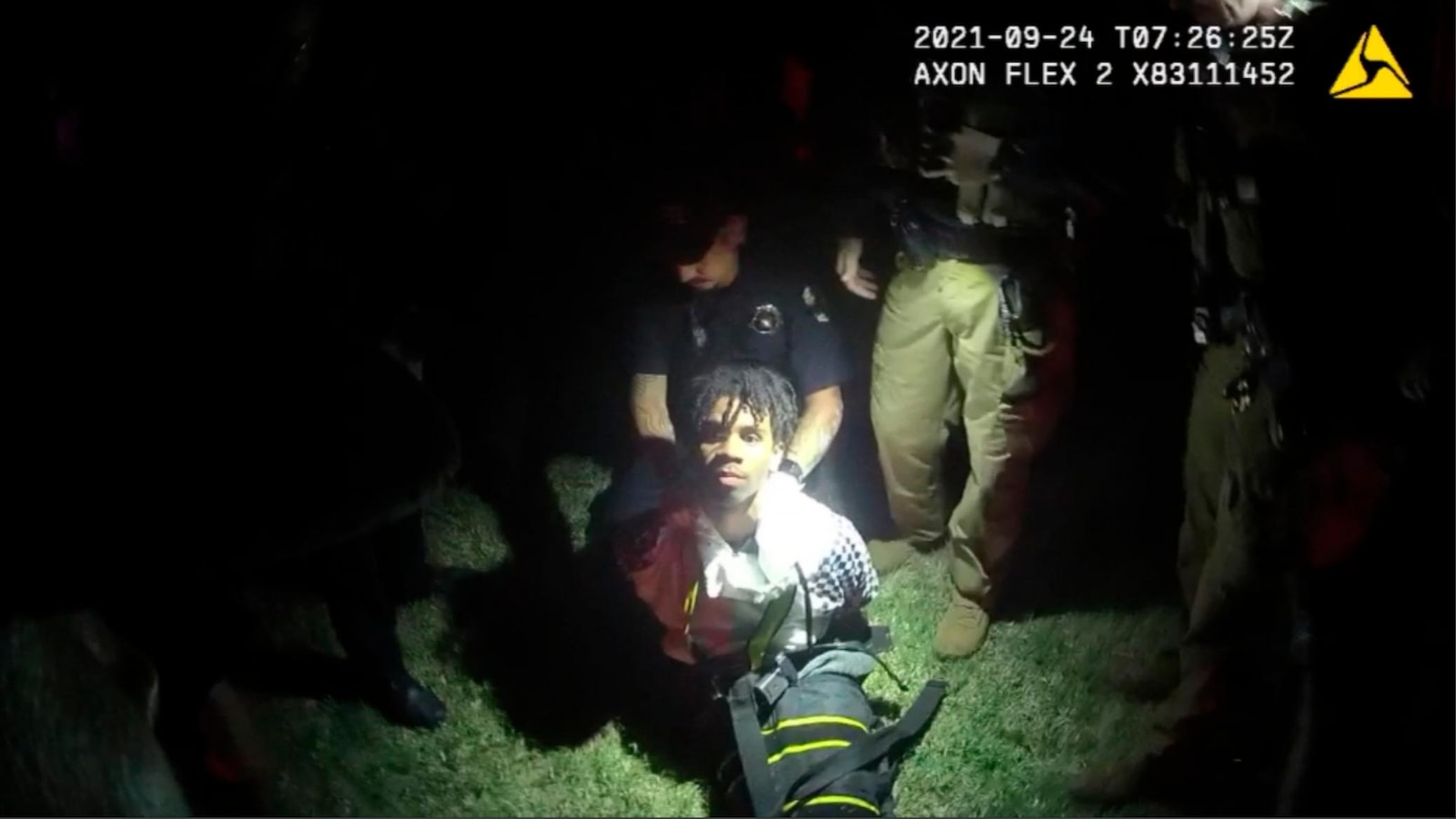
When police officers arrived at the home, they were faced with a 5-foot-10, 135-pound teenager who was clearly in the midst of a mental health crisis and understandably resistant to being taken anywhere against his will. Body camera footage from that night shows that officers spent nearly an hour trying to convince Cedric to voluntarily allow them to transport him to a mental hospital where he could receive proper care. Despite their extended attempts at persuasion, the frightened and confused teenager refused to cooperate. At this point, the officers made a decision that would prove fateful: rather than continuing to de-escalate the situation or calling in mental health crisis specialists, they chose to use force. They restrained the slight teenager using something called the WRAP—a restraint device consisting of a locking shoulder harness combined with leg restraints and ankle straps. This level of physical restraint for someone clearly experiencing a mental health emergency rather than posing a genuine violent threat raises serious questions about training, protocols, and the criminalization of mental illness. The situation deteriorated further when a sergeant made the determination that Cedric was “too combative” to be taken to a hospital—the very place where he might have received the psychiatric help he needed. Instead, officers transported him to the Sedgwick County Juvenile Intake and Assessment Center, a detention facility rather than a treatment center, fundamentally misunderstanding or ignoring the nature of his crisis.
The Fatal 39 Minutes
What happened after Cedric arrived at the juvenile facility represents one of the most disturbing aspects of this entire tragedy. Once the WRAP restraint device was removed, the teenager—frightened, confused, and likely exhausted from the earlier struggle—scuffled with facility staff. Rather than employing de-escalation techniques or seeking emergency mental health intervention, staff members made the decision to shackle the teenager’s ankles and place him facedown on the floor in what’s known as a prone restraint position. Medical experts and law enforcement training specialists have long warned about the dangers of prolonged prone restraint. When a person is held facedown, especially with pressure applied to their back, their ability to breathe can become severely compromised. The position makes it difficult for the chest to expand properly, and when combined with the stress of the situation, physical exertion, and any existing health conditions, it can quickly become life-threatening. Despite these well-documented dangers, staff kept Cedric in this position for 39 agonizing minutes. By the time staff members noticed that he had stopped breathing, it was too late. Paramedics rushed to the facility, but the damage had been done. Cedric was transported to a hospital where he fought for his life for two days before passing away on September 26, 2021—just one day before what should have been his 18th birthday. The final autopsy would declare his death a homicide, a medical determination that his death resulted from the actions of others.
The Aftermath: Accountability Denied and Delayed
In the months following Cedric Lofton’s death, his family faced not only grief but frustration as they sought accountability for what had happened. Marc Bennett, the Sedgwick County District Attorney, announced that despite the homicide ruling, he would not be pursuing involuntary manslaughter charges against any of the staff members involved. His justification? Kansas’s “stand-your-ground” law, which he claimed prevented prosecution because the staff members were supposedly protecting themselves. This reasoning struck many as a grotesque misapplication of self-defense laws—the idea that multiple adults needed to restrain a 135-pound teenager experiencing a mental health crisis facedown for 39 minutes to protect themselves strains credibility and common sense. With criminal accountability off the table, Cedric’s family turned to the civil justice system, filing a federal lawsuit against Sedgwick County and the officers involved. The $8.3 million verdict represents the jury’s assessment not just of the monetary value of a young life cut short, but of the severity of the violations that led to his death. Sedgwick County, which employed the officers named in the lawsuit, released a statement saying it was reviewing the verdict and discussing next steps, leaving open the possibility of an appeal. For Cedric’s family, no amount of money can bring back their loved one or erase the trauma of knowing how he spent his final conscious moments. But the verdict does provide a measure of public acknowledgment that what happened to Cedric was wrong, that those tasked with his care failed him catastrophically, and that the system that was supposed to help a teenager in crisis instead became the instrument of his death. As communities across the country grapple with how to properly respond to mental health emergencies without resorting to force, Cedric Lofton’s name joins a growing list of those who died unnecessarily, reminding us of the urgent need for reform.