


Lindsey Vonn’s Bold Olympic Comeback: The Risks and Reality of Competing with a Torn ACL
The Decision to Push Forward Despite Serious Injury
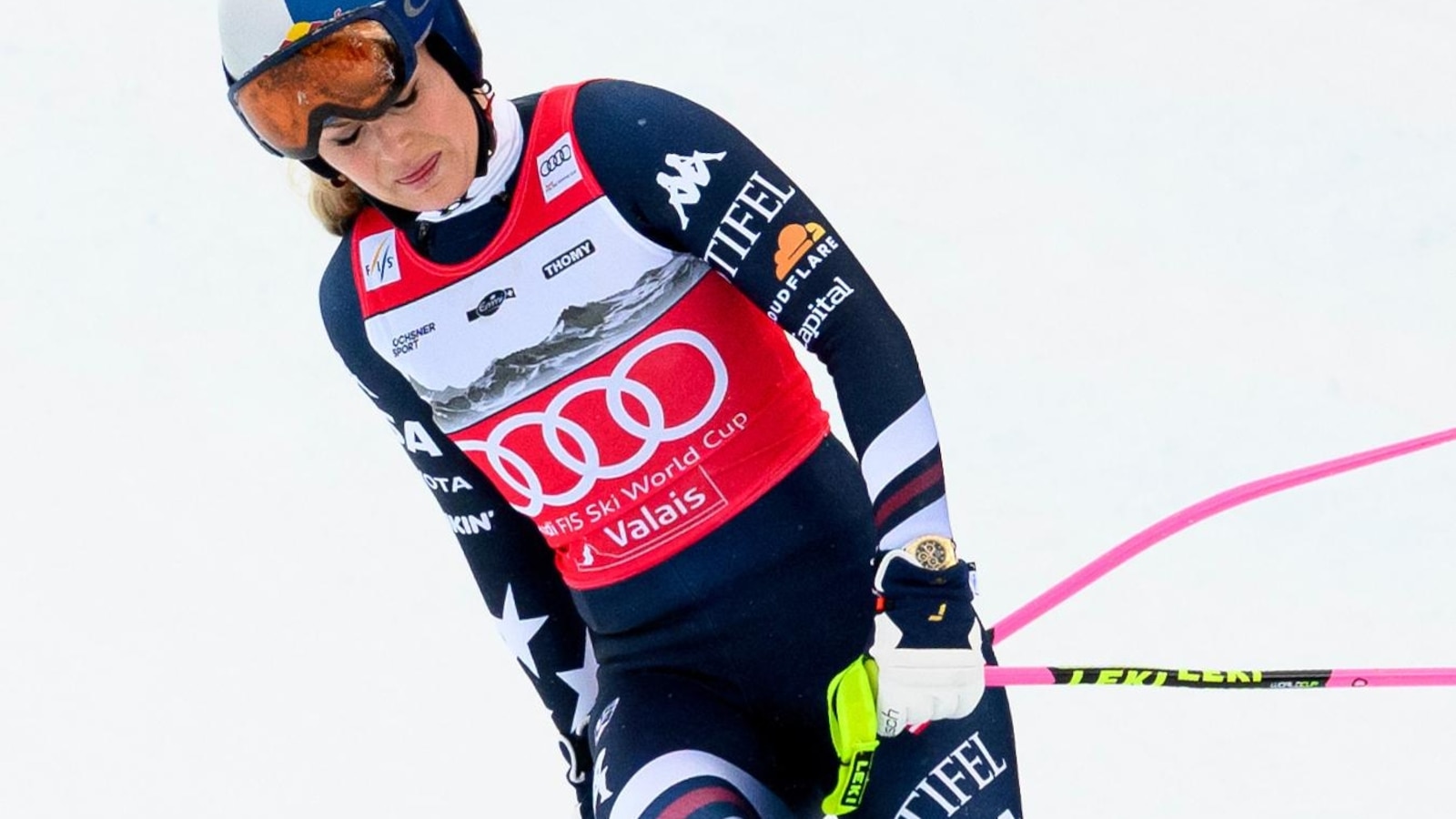
At 41 years old, legendary ski champion Lindsey Vonn has made headlines not just for her remarkable return from retirement to earn a spot on the U.S. Olympic team, but for her controversial decision to compete in the Milan Cortina Olympics despite suffering a severe knee injury. After a frightening crash during a World Cup downhill event in Switzerland last Friday, Vonn received devastating news about her left knee: a completely ruptured anterior cruciate ligament (ACL), significant bone bruising, and meniscal damage. For most athletes, this combination of injuries would signal an immediate end to competition. However, Vonn is not most athletes. Following physical therapy sessions and extensive consultations with medical professionals, she announced at a Tuesday news conference her intention to compete, stating confidently, “My knee is not swollen, and with the help of a knee brace, I am confident that I can compete on Sunday.” This decision, while shocking to many observers, is actually not as unusual as it might seem in the world of elite athletics, according to experts in orthopedics and sports medicine who understand the unique pressures and capabilities of world-class competitors.
Expert Perspectives on Elite Athletes and Injury
Medical professionals who work closely with Olympic-level athletes weren’t entirely surprised by Vonn’s decision to continue competing. Dr. Catherine Logan, an orthopedic surgeon with the Joint Preservation Center in Denver, Colorado, who has extensive experience working with U.S. ski, snowboard, and lacrosse teams, provided valuable context for understanding this choice. “It’s not unusual for any elite athlete. People will push through with something that us normal folks wouldn’t push through because the stakes are a little higher,” she explained. This observation highlights a fundamental difference between elite competitors and recreational athletes—their threshold for risk, their physical conditioning, and what they’re willing to endure to achieve their goals are all operating at a completely different level. Elite athletes like Vonn have spent their entire lives developing not just their physical abilities but also their mental toughness and pain tolerance. They’ve invested decades of training, sacrifice, and dedication to reach the pinnacle of their sport. When faced with what might be their final Olympic opportunity, the calculation of risk versus reward takes on dimensions that most people cannot fully comprehend.
Understanding the ACL Injury and Its Severity
To fully appreciate the risk Vonn is taking, it’s important to understand exactly what an ACL injury involves and why it’s considered so serious. The ACL, or anterior cruciate ligament, is one of the key ligaments that connects the femur (thighbone) to the tibia (shinbone), providing crucial stability to the knee joint. This ligament is particularly vulnerable in sports that involve rapid directional changes, such as basketball, soccer, and especially alpine skiing. When the ACL ruptures, athletes typically experience a distinctive loud “pop” in the knee, followed by the joint immediately giving out and significant swelling developing rapidly. In Vonn’s case, the injury is even more complex because it includes damage to the meniscus—a piece of rubbery cartilage that functions as a shock absorber between the femur and tibia. Dr. Mia Hagen, a sports medicine surgeon at UW Medicine in Seattle, characterized a ruptured ACL combined with meniscal damage as a severe injury. According to guidelines from the American Academy of Orthopaedic Surgeons, this type of injury is typically treated with surgical intervention within months, followed by a lengthy recovery period of nine months to a year. Dr. Hagen noted that while some athletes can return to competition earlier than expected, others never manage to return to their sport at all, underscoring just how serious and career-threatening this type of injury can be.
The Real Dangers Vonn Faces on the Slopes
While Vonn’s determination is admirable, medical experts are clear-eyed about the very real dangers she faces by competing with this injury. Dr. Yana Klein, an emergency and sports medicine specialist at the University of Colorado School of Medicine, outlined the worst-case scenarios in stark terms. “She might blow out her knee entirely,” Klein warned. “At these really high racing speeds, the big risk is that the knee is just not stable enough to compete.” Alpine skiing is already one of the most dangerous Olympic sports, with athletes reaching speeds that can exceed 80 miles per hour while navigating challenging terrain and making split-second decisions. The forces exerted on the knees during these high-speed runs are tremendous, and without the stabilizing function of an intact ACL, Vonn’s knee is operating without one of its critical support structures. Klein emphasized that decisions like Vonn’s are always complicated and stressed that they are made with “athlete safety as the top priority,” though she acknowledged the inherent risks. The potential consequences extend beyond just further damage to an already injured knee—a catastrophic failure of the joint at racing speeds could result in a crash that causes additional injuries to other parts of the body, potentially ending not just Vonn’s competitive career but affecting her quality of life long after her athletic days are over.
How Vonn Can Compete Despite the Injury
Despite the serious nature of the injury, medical experts acknowledge that competing with a ruptured ACL, while dangerous, is not impossible—particularly for someone with Vonn’s exceptional physical conditioning and experience. Dr. Catherine Logan explained the biomechanics that make this possible: “Skiing is possible with a ruptured ACL. It really relies on our quad strength, our hip strength and our neuromuscular control.” Essentially, Vonn will be compensating for the lack of ACL stability by relying heavily on the surrounding musculature and her finely-tuned body awareness developed over decades of elite competition. The external knee brace she plans to wear will provide some additional support, though it cannot fully replace the function of the damaged ligament. Logan noted that swelling presents one of the biggest challenges—if Vonn develops significant swelling or excess fluid accumulation in the knee joint, it could seriously compromise her power, strength, and edge control (the ability to manage the angle of the skis relative to the snow). However, if she can manage to control inflammation and other factors, Logan believes competitive performance remains possible: “For an elite alpine skier like Lindsey is, to perform at an Olympic event, it’s still possible.” This assessment accounts for Vonn’s exceptional quad and hip strength, her superior neuromuscular control developed over years of training, and her intimate knowledge of how her body moves and responds on the slopes.
The Larger Context of Athletic Courage and Risk
Lindsey Vonn’s decision to compete in the Milan Cortina Olympics with a severely damaged knee represents more than just one athlete’s choice—it reflects the complex intersection of athletic ambition, risk calculation, medical capability, and the unique psychology of world-class competitors. For Vonn, who came out of retirement at 41 to pursue one more Olympic dream, the opportunity cost of not competing may feel greater than the physical risks involved. Her decision has been made with full knowledge of the potential consequences and with the support and guidance of medical professionals who understand both the risks and her exceptional physical capabilities. Whether this decision is ultimately vindicated by a successful performance or results in further injury, it will undoubtedly be studied and discussed in sports medicine circles for years to come. What’s clear is that Vonn embodies the spirit of athletic competition at its highest level—the willingness to push boundaries, to test limits, and to pursue excellence even when the odds and the circumstances seem stacked against success. As spectators and observers, we can only watch with admiration for her courage while hoping that her gamble pays off without serious long-term consequences for her health and wellbeing.