


Tensions Flare in the Strait of Hormuz: A Fragile Ceasefire Under Pressure
U.S. Declares Convoy Operations a Temporary Fix
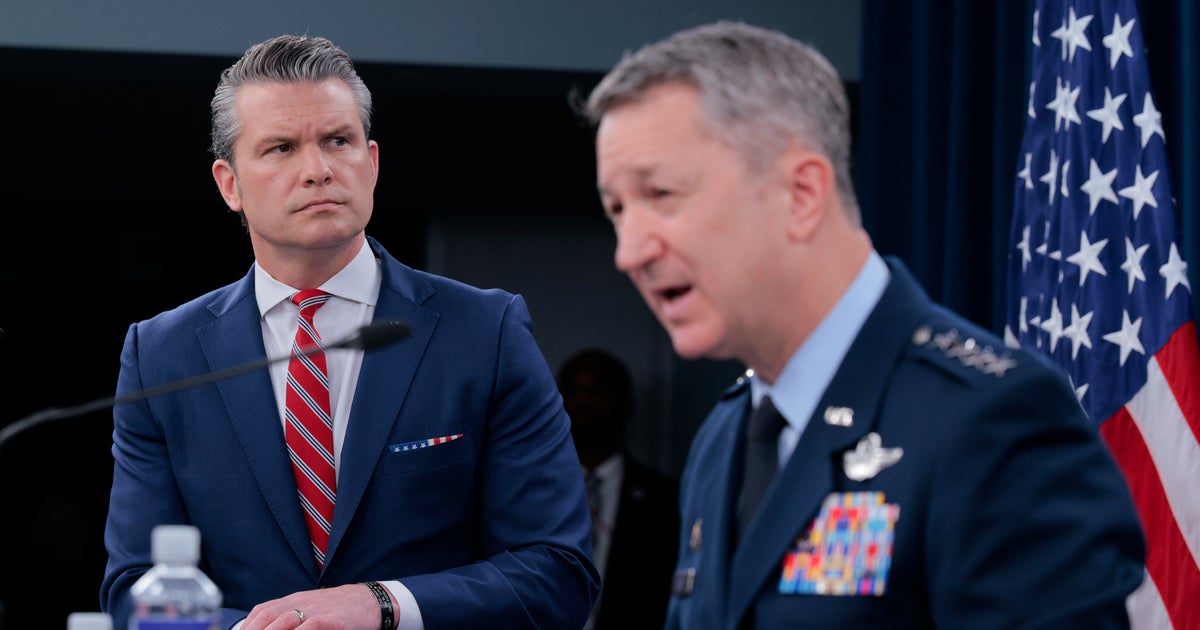
Defense Secretary Pete Hegseth addressed the growing tensions in the Persian Gulf on Tuesday, characterizing America’s current naval escort operation through the Strait of Hormuz as merely a stopgap measure rather than a permanent solution. Speaking at a Pentagon press conference just one day after U.S. and Iranian forces exchanged fire in these contested waters, Hegseth made clear that while the United States is committed to keeping international shipping lanes open, the current arrangement can’t last indefinitely. He emphasized a fundamental principle that has guided American foreign policy in the region for decades: “Iran cannot be allowed to block innocent countries and their goods from an international waterway.” This statement underscores the strategic importance of the Strait of Hormuz, a narrow passage that has become a flashpoint in the ongoing confrontation between Washington and Tehran. Hegseth’s comments reflect the delicate balancing act the administration is attempting—demonstrating strength and resolve while acknowledging that the current military posture isn’t sustainable in the long term.
A Ceasefire in Name Only
Despite Monday’s violent confrontation that resulted in the destruction of several Iranian vessels, Hegseth was quick to clarify that “the ceasefire is not over,” suggesting that both sides are attempting to prevent the situation from spiraling into full-scale conflict. However, General Dan Caine, Chairman of the Joint Chiefs of Staff, painted a concerning picture of just how tenuous this ceasefire has become. According to Caine, Iranian forces have attacked American assets “more than 10 times” since the April 8 ceasefire agreement was established. These weren’t minor provocations but deliberate acts of aggression that nonetheless “fell below the threshold of restarting major combat operations.” This revelation raises serious questions about what exactly constitutes a ceasefire when one party repeatedly attacks the other. The American military has apparently established an unspoken calculus determining which Iranian actions warrant a full military response and which can be absorbed or countered with limited force. Monday’s engagement, which saw U.S. forces sink multiple Iranian boats after they fired on American ships escorting commercial vessels, apparently remained just below that critical threshold—though it came dangerously close to crossing it.
Project Freedom: A Massive Military Commitment
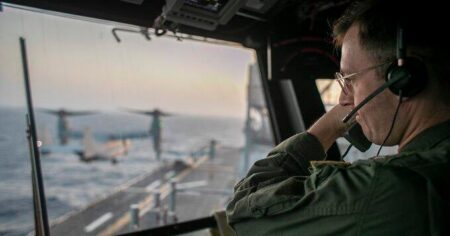
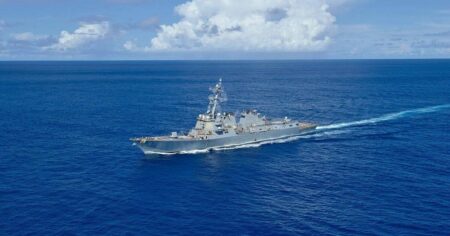
The operation currently underway in the Strait of Hormuz, dubbed “Project Freedom,” represents a substantial commitment of American military resources. General Caine disclosed that the mission involves approximately 15,000 U.S. service members—a significant force deployment that underscores how seriously Washington views the threat to international shipping. The naval component includes guided missile destroyers and other warships specifically tasked with detecting and neutralizing Iranian threats, whether they come from small “fast boats” laden with explosives, anti-ship missiles, or drones. Beyond the surface fleet, the operation includes an impressive air component featuring 100 attack aircraft along with numerous unmanned aerial vehicles. Remarkably, the entire operation is being coordinated by the 82nd Airborne Division, an Army unit more typically associated with rapid deployment ground operations than maritime security missions. Hegseth was careful to distinguish Project Freedom from “Operation Epic Fury,” another military initiative in the region, suggesting the U.S. is simultaneously managing multiple complex operations in this volatile area. His comment that “the world needs this waterway more than we do” reflects a broader truth: while the United States has reduced its dependence on Middle Eastern oil in recent years, its allies and the global economy remain heavily reliant on the approximately 20% of the world’s oil that normally flows through this strategic chokepoint.
Monday’s Dangerous Confrontation
The incident that prompted Tuesday’s Pentagon briefing unfolded on Monday when two U.S. Navy destroyers attempted to transit the Strait of Hormuz while escorting commercial vessels. According to defense officials, the American warships faced a coordinated attack involving both Iranian drones and missiles—a barrage that could have resulted in catastrophic casualties had it succeeded. U.S. Central Command reported that two American-flagged commercial vessels successfully made the passage as part of Project Freedom, but not without significant interference from Iranian forces. According to U.S. accounts, six or possibly seven Iranian boats attempted to block or attack the commercial ships, prompting American forces to open fire and destroy the threatening vessels. Predictably, Tehran and Washington offered conflicting narratives about what transpired. Iran’s state-run IRNA news agency flatly denied that any of its vessels were destroyed, claiming that none of its “fast boats” were lost in Monday’s engagement. This dispute over basic facts highlights the information warfare that accompanies the physical confrontations, with both sides shaping narratives for domestic and international audiences. President Trump, characteristically blunt, issued a stark warning during an interview with Fox News, declaring that Iran would be “blown off the face of the Earth” if the country continues to interfere with shipping in the Strait of Hormuz—rhetoric clearly intended to deter further Iranian aggression but which also raises the temperature in an already overheated situation.
Iran’s Strategy and Regional Implications
Iran’s attempts to control the Strait of Hormuz represent both a strategic chokehold and an act of desperation. Since hostilities escalated in late February, the strait has been largely closed to normal commercial traffic, disrupting global oil markets and demonstrating Tehran’s ability to inflict economic pain on the international community. For Iran, controlling this waterway provides leverage in negotiations and demonstrates that despite facing a technologically superior adversary, it possesses asymmetric capabilities that can’t be easily countered. Monday’s violence wasn’t limited to the strait itself. According to U.S.-allied sources, Iranian forces also fired at targets in the United Arab Emirates and attacked a tanker owned by Abu Dhabi’s state energy company. These strikes against Emirati targets represent a dangerous expansion of the conflict, threatening to draw additional regional players into the confrontation. The UAE, a close American ally that has normalized relations with Israel, represents the kind of regional partnership that Iran views as threatening to its interests. By attacking Emirati assets, Tehran is sending a message that American allies will pay a price for their cooperation with Washington. Iranian Foreign Minister Abbas Araghchi attempted to frame his country’s position in reasonable terms, arguing that Monday’s violence demonstrated “there’s no military solution” to the conflict and warning that the U.S. and its regional partners “should be wary of being dragged back into quagmire by ill-wishers.” This language suggests Iran is attempting to position itself as the reasonable party seeking to avoid escalation while simultaneously engaging in the very provocations that risk expanding the conflict.
An Uncertain Path Forward
The current situation presents both dangers and opportunities for diplomacy. Foreign Minister Araghchi indicated that negotiations between Tehran and Washington are “making progress,” suggesting that despite the violence, both sides recognize that a diplomatic resolution is preferable to indefinite military confrontation. President Trump extended the ceasefire indefinitely last month while negotiations continue toward a longer-term agreement, indicating some willingness to pursue a peaceful resolution. However, Trump’s weekend comments that Iran’s latest peace proposal likely wouldn’t be acceptable because “they have not yet paid a big enough price” suggest that the administration believes additional pressure—whether military, economic, or both—is necessary before a satisfactory agreement can be reached. This creates a dangerous dynamic where both sides are simultaneously negotiating and escalating, each trying to improve their bargaining position through shows of force. The risk, of course, is that one of these “limited” confrontations spirals beyond anyone’s ability to control it, transforming a manageable crisis into a full-scale war that neither side actually wants. The world watches nervously as naval forces maneuver in confined waters, knowing that a miscalculation, a technical malfunction, or simply bad luck could shatter the fragile ceasefire and plunge the region into a conflict with devastating humanitarian and economic consequences. For now, Project Freedom continues, American service members guide vulnerable commercial vessels through dangerous waters, and diplomats work behind the scenes to find an off-ramp from this confrontation—all while the ever-present possibility of renewed warfare looms over the Persian Gulf.