

Trump’s Social Media Posts Become Legal Ammunition Against His Own Administration
When Presidential Tweets Turn Into Courtroom Evidence
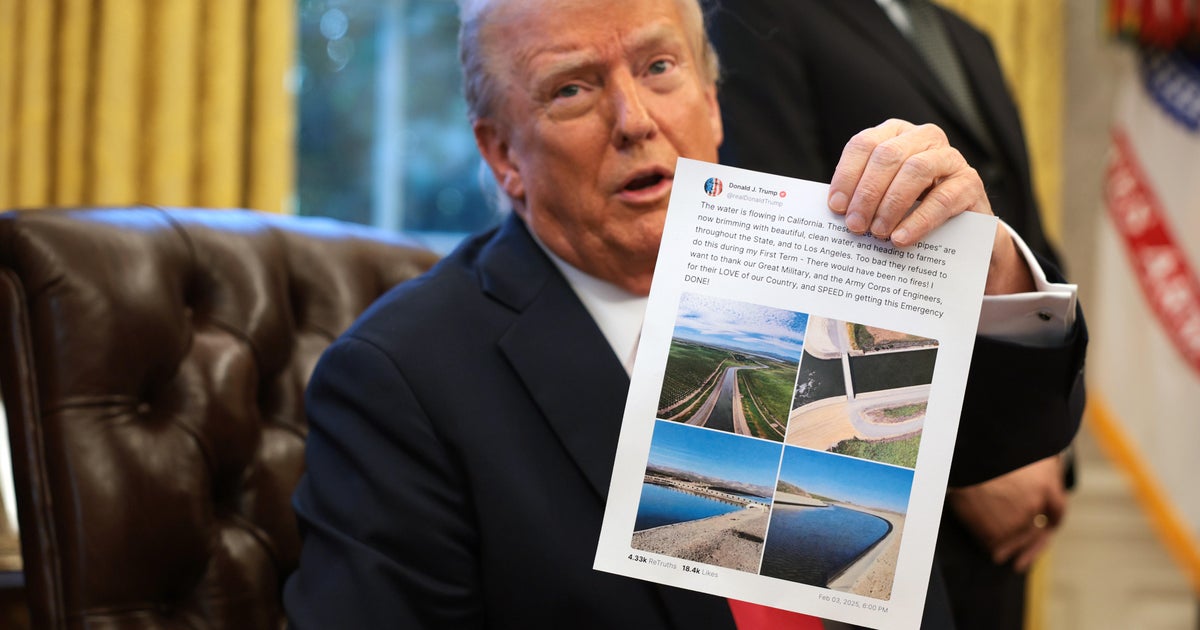
In an ironic twist of modern governance, President Trump’s well-documented love affair with social media is creating significant legal headaches for his own administration. Justice Department attorneys find themselves in the uncomfortable position of defending presidential policies while the president himself undermines their arguments with his unfiltered posts online. In at least a dozen cases among hundreds filed against the administration, federal judges have pointed directly to social media posts from Trump and his senior officials as evidence supporting rulings against the government. These posts have become a digital paper trail revealing motivations that contradict the official justifications provided by government lawyers in court, touching on everything from First Amendment violations to federal grant disputes and immigration policy.
The problem isn’t limited to off-the-cuff remarks or late-night musings. Trump’s posts have influenced decisions on major policy matters, including attempts to withhold federal benefits, fire government workers, and end deportation protections. Perhaps most dramatically, U.S. District Judge James Boasberg referenced over 100 Trump social media posts in his ruling blocking subpoenas issued to the Federal Reserve. After examining years of Trump’s public attacks on Fed Chairman Jerome Powell demanding lower interest rates, Boasberg concluded that “a mountain of evidence suggests that the dominant purpose is to harass Powell to pressure him to lower rates.” The judge determined the official justifications for the subpoenas were merely pretext—a legal finding that essentially called out the administration for dishonesty. While the U.S. Attorney’s Office in Washington eventually dropped the investigation into Powell, the damage to the administration’s credibility had been done, all thanks to the president’s own words.
Presidential Transparency or Legal Self-Sabotage?
Organizations challenging Trump administration policies have found an unexpected ally in the president’s communication style. “We say, let him keep talking. Let him keep tweeting,” declared Skye Perryman, president of Democracy Forward, a legal organization that has filed hundreds of lawsuits against the administration. “Because every time that the president engages in or his associates and administration officials engage in this type of brash rhetoric, it is often helping us in court and exposing for both the court and the American people that the administration is taking a range of actions that are motivated, often unconstitutionally motivated, by the president’s own viewpoint or retribution agenda.” This sentiment reflects a broader pattern where Trump’s desire to communicate directly with his base through social media conflicts dramatically with legal strategy.
A striking example came during a government shutdown when Trump’s administration suspended SNAP (food assistance) benefits. The president posted on Truth Social that benefits “will be given only when the Radical Left Democrats open up government, which they can easily do, and not before!” This post became central evidence in a lawsuit brought by Democracy Forward on behalf of small businesses and nonprofit organizations. U.S. District Judge John McConnell didn’t mince words in his ruling, writing, “This Court is not naïve to the administration’s true motivations. Far from being concerned with Child Nutrition funding, these statements make clear that the administration is withholding full SNAP benefits for political purposes. Such ‘unjustifiable partisanship’ has infected the USDA’s decision-making, rendering it arbitrary and capricious.” The judge essentially used Trump’s own declaration to prove the government was acting illegally.
The White House, however, frames the situation entirely differently. Spokesperson Abigail Jackson defended the president’s approach, stating, “The American people love and value President Trump’s transparency. His posts aren’t the problem — the problems are the unrelenting, unlawful rulings issued by lower court judges pushing their own policy agenda who are clearly triggered by President Trump’s agenda. President Trump will not waver when implementing the America First initiatives he was elected on.” This response reveals the fundamental tension at the heart of the issue: the administration values the political benefits of Trump’s direct communication style more than the legal complications it creates, viewing judicial pushback not as legitimate constitutional concerns but as partisan opposition.
Federal Funding as a Weapon and the First Amendment Consequences
Trump’s tendency to use federal funding as leverage against institutions he criticizes has created particular legal vulnerability. When his administration froze over $2 billion in grants to Harvard University, citing the school’s handling of antisemitism and treatment of Jewish students, the president’s social media posts told a different story. Trump had called Harvard a “joke” that “should no longer receive Federal Funds,” attacking the school for “hiring almost all woke, Radical Left, idiots and ‘birdbrains’ who are only capable of teaching FAILURE to students.” When Harvard sued, U.S. District Judge Allison Burroughs found that Trump’s posts, along with statements from other officials, “corroborate that the government-initiated onslaught against Harvard was much more about promoting a governmental orthodoxy in violation of the First Amendment than about anything else, including fighting antisemitism.” The ruling revealed that the stated justification—combating antisemitism—was undermined by the president’s own words showing viewpoint discrimination.
Similar First Amendment issues arose when Trump signed an executive order cutting funding to National Public Radio and the Public Broadcasting Service, claiming they engaged in biased reporting. Trump’s social media history provided clear evidence of his motivations, with posts calling them a “Radical Left Disaster, and 1000% against the Republican Party!” and “arms of the Radical Left Democrat Party.” U.S. District Judge Randolph Moss permanently blocked enforcement of the order, writing that it targeted the outlets for viewpoints Trump dislikes. “The President is entitled to criticize this or any other reporting, and he can express his own views as he sees fit,” Moss wrote. “He may not, however, use his governmental power to direct federal agencies to exclude Plaintiffs from receiving federal grants or other funding in retaliation for saying things that he does not like.” These cases illustrate how Trump’s social media presence has created documented evidence of unconstitutional viewpoint discrimination that would be difficult to prove otherwise.
Legal experts note that while out-of-court statements generally aren’t admissible in court, statements by an opposing party are an exception. In challenges against the Trump administration, these opposing party statements typically come from the president or senior officials. Nikhel Sus, chief counsel for Citizens for Responsibility and Ethics in Washington, explained that Trump’s maximalist view of presidential authority—claiming ultimate control over the entire executive branch—means his statements about administration actions would bind the Justice Department in litigation. “If the president is going to take a particular action and then he wants to speak to the American people through some social media channel or through the press in ways that are honest and the real reason behind a particular policy, even if they hurt the government’s legal case, I think that’s a good thing,” Sus said. “Because courts should not have to guess about why the president or the executive branch is taking a particular stance or adopting a particular policy.”
The Legal Legacy of January 6th and the 2020 Election
Trump’s social media problems aren’t new—they date back to his presidency and particularly to his posts surrounding the 2020 election and the January 6th Capitol attack. Civil lawsuits and the federal indictment related to that day relied heavily on Trump’s tweets repeating false claims about winning the 2020 election and alleging fraud in battleground states. Prosecutors and civil plaintiffs argued these posts deceived Trump’s supporters about the election outcome and incited the Capitol violence. While special counsel Jack Smith’s criminal prosecution ended after Trump won the 2024 election, a civil lawsuit has proceeded, with U.S. District Judge Amit Mehta recently evaluating nearly three dozen Trump tweets related to January 6th to determine whether they constituted official presidential conduct—an analysis necessitated by the Supreme Court’s 2024 ruling granting presidents immunity from prosecution for official acts.
Judge Mehta concluded that nearly all of Trump’s social media postings about the election fell outside his duties as president and were instead the unofficial actions of a candidate trying to hold onto office. This distinction matters enormously because it means Trump cannot claim presidential immunity for that conduct. The January 6th cases established a precedent for how courts would evaluate Trump’s social media presence in his second term—not as protected presidential communications but as evidence potentially demonstrating improper motivations, personal vendettas, or even illegal conduct. The comprehensive documentation Trump himself created through his prolific posting has provided an unprecedented record of a president’s thinking and motivations in real time, something historians might value but which lawyers defending his administration surely curse.
When a Truth Social Post Constitutes Official Notice
As Trump has continued using social media extensively in his second term, judges have grappled with a peculiar question: when does a social media post constitute an official presidential action? During a hearing about Trump’s decision to federalize Oregon National Guard members and send them to Portland, U.S. District Judge Karin Immergut questioned Justice Department lawyers skeptically: “Really? A social media post is going to count as a presidential determination that you can send the National Guard to cities? I mean, is that really what I should be relying on?” The president had announced the deployment via Truth Social, stating he was directing Defense Secretary Pete Hegseth to send troops to “protect war ravaged Portland, and any of our ICE facilities under siege from attack by Antifa, and other domestic terrorists.”
The question of social media posts as official notice became even more complicated in Trump’s attempt to fire Lisa Cook from the Federal Reserve Board of Governors. Trump posted on Truth Social that Cook “must resign, now!!!” with a link to an article about mortgage fraud allegations against her. Five days later, he shared a letter on Truth Social informing Cook she was fired. U.S. District Judge Jia Cobb found this process violated Cook’s due process rights, writing, “The Court is highly doubtful that Cook should have been required to piece together the evidentiary basis for a ‘for cause’ removal from a scattered assortment of social media posts and news articles. Even if the notice provided had been sufficient, Cook’s due process rights were nevertheless likely violated because she was not given a ‘meaningful opportunity’ to be heard.”
When the case reached the Supreme Court, multiple justices expressed skepticism about Truth Social as official notice. Justice Sonia Sotomayor told the Solicitor General, “This whole case is irregular, starting with the Truth Social notice or thinking of it as notice at all. It certainly didn’t invite an opportunity to be heard.” Justice Ketanji Brown Jackson pressed further, asking Cook’s lawyer, “Are you conceding that a posting on social media is sufficient notice in a situation like this when the president is seeking to remove a governor for cause?” She later questioned what would happen if Cook didn’t even have a Truth Social account. These exchanges reveal the judiciary’s struggle to adapt traditional legal concepts about official government action to Trump’s unconventional communication style. While the Supreme Court hasn’t yet ruled on whether Cook can keep her job, the justices appeared likely to reject Trump’s removal attempt, suggesting the highest court views Truth Social posts as insufficient for such serious official actions.
A New Normal: Administration Officials Follow the Leader
The problem extends beyond Trump himself. Senior administration officials have adopted similar social media habits, and their posts have also factored into judicial decisions against the government. When the Pentagon implemented restrictive new press policies, U.S. District Judge Paul Friedman ruled in favor of the New York Times, finding the rules discriminated based on viewpoint in violation of the First Amendment. Critical to his decision were social media posts from chief Pentagon spokesman Sean Parnell calling the New York Times and other outlets “Trump-hating” and “obsessed with destroying anyone committed to President Trump’s agenda.” Another Pentagon press team member called for “severe punishment” of Washington Post reporters on social media, while journalists who signed the new press policy received praise from officials online.
Judge Friedman wrote bluntly: “The undisputed evidence reflects the Policy’s true purpose and practical effect: to weed out disfavored journalists — those who were not, in the Department’s view, ‘on board and willing to serve,’ — and replace them with news entities that are. That is viewpoint discrimination, full stop.” Ted Boutrous, a lawyer who has litigated numerous First Amendment cases and represented the New York Times and NPR, noted that such posts provide direct evidence of viewpoint hostility. “It’s really a Trumpian characteristic in that putting hostility and viewpoint discrimination on the record is extremely rare,” he explained. “It’s very unusual and it’s very powerful.” The fact that administration officials feel comfortable publicly expressing such partisan hostility suggests a top-down culture where Trump’s communication style has been normalized throughout the executive branch, creating legal vulnerabilities at multiple levels.
Boutrous also observed that Trump’s use of social media for official announcements has become more pronounced in his second term, forcing courts to wrestle with interpretation. “He’s using Truth Social and these posts to make declarations and announce decisions as president, and so that’s where the courts seem to be going with these issues,” Boutrous told CBS News. “When that’s the chosen means of communication, then we should all be able to rely on them for better or worse.” This creates a fundamental challenge for the Justice Department: how do you defend administration actions when the president and his senior officials are simultaneously undermining your legal arguments in real time, in public, in ways that create permanent records admissible as evidence? The answer, increasingly, is that you can’t—at least not successfully. Trump’s presidency is establishing new precedents about how unfiltered presidential communication, while politically popular with his base, creates legal accountability that traditional, carefully managed White House communications were designed to avoid. Whether this represents healthy transparency or reckless governance likely depends on one’s perspective, but the legal consequences are undeniably real and mounting.