


Ohio and Indiana Primary Elections: What’s at Stake This Tuesday
Trump’s Unprecedented Involvement in Indiana State Senate Races
In an unusual display of presidential attention to local politics, former President Donald Trump has become deeply involved in Indiana’s state senate primary races—a level of engagement that political experts say is virtually unprecedented in American political history. According to Ball State University professor Chad Kinsella, no one can recall another instance where a sitting or former president has devoted this much energy to state legislative contests. The reason for Trump’s interest traces back to last year when Indiana considered redrawing its congressional map to create a Republican sweep of all nine congressional districts. Currently, the state maintains a 7-2 split between Republicans and Democrats. Despite intense pressure from the White House, twenty-one Republican state senators stood firm against the redistricting plan, facing doxxing attempts and threats of violence for their resistance.
Now those senators are facing consequences for their independence. Of the twenty-five state senators up for reelection on Tuesday due to Indiana’s staggered election system, seven who voted against redistricting are running again. Trump and Indiana Governor Mike Braun have thrown their support behind primary challengers for each of these incumbents, transforming what would typically be sleepy local races into high-stakes political battles. The former president’s endorsements have opened the floodgates of money from allied groups supporting the challengers, while the Indiana Senate Republican Caucus has responded by pouring more resources into these races than were spent in all of 2022 combined. The intensity of this political warfare demonstrates how Trump continues to reshape the Republican Party in his image, punishing those who don’t fall in line with his agenda, even at the state legislative level.
Local Politics Meets National Influence in Indiana
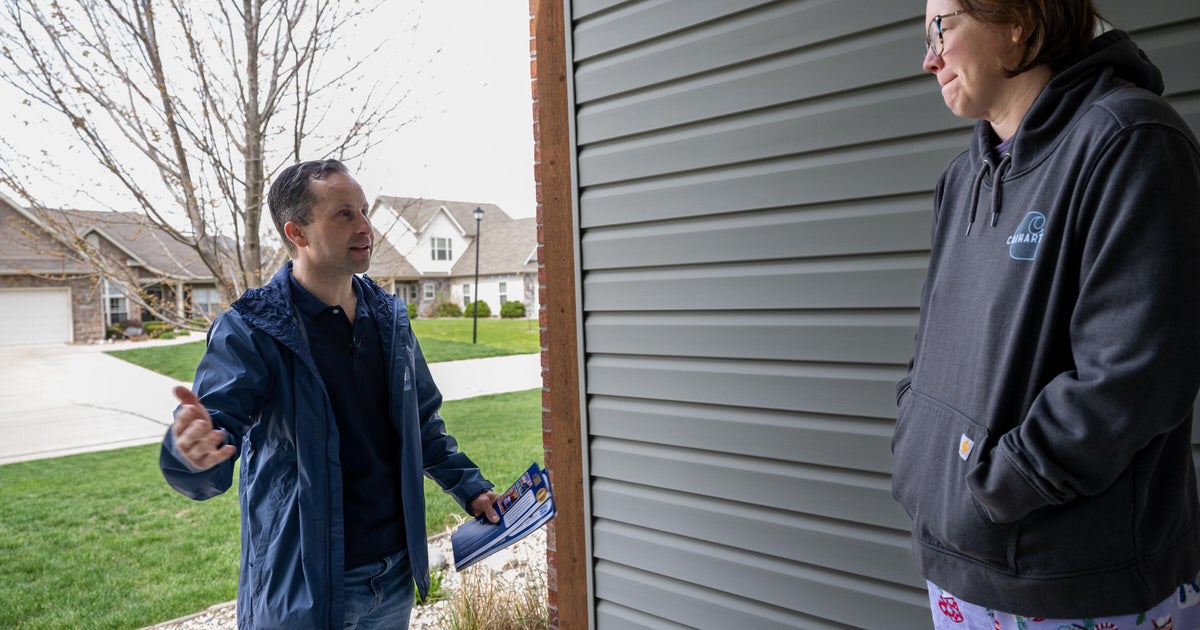
The dynamics playing out in these Indiana state senate races reveal the tension between local governance and national political influence. Indiana State University professor Matthew Bergbower has observed this firsthand in his own district, where the Trump-backed challenger Brenda Wilson’s entire campaign messaging centers on the former president’s endorsement. In contrast, incumbent state Senator Greg Good has accumulated endorsements from numerous local organizations, presenting himself as a hometown candidate focused on community needs rather than national political vendettas. Bergbower characterizes the race as a classic matchup between “a local candidate poster child” and “a one-trick pony, nationalized candidate” whose sole qualification appears to be Trump’s blessing.
Beyond these individual races, Trump has set his sights on Indiana State Senate President Rodric Bray, though Bray won’t face voters until 2028. The former president’s goal is to see enough Trump-aligned challengers win on Tuesday to potentially threaten Bray’s leadership position, effectively staging a slow-motion coup within the Indiana state legislature. However, political scientists suggest that Trump’s influence may have limits. Professor Kinsella notes that while Republican primary voters lean further right than the general electorate and may want to support Trump, state senate races appear so far down the ballot and are so disconnected from typical national political conversations that voters might simply forget to check who Trump endorsed—or may not take the time to find out. This disconnect between national celebrity endorsements and local voter priorities could prove to be the saving grace for the incumbent senators who dared to stand against the redistricting pressure.
Ohio’s Senate Race Could Determine Chamber Control
Ohio’s Tuesday primary will set the stage for what could become a pivotal battle for control of the United States Senate. Former Democratic Senator Sherrod Brown, who lost his reelection bid in 2024 to Republican Bernie Moreno, is mounting a comeback campaign that has energized Democrats across the country. Brown’s entrance into the race represented a major recruiting victory for Democrats, who see a genuine opportunity to flip this seat despite Ohio’s increasingly Republican tilt in recent years. Brown must first navigate Tuesday’s primary against political newcomer Ron Kincaid, though he’s heavily favored to secure the Democratic nomination.
The winner will face Senator John Husted, the former Ohio lieutenant governor who was appointed to fill Vice President JD Vance’s seat after Vance joined the Trump administration last year. Democrats view this race as particularly competitive because Brown demonstrated surprising strength even in defeat during the 2024 election. He lost by less than four percentage points in a state that President Trump carried by more than ten points—a remarkable performance that suggests Brown’s personal brand and working-class appeal transcends typical partisan divisions. Now, with the potential for midterm momentum working in Democrats’ favor (as the party out of power in the White House typically gains ground in midterm elections), strategists believe Brown has a genuine shot at reclaiming his old seat and potentially providing Democrats with the vote they need to flip Senate control.
Battle for Ohio’s 9th Congressional District Intensifies
One of the most closely watched House races on Tuesday’s ballot involves Ohio’s 9th Congressional District, where five Republican candidates are competing for the opportunity to challenge Democratic Representative Marcy Kaptur in November. Kaptur holds a special place in congressional history as the longest-serving woman ever to serve in Congress, having represented this northwestern Ohio district since 1983. However, her political position has become increasingly precarious following an October 2025 redistricting that reshaped the district to favor Republican candidates. The new boundaries made what was once a safely Democratic seat into a genuine swing district, fundamentally altering the electoral landscape.
Kaptur barely survived her 2024 reelection campaign, narrowly defeating Derek Merrin, a former state representative, in one of that year’s most competitive contests. Now Merrin is back for a rematch, determined to finish what he started. He faces four other Republicans in Tuesday’s primary: state Representative Josh Williams, former Immigration and Customs Enforcement official Madison Sheahan, healthcare data scientist Anthony Campbell, and Air Force veteran Alea Nadeem. Whoever emerges victorious will immediately become a top-tier challenger to Kaptur, who despite her decades of experience and deep constituent relationships, faces the harsh reality that the district’s new Republican lean makes her vulnerable. This race exemplifies how redistricting can fundamentally alter political careers and why state-level battles over congressional maps—like the one Indiana Republicans tried to wage last year—carry such enormous consequences for federal representation.
Ohio’s Gubernatorial Contest: Ramaswamy vs. Acton
Ohio’s gubernatorial race has effectively been decided on the Republican side before voters even cast their ballots. Biotech billionaire Vivek Ramaswamy, who ran an attention-grabbing presidential campaign in 2020 based on his outspoken conservative views and business background, has secured both President Trump’s endorsement and the backing of the Ohio Republican Party to succeed term-limited Governor Mike DeWine. Ramaswamy’s political celebrity and financial resources have effectively cleared the Republican field. Attorney General Dave Yost withdrew from the race in May 2025, candidly acknowledging he faced a “vertical cliff” in trying to compete against Ramaswamy’s advantages. Similarly, Lieutenant Governor Jim Tressel, a legendary former Ohio State University football coach who might have leveraged his popularity in this football-obsessed state, opted not to enter the race at all.
Only one challenger remains: Casey Putsch, a business owner who markets himself as “The Car Guy,” though he’s given little chance of derailing Ramaswamy’s nomination. The real contest will come in November when Ramaswamy faces Democrat Amy Acton, who served as Ohio’s director of public health and became a controversial figure during the COVID-19 pandemic. Acton faces no primary opposition and will carry the Democratic banner in what promises to be a fascinating general election matchup. The race will test whether Ramaswamy’s brand of bombastic, Trump-aligned conservatism can win in a state that has trended increasingly Republican but still maintains some competitive statewide races. It will also determine whether Acton’s healthcare expertise and policy-focused approach can appeal to moderate voters who may be uncomfortable with the direction of both major parties. As Ohio continues its political evolution from swing state to Republican-leaning territory, this gubernatorial contest will provide important signals about where the state’s electorate stands heading toward the 2028 presidential election.