

The Remarkable Life and Legacy of Ted Turner: A Media Pioneer’s Journey
A Visionary Who Changed How the World Consumes News
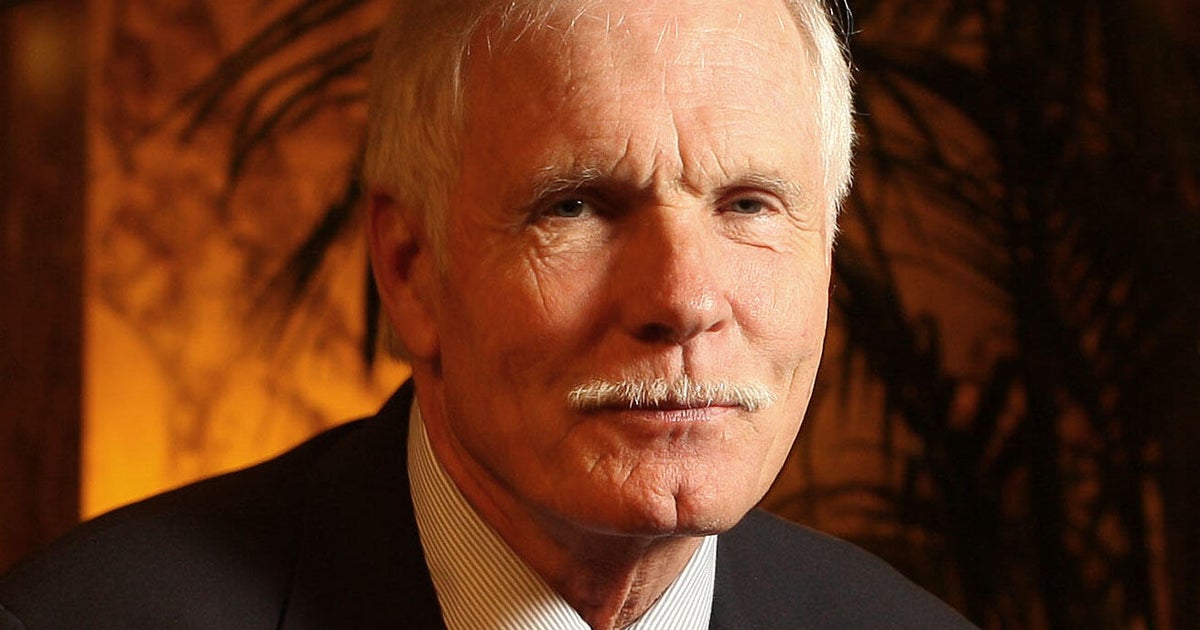
Ted Turner, the legendary media mogul who revolutionized broadcast journalism and built an entertainment empire that reshaped American culture, passed away peacefully on Wednesday at the age of 87. Surrounded by his family, Turner succumbed to complications from Lewy body dementia, a progressive neurological disorder he had been courageously battling since revealing his diagnosis in 2018. His company, Turner Enterprises, confirmed his death in an official statement, marking the end of an era for one of broadcasting’s most influential and colorful figures. Turner’s passing represents not just the loss of a business titan, but the departure of a true American original whose bold vision and fearless approach to innovation left an indelible mark on media, sports, conservation, and philanthropy. CNN Chairman and CEO Mark Thompson captured the sentiment of many when he described Turner as “an intensely involved and committed leader, intrepid, fearless and always willing to back a hunch and trust his own judgement.” Thompson’s words ring particularly true for anyone familiar with Turner’s extraordinary career, which was built on calculated risks, unconventional thinking, and an unwavering belief in his own instincts. Even President Trump, who has frequently criticized CNN in recent years, paused to honor Turner’s contributions, calling him “one of the Greats of Broadcast History, and a friend of mine,” though he couldn’t resist adding criticism about CNN’s direction after Turner’s departure from leadership. Turner’s legacy as the founder of CNN alone would secure his place in history, but his influence extended far beyond the 24-hour news cycle he pioneered in 1980, touching everything from professional sports to environmental conservation.
The Birth of CNN and the 24-Hour News Revolution
When Ted Turner launched CNN in 1980, skeptics dismissed it as a pipe dream destined for failure. The concept of a television network dedicated exclusively to news, broadcasting around the clock, seven days a week, seemed financially unsustainable and unnecessary to industry insiders who couldn’t imagine viewers wanting constant access to current events. But Turner, true to his contrarian nature, saw what others couldn’t: a world hungry for immediate information, unwilling to wait for the evening news broadcast to learn what was happening across the globe. His vision proved not just viable but transformative, fundamentally altering how people around the world consume information and establishing a template that would be copied countless times over the following decades. CNN became more than just a news channel; it became a cultural touchstone, the default destination during major breaking news events, and a powerful force in shaping public discourse. Thompson’s statement that Turner “was and always will be the presiding spirit of CNN” acknowledges that while the network has evolved and changed hands over the years, its DNA remains imprinted with Turner’s bold, innovative approach to journalism. Turner himself was immensely proud of CNN, viewing it as perhaps his greatest professional achievement, though characteristically, he approached its creation with the same adventurous spirit he brought to everything else in his remarkable life. The network’s success spawned an entire media empire that included entertainment channels like TBS, TNT, and Turner Classic Movies, each of which became a dominant force in their respective niches, proving that Turner’s golden touch extended beyond news into entertainment and culture more broadly.
A Man of Many Facets: Adventurer, Sportsman, and Risk-Taker
Ted Turner was far more than a media executive; he was a genuine adventurer whose appetite for challenge and competition extended well beyond the boardroom. In 1977, he personally skippered the yacht Courageous to victory in the America’s Cup, bringing the prestigious yachting trophy back to the United States and earning international recognition as a world-class sailor. This wasn’t merely a wealthy man’s hobby—Turner was intimately involved in the racing, demonstrating the hands-on approach that characterized all his endeavors. His ownership of professional sports teams further illustrated his competitive spirit and his deep connection to his adopted home of Atlanta. He owned the Atlanta Hawks basketball team for 19 years and the Atlanta Braves baseball team for 20 years, during which time the Braves achieved their crowning glory by winning the 1995 World Series. Turner was known as a passionate, involved owner who genuinely cared about his teams’ success, not merely as business investments but as civic institutions that mattered to their communities. His personality was as outsized as his ambitions—a hard-drinking, cigar-smoking figure who earned colorful nicknames like “The Mouth From The South” and “Captain Outrageous” for his tendency to make provocative, off-color remarks that kept him perpetually in the headlines. As he told CBS’s “60 Minutes” in 1979, “I’m a lot of different people, if you don’t know that by now. I’m a multifaceted person. I’ve got a lot of different personalities. You ought to see me at midnight on a full moon.” This self-awareness about his complex, sometimes contradictory nature made Turner both fascinating and, for some, frustrating. He could be as unlikable as he was invincible, depending on who you asked and when you asked them, but no one could deny his impact or his authenticity.
Financial Highs and Lows: The AOL Time Warner Debacle
For all his business acumen and visionary thinking, Turner was not immune to devastating financial setbacks. As the largest individual shareholder of AOL Time Warner in the early 2000s, he suffered staggering losses when the dot-com bubble burst, watching his paper wealth evaporate at a rate that would have crushed most people. During a 2008 “60 Minutes” interview with Morley Safer, Turner displayed characteristic nonchalance about the magnitude of his losses, casually admitting, “I get thousands, millions and billions mixed up,” while trying to recall whether he’d lost nearly a million dollars a day or $10 million a day for two and a half years. (The answer was the latter—$10 million per day, a sum that defies most people’s comprehension.) This catastrophic financial hit came after Turner had sold his media empire to what became AOL Time Warner, a merger that many analysts would later cite as one of the worst corporate combinations in business history. Yet even this devastating loss didn’t fundamentally change Turner’s spirit or his commitment to the causes he cared about most. His resilience in the face of financial adversity demonstrated the same fortitude he’d shown throughout his career when facing skeptics and naysayers. Turner had built his fortune by taking bold risks, and he understood better than most that great risk sometimes leads to great loss. The experience humbled him somewhat, but it didn’t break him, and he continued to focus his energy and remaining resources on projects that mattered to him, particularly environmental conservation and his extensive landholdings dedicated to preserving endangered species and natural habitats.
Love, Loss, and the Human Side of a Media Titan
Behind the brash public persona and the billion-dollar deals, Ted Turner was a man who experienced profound love and heartbreaking loss. He married three times, but his most famous and perhaps most meaningful relationship was his decade-long marriage to actor and activist Jane Fonda, which lasted from 1991 to 2001. Their union brought together two larger-than-life personalities, both known for their strong convictions and willingness to court controversy. Though the marriage ultimately ended, Turner never stopped loving Fonda, as he openly admitted in a remarkably vulnerable 2012 interview with CNN. “When you love somebody, and you really love ’em, you never stop loving ’em,” he said, acknowledging that Fonda was probably the great love of his life, that he hadn’t gotten over her, and that he doubted he ever would. This emotional honesty from a man better known for bravado and business deals revealed a depth of feeling that complicated and enriched the public’s understanding of who Ted Turner really was. His battle with Lewy body dementia, which he disclosed to CBS’s Ted Koppel in 2018, further showed his humanity and vulnerability. Describing it as “a mild case of what people have as Alzheimer’s—it’s similar to that, but not nearly as bad,” Turner faced this diagnosis with the same directness he’d brought to every other challenge in his life. The progressive nature of the disease eventually claimed him, but not before he’d lived a life fuller and more impactful than most people could imagine. His willingness to discuss his condition publicly helped raise awareness about Lewy body dementia, benefiting countless families facing similar diagnoses.
An Environmental Legacy That May Outlast Everything Else
While Ted Turner will forever be remembered as the founder of CNN and a media revolutionary, he often seemed most proud of his environmental conservation work, particularly his efforts to save the American bison and preserve vast tracts of wild land. Turner became one of the largest private landowners in the United States, not for profit or development, but for preservation and restoration. He devoted hundreds of thousands of acres to creating habitats where endangered species, especially the American bison, could thrive and multiply. His ranches across the American West became sanctuaries where these magnificent animals, once hunted nearly to extinction, could roam freely as they had centuries before. Turner understood that true wealth wasn’t measured solely in dollars and cents but in the legacy we leave for future generations. He saw himself not as an owner of these lands but as a temporary caretaker, often saying that we don’t really own anything—we just borrow it for a while. This philosophical approach to stewardship represented a profound shift from the conquering, development-focused attitude that had characterized much of American westward expansion. In many ways, Turner’s conservation work may prove to be his most enduring legacy, outlasting even CNN and his media empire. Long after the news cycles have moved on and television technology has evolved beyond recognition, the wild places Turner protected and the species he helped save will continue to exist, living monuments to a man who understood that some things matter more than ratings, revenue, or recognition. His multifaceted legacy—as innovator, competitor, conservationist, and flawed human being—makes Ted Turner one of the most fascinating American figures of the late 20th century, a true original whose impact will be felt for generations to come.