


Rise: The Plush Toy That Captured Hearts on Humanity’s Journey Around the Moon
A Second Grader’s Dream Takes Flight
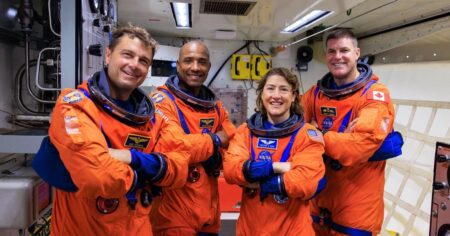
When the four brave astronauts of Artemis II prepared to return to Earth on Friday after their historic journey around the far side of the moon, they brought with them more than just scientific data and breathtaking photographs. Nestled among their equipment was Rise, a small plush toy that became an unlikely star of the mission. But Rise wasn’t just any stuffed animal—this adorable mascot served a critical function as a zero-gravity indicator while capturing the imagination of millions watching from Earth. The story of how Rise came to be part of this groundbreaking mission begins over a year before launch, with a young boy’s creativity and NASA’s innovative approach to engaging the public in space exploration. In March 2025, NASA partnered with Freelancer, the world’s largest crowdsourcing platform, to create something special: a design competition that would give ordinary people a chance to contribute to an extraordinary mission. The challenge was deceptively simple yet remarkably complex—create a mascot that could float alongside astronauts while meeting NASA’s stringent safety requirements.
The Challenge of Creating a Space-Worthy Companion
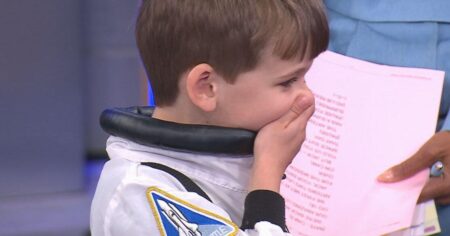
The parameters for designing Rise were as demanding as they were specific, reflecting the exacting standards required for anything that travels to space. Contestants faced a puzzle that would test both their creativity and practical design skills. The mascot had to be compact enough to fit within a 6x6x6-inch box and light enough to weigh no more than 12 ounces—restrictions that immediately eliminated many conventional toy designs. Beyond size and weight, designers could only use specific materials approved for spaceflight, materials that wouldn’t off-gas in the vacuum of space or pose any hazard to the crew or sensitive equipment. But perhaps the most challenging requirement was the conceptual one: the design had to “represent humanity, exploration, and the spirit of the Artemis campaign.” This meant the winning design needed to be more than cute or clever; it had to embody the hopes and dreams of everyone on Earth looking up at the stars. For second-grader Lucas Ye, these challenges were intimidating but not insurmountable. His initial ideas, as he later admitted, “didn’t really work out.” But after “some brainstorming,” that magical moment of inspiration struck, and the design that would become Rise began to take shape in his young imagination.
Every Detail Tells a Story
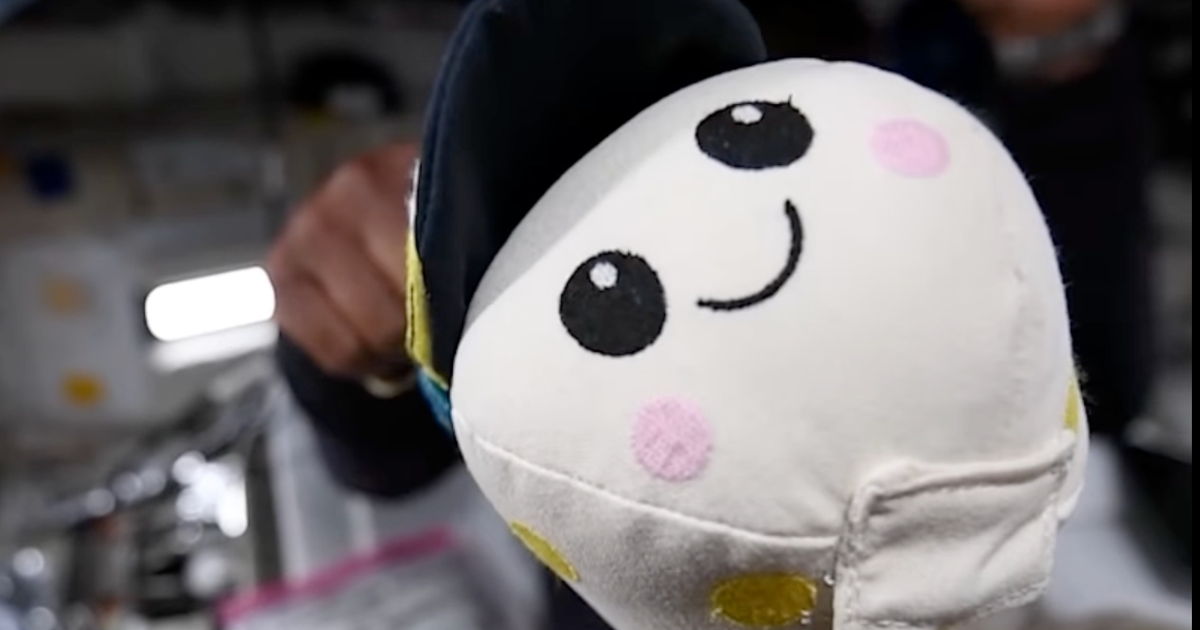
What ultimately set Lucas’s design apart from thousands of others was its thoughtful incorporation of space history into every element. The final design of Rise is a masterclass in meaningful symbolism, with each feature carefully chosen to honor the legacy of space exploration. The round white body represents the moon itself, humanity’s first destination beyond Earth and the target of the Artemis II mission’s historic flyby. On the back, a tiny footprint pays tribute to Neil Armstrong’s iconic first steps on the lunar surface in 1969—a moment that defined a generation and proved that humanity could reach beyond our planetary bounds. The cap adorning Rise’s head draws inspiration from one of the most powerful images ever captured: the “Earthrise” photograph taken during the Apollo 8 mission, showing our blue planet rising above the moon’s desolate horizon. This image fundamentally changed how humanity viewed itself, revealing our world as a fragile oasis in the vast darkness of space. The visor and brim of Rise’s cap feature decorative elements depicting a galaxy and rockets, celebrating both the vastness of what we explore and the machines that carry us there. Even the constellation Orion makes an appearance in the design—a fitting tribute since Orion is the name of the spacecraft capsule that carried the Artemis II crew on their journey. Lucas didn’t just sketch his design on paper; he took the initiative to build a prototype himself, demonstrating the hands-on problem-solving spirit that defines great explorers and engineers.
From Thousands of Dreams to One Winner
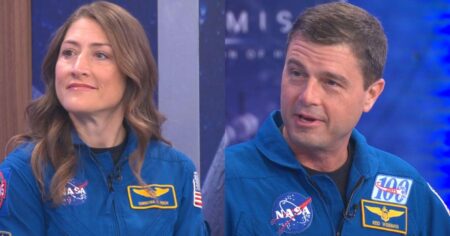
When the submission period closed in June 2025, Freelancer faced the monumental task of reviewing 2,605 entries from more than 50 countries. The response demonstrated the universal appeal of space exploration and the hunger people around the world feel to participate in humanity’s greatest adventures. In August, the field was narrowed to 25 finalists, including Lucas’s Rise. At that stage, Lucas told Freelancer that if Rise was actually selected, he would feel “hyperactive”—an endearingly honest reaction that any parent or teacher would recognize. The competition then intensified as five designs were shortlisted for final consideration. But the ultimate decision didn’t rest with Freelancer executives or NASA administrators; it belonged to the four astronauts who would actually travel with the mascot into space. In a behind-the-scenes video documenting the selection process, Artemis II pilot Victor Glover acknowledged it was a “difficult decision.” Mission specialist Christina Koch explained that Rise’s thoughtful historical references became the deciding factor. “It was a design inspired by the Earthrise photo taken on Apollo 8, which is very special to our crew,” Koch said. That connection became even more poignant when the Artemis II crew captured their own “Earthset” image during the mission—a mirror of that iconic Apollo 8 photograph, showing Earth setting below the moon’s horizon as seen from the far side of our natural satellite.
Crafting a Mascot for Space
Once Rise was selected, the design had to be transformed from Lucas’s prototype into a space-worthy reality. This task fell to NASA’s Thermal Blanket Lab at the Goddard Space Flight Center in Greenbelt, Maryland—a facility that typically builds custom materials to protect fragile scientific equipment from the extreme temperatures and harsh conditions of space. Technician Pamela Cain took on the responsibility of bringing Rise to life, using a combination of machine and hand-sewing techniques to ensure every stitch met NASA’s exacting safety standards. The mascot couldn’t shed fibers that might float into sensitive equipment, couldn’t contain materials that might become hazardous in zero gravity, and had to withstand the forces of launch and the extreme conditions of spaceflight. Cain also incorporated a special pocket into Rise’s design to hold a micro SD card containing more than 5.6 million names submitted through NASA’s “Send Your Name with Artemis” campaign. This meant that Rise literally carried the hopes and dreams of millions of people along on the journey, making the plush toy a vessel for humanity’s collective aspirations to explore the cosmos.
A Symbol of Inspiration Returns Home
On April 1st, Rise was carefully tethered inside the Orion capsule alongside the four Artemis II astronauts, beginning an adventure that would take the plush toy farther from Earth than any similar object had ever traveled. Lucas and his family watched the launch from the Kennedy Space Center, witnessing the culmination of his creative efforts in the most spectacular way imaginable. “We never thought we got an opportunity to be part of this mission,” Lucas’s father told Freelancer, his voice surely filled with emotion. “This is really meaningful to us, especially [since] Lucas has such a passion about space and rockets. It’s a very meaningful project for the whole family.” As the mission progressed, Rise became an internet sensation, floating through videos taken aboard Artemis II and capturing hearts around the world. The image of the cheerful plush toy floating in weightlessness became a symbol of the joy and wonder of space exploration, reminding viewers that even humanity’s most advanced technological achievements can have a playful, accessible side. On Monday, the Artemis II crew set a record for the farthest humans have ever traveled from Earth, carrying Rise along as they pushed the boundaries of human exploration. As the crew returns to Earth on Friday, Rise will serve its practical purpose one final time, floating free in the capsule until the moment when increasing gravity pulls it downward, signaling to the astronauts that they’re returning to Earth’s embrace. While Freelancer hasn’t specified what will happen to Rise after the Orion capsule splashes down in the Pacific Ocean, the mascot has already secured its place in history. For Lucas, the experience has crystallized a dream for his future: to “work at NASA” and “be an astronaut.” In this way, Rise represents not just the past and present of space exploration, but its future—a future that may well include a young designer who once created a plush toy that traveled to the moon.