
Navigating Airport Security During the Government Shutdown: A Traveler’s Guide
Understanding the Current TSA Crisis and Its Impact on Your Travel Plans
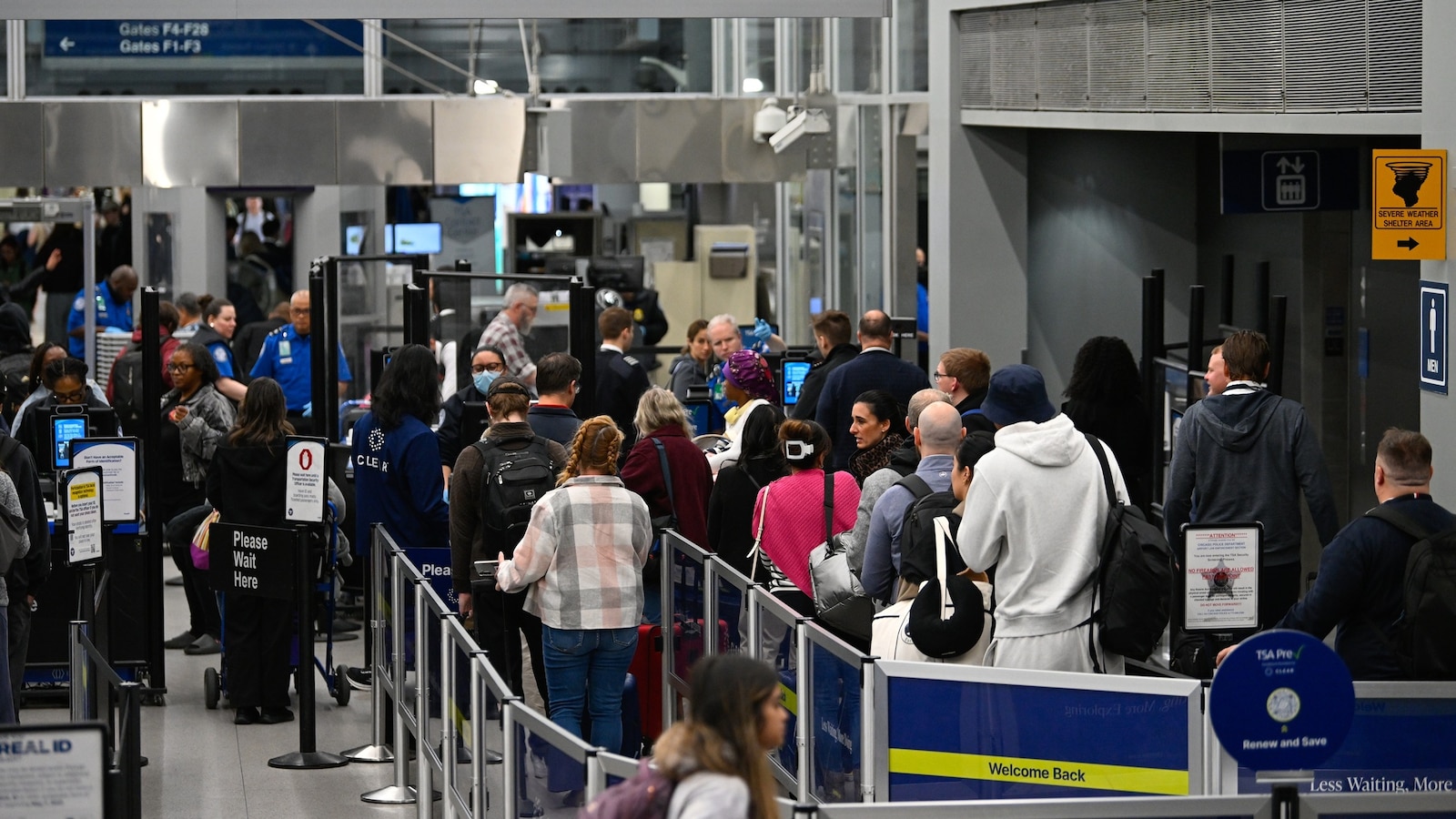
The partial government shutdown has created a perfect storm of challenges for American air travelers, particularly as the busy spring break season reaches its peak. With approximately 60,000 Transportation Security Administration (TSA) agents working without paychecks, the situation at airports across the country has become increasingly difficult. The strain on the system is evident in the troubling statistics: on March 14, 2026, Houston Hobby International Airport experienced a staggering 55% callout rate among TSA workers—the highest single-day spike reported by the Department of Homeland Security. Since the shutdown began just last month, more than 300 TSA officers have already left the agency entirely, according to statistics obtained by ABC News. This exodus of security personnel, combined with the millions of travelers moving through airports during one of the busiest travel periods of the year, has created a situation where security wait times can stretch for several hours at some locations. For anyone planning to fly in the coming weeks, understanding how to navigate these challenges has shifted from being merely helpful to absolutely essential for ensuring you make your flight on time.
Where to Find Accurate Security Wait Time Information
In normal circumstances, checking airport security wait times would be straightforward, but the government shutdown has complicated even this basic task. The official My TSA app, which traditionally provided travelers with security line wait-time updates based on historical data and user reports, now displays a warning message stating, “Due to the lapse in federal funding, this website will not be actively managed.” This means the information on the federal app doesn’t accurately reflect the rapidly changing on-ground conditions caused by staffing fluctuations. So where should concerned travelers turn for reliable information? Travel experts like Katy Nastro from Going.com strongly recommend that travelers “check airport websites directly” instead of relying on federal resources. Many individual airports maintain their own websites with terminal-specific wait times that are updated more frequently than federal apps could manage even under normal circumstances. Major airport hubs including Atlanta, Dallas-Fort Worth, Denver, and the three major New York metropolitan area airports—LaGuardia, John F. Kennedy International Airport, and Newark Liberty International Airport—all offer real-time updates on their websites. For example, JFK’s official website displays current security wait time information that travelers can check before leaving for the airport. Beyond official airport websites, Nastro also advises travelers to monitor airport social media accounts for live updates and to check whether your departure airport is trending on social media platforms—though she warns that “it may not be for a good reason,” suggesting that trending airports might be experiencing significant problems.
Smart Strategies: Arriving Earlier and Using Your Time Wisely
The most straightforward advice for navigating the current airport security crisis is also the most important: give yourself significantly more time than you normally would. Travel expert Zach Griff, who addressed the airport security line issues in his From the Tray Table newsletter, strongly encourages travelers “to arrive at least 15 to 20 minutes earlier than their typical schedule.” While this might seem like a minor adjustment, those extra minutes can make the difference between making your flight comfortably and sprinting to your gate in a panic—or worse, missing your flight entirely. This recommendation applies to all travelers, but it’s particularly crucial during the current shutdown when wait times can fluctuate wildly from hour to hour based on staffing availability. The unpredictability of the situation means that even if you check wait times before leaving home, conditions at the airport might have changed significantly by the time you arrive. Building in that extra cushion of time provides insurance against these unexpected variations. For families traveling with children, the advice is even more critical, as navigating security with kids invariably takes longer than traveling alone. Parents should plan for additional time beyond even the recommended buffer, accounting for the extra steps involved in getting children, strollers, car seats, and all the accompanying gear through security screening.
Expedited Screening Options: TSA PreCheck, CLEAR, and Touchless ID
For travelers looking to minimize their time in security lines, expedited screening services remain operational and can provide a significant advantage during the current crisis. TSA PreCheck and CLEAR services continue to function and typically offer substantially shorter wait times compared to standard security lines. Griff particularly recommends that travelers consider enrolling in TSA PreCheck “and especially the Touchless ID solution,” which represents the cutting edge of airport security technology. Touchless ID allows TSA PreCheck-verified travelers to move through security screening with remarkable efficiency—they simply show up in the security line and take a quick picture of their face, with no physical ID required during the normal screening process. To take advantage of Touchless ID, ticketed passengers must opt into the program with each individual airline and upload passport information tied to their TSA PreCheck membership. Nastro echoes this recommendation, noting that “most major carriers offer this now, and it can be a game-changer” for frequent travelers. However, both experts emphasize important caveats about these expedited services. Griff notes that Touchless ID “doesn’t work for families,” reminding parents to still plan for longer wait times even if they personally have access to expedited screening. Additionally, the TSA website clearly states that travelers must still carry a physical ID with them, even when enrolled in TSA PreCheck and Touchless ID, in case their identity “cannot be verified by the biometric technology at the security checkpoint.” Nastro also warns that expedited lanes have been reported closed at certain airports from time to time during the shutdown, meaning travelers cannot always count on these services being available.
Innovative Solutions: The Spot Saver and Reserve Programs
Beyond traditional expedited screening services, some airports have implemented innovative programs that allow travelers to essentially make an appointment for their security screening time. The Spot Saver or Reserve program enables passengers to pre-book a specific time slot to enter the security line, bringing the concept of scheduled appointments to airport security. Currently, this service is offered free to passengers flying out of several major airports: JFK Terminal 4, Seattle-Tacoma International Airport, Minneapolis-St. Paul International Airport, Phoenix Sky Harbor International Airport, and Orlando International Airport. The program works by allowing passengers to sign up for an appointment slot up to six days in advance of their departure date, giving them a guaranteed entry time into the security screening process. While availability is limited and depends on how many other travelers have already reserved slots, this option can provide tremendous peace of mind for travelers who are particularly concerned about missing their flights due to long security lines. For business travelers with tight schedules or families trying to manage the logistics of traveling with children, knowing exactly when you’ll enter the security line removes a significant source of stress from the travel experience. Even if your departure airport doesn’t currently offer this program, it’s worth checking periodically, as more airports may add similar services in response to the ongoing security challenges.
Preparing for Uncertainty: Final Recommendations for Smooth Travel
As the government shutdown continues with no clear resolution in sight, travelers should prepare for ongoing uncertainty and unpredictability at airports nationwide. Beyond the specific tactics already discussed—checking wait times, arriving early, using expedited services, and considering appointment-based screening—there are additional steps travelers can take to protect themselves from disruption. First, consider building even more flexibility into your travel plans if possible. If you have the option to choose your flight time, early morning departures often experience shorter security lines because fewer travelers are at the airport and because TSA staffing tends to be more consistent at the start of the day before fatigue and callouts accumulate. Similarly, flying on less popular travel days—typically Tuesday, Wednesday, and Saturday—can help you avoid the worst crowds and longest lines. Second, stay informed about the broader situation by following travel news and understanding how the shutdown might evolve. If the funding impasse continues, conditions could deteriorate further, while a resolution could quickly improve the situation. Third, maintain realistic expectations and patience. The TSA agents who are showing up to work are doing so without pay, often facing frustrated crowds and difficult working conditions. Treating these essential workers with courtesy and respect isn’t just the right thing to do—it can also help the security process move more smoothly for everyone. Finally, have a backup plan for critical travel. If you absolutely must reach your destination for an important business meeting or family event, consider booking an earlier flight than you need or even traveling a day ahead to ensure you arrive on time. While these challenges are frustrating for everyone involved, with proper planning and realistic expectations, travelers can successfully navigate airport security even during this difficult period.