


City Councilor’s Home Attacked in Dispute Over Data Center Development
A Terrifying Night in Indianapolis
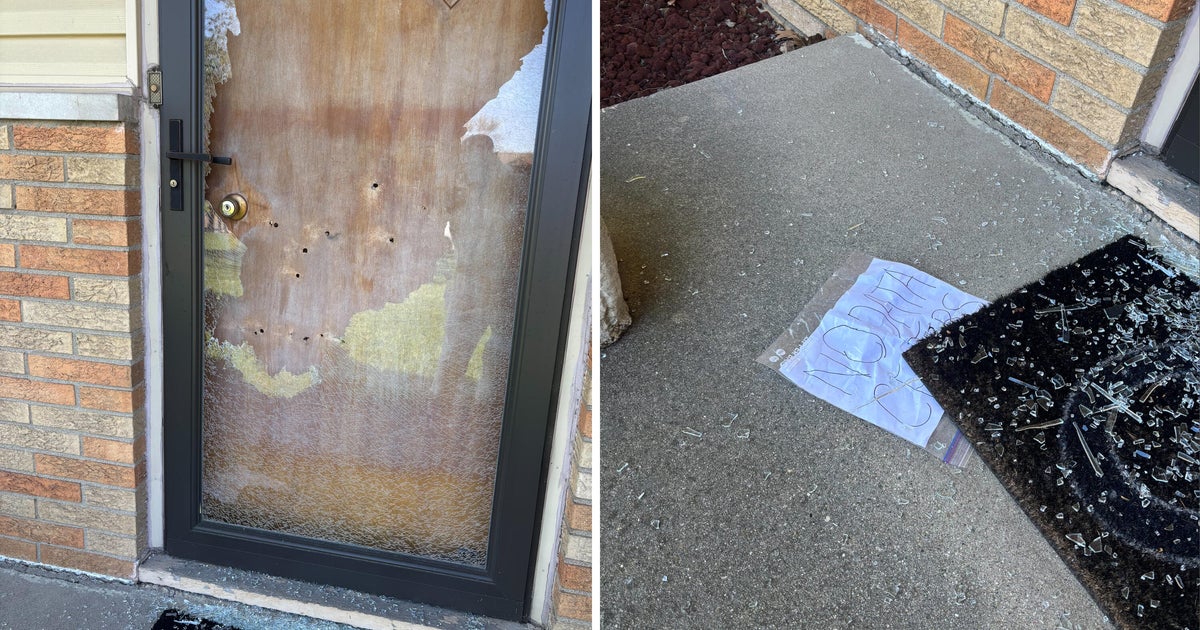
In the early hours of a quiet Monday morning, Indianapolis City-County Councilor Ron Gibson and his 8-year-old son were jolted awake by a sound no family should ever have to hear—gunfire directed at their own home. What began as a peaceful night quickly transformed into a nightmare when an unknown assailant fired 13 shots at Gibson’s front door, shattering glass and piercing the sense of security that every family deserves in their own home. But the attack wasn’t just random violence; it carried a clear message. Left on the doorstep in a zip-closed bag was a note with just three words: “NO DATA CENTERS.” The councilor, who is currently serving his third term representing his Indianapolis community, immediately ran to protect his young son, assuring him that he was safe even as the reality of what had just occurred began to sink in. The physical structure of their home could be repaired, the shattered glass replaced, and the bullet holes patched, but the psychological impact of such a targeted attack—especially one that endangered a child—would not be so easily mended. Gibson later reflected that while he understood public service often brings strong opinions and disagreement, violence is never an acceptable form of expression, particularly when it puts innocent families at risk. The Indianapolis Metropolitan Police Department responded to the scene around 9 a.m. that Monday morning, collecting evidence and determining that this was not a random act but rather “an isolated, targeted incident,” with the investigation now receiving support from the FBI.
The Controversial Data Center Proposal
At the heart of this frightening incident lies a development project that has deeply divided the Martindale-Brightwood neighborhood of Indianapolis. Developer Metrobloks LLC has proposed building a data center and business offices at 2505 North Sherman Drive, a project that requires rezoning approval from local authorities. Data centers have become increasingly controversial across communities throughout the United States, and for good reason. These massive facilities, which store, train, and operate artificial intelligence models and other digital infrastructure, have been shown to drain enormous amounts of power from shared electric grids, potentially driving up costs for everyday residents who share those resources. Beyond the financial burden on local ratepayers, these facilities have also demonstrated an alarming appetite for water consumption, raising serious concerns about environmental impact and public health consequences that could ripple through communities for years to come. For residents of Martindale-Brightwood, a neighborhood with its own unique character and concerns, the prospect of such a facility being built in their area has sparked intense debate about the balance between economic development and quality of life, between promised jobs and potential environmental costs, and between the desires of developers and the voices of longtime residents who call this area home.
A Heated Public Meeting
The tension surrounding this proposed data center came to a head just days before the shooting, when Councilor Gibson attended a Metropolitan Development Commission meeting on Wednesday to advocate for the rezoning that would allow the project to move forward. When Gibson approached the microphone to speak, his reception from the packed room was unmistakably hostile—he was met with a chorus of boos from community members who had come to oppose the development. Undeterred, Gibson made his case for the economic benefits he believed the project would bring to the area. “There are real benefits tied to this development,” Gibson told the assembled crowd. “Construction is expected to support roughly 300 jobs over a three-year period.” For Gibson and other supporters, these jobs represented opportunity, economic growth, and investment in a community that could use the boost. However, the response from the audience made it abundantly clear that his position was not shared by many in attendance. Shortly after Gibson finished voicing his support for the rezoning project, the meeting facilitator asked those who disapproved of the project to stand—and the vast majority of the crowd rose to their feet in silent but powerful opposition. The visual was striking and unmistakable: this community was largely united against this particular form of development, regardless of the promised economic benefits. Despite this overwhelming show of community opposition, the Metropolitan Development Commission ultimately approved the project last week, though the rezoning petition still needs to pass through the full Indianapolis City-County Council before the development can proceed.
Community Groups Respond to the Violence
In the wake of the shooting at Gibson’s home, community organizations that have been leading the opposition to the data center were quick to condemn the violence and distance themselves from the attack. Protect Martindale-Brightwood, one of the neighborhood groups most vocally opposed to the data center development, issued a statement on social media making their position crystal clear. “Violence has no place in our community or our advocacy,” the group declared, emphasizing that they wanted to be absolutely certain everyone understood their stance. The organization went further, explicitly denying any connection to the attack: “We want to be clear: any signage or messaging at the scene is not affiliated with our organization and does not reflect who we are.” They described their approach to activism as being “rooted in peaceful, community-led advocacy grounded in respect and accountability.” This swift and unequivocal response suggests that while the opposition to the data center runs deep in this community, there is broad recognition that crossing the line into violence betrays the very values that community advocacy is supposed to represent. The statement served not only as a condemnation of the attack but also as a reminder that passionate disagreement over policy issues need not—and should not—devolve into threats, intimidation, or violence that endangers families and undermines the democratic process itself.
The Broader Context of Development Disputes
This incident in Indianapolis reflects a growing tension playing out in communities across America as the digital economy’s infrastructure needs increasingly collide with local concerns about sustainability, resources, and quality of life. Data centers, once relatively obscure facilities that few people thought much about, have become flashpoints for community concern as their scale and impact have grown alongside the explosive expansion of cloud computing, artificial intelligence, and our increasingly digital world. The appeal for municipalities and developers is clear: these projects promise construction jobs, ongoing employment, tax revenue, and the prestige of being connected to cutting-edge technology industries. However, residents in affected communities are increasingly asking harder questions about what they’re being asked to sacrifice in exchange for these benefits. When a data center moves into a neighborhood, it brings with it significant demands on local infrastructure—drawing massive amounts of electricity that can strain power grids and potentially drive up rates for other users, consuming water resources that might otherwise serve residential or agricultural needs, generating heat that requires cooling systems, and creating truck traffic and other disruptions. For communities that are already underserved or that have historically borne disproportionate environmental burdens, the arrival of such a facility can feel less like progress and more like yet another imposition. The Martindale-Brightwood dispute exemplifies these tensions, with residents apparently unconvinced that 300 temporary construction jobs over three years adequately compensate for whatever long-term impacts the facility might have on their neighborhood.
Moving Forward: Democracy Without Violence
Indianapolis City-County Council President Maggie Lewis added her voice to those condemning the attack on Gibson’s home, using the incident as an opportunity to call for maintaining civility even amid passionate disagreement. “Differences in opinion are a natural and necessary part of civic life,” Lewis stated, acknowledging that debate and disagreement are not just inevitable but actually healthy components of democratic governance. However, she drew a firm line regarding acceptable methods of expressing those differences: “But violence, threats, and intimidation are not forms of dialogue—they are attacks on our shared commitment to democracy, civil discourse, and community safety.” Her statement captures the fundamental challenge facing communities navigating controversial development projects and other contentious issues—how to create space for genuine disagreement and robust debate while maintaining the bonds of mutual respect and safety that allow democratic processes to function. The shooting at Gibson’s home represents a complete breakdown of this social contract, an attempt to influence policy through fear rather than persuasion. As the investigation continues, with both local police and the FBI working to identify the person responsible, the broader community faces important questions about how to move forward. The rezoning petition still needs to go through the full City-County Council, meaning this contentious debate is far from over. The challenge for Indianapolis, and for communities across America facing similar disputes, is finding ways to channel passionate disagreement into productive democratic engagement rather than allowing it to explode into violence that traumatizes families, silences voices, and ultimately undermines the very community values that all sides claim to be defending.