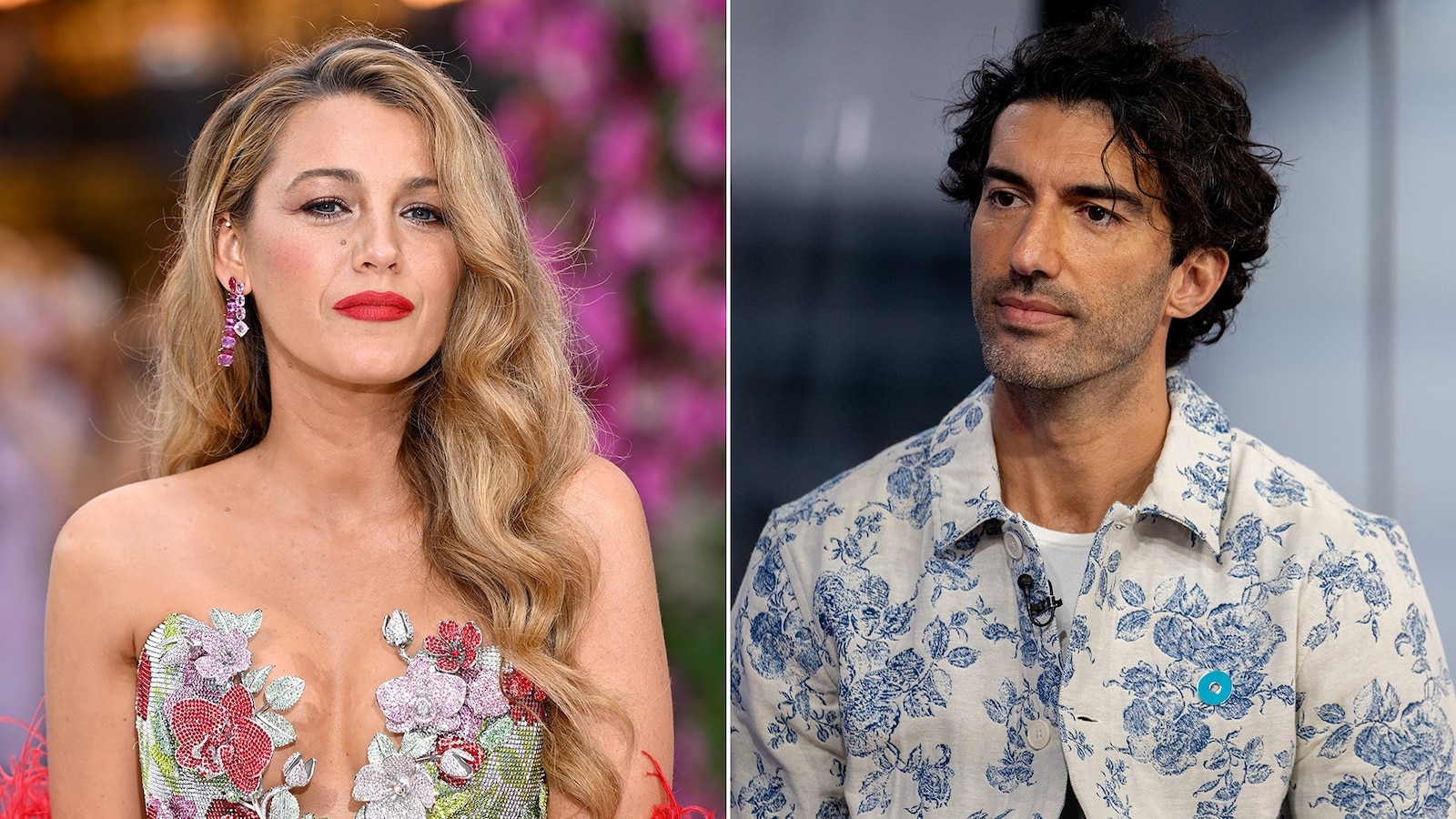

Blake Lively’s Legal Battle with Justin Baldoni Takes a Major Turn
Court Dismisses Sexual Harassment Claims but Case Moves Forward
In a significant development that has captured public attention, a federal judge in New York has dramatically narrowed Blake Lively’s lawsuit against her “It Ends With Us” co-star Justin Baldoni. Judge Lewis Liman’s ruling on Thursday dismissed most of Lively’s original claims, including the highly publicized allegations of sexual harassment that occurred on the movie set. However, the judge did allow certain aspects of the case to proceed—specifically, claims related to an alleged retaliation campaign orchestrated by Baldoni’s public relations team that Lively says damaged her reputation and career. This decision comes at a crucial moment, just one month before the case was scheduled to go to trial, and while both parties have been actively engaged in settlement negotiations that have so far failed to resolve their differences.
The ruling represents a complex legal outcome where both sides can claim partial victories. For Baldoni and his legal team, the dismissal of all sexual harassment claims and claims against individual defendants represents a major win and vindication. For Lively, while losing the harassment component is undoubtedly disappointing, the judge’s decision to allow her retaliation claims to proceed keeps alive what her legal team describes as the heart of the case—the alleged coordinated effort to destroy her reputation after she raised safety concerns on set. This legal battle, which has now stretched beyond a year, continues to shed light on power dynamics in Hollywood, the treatment of women who speak up about workplace concerns, and the increasingly sophisticated ways that reputations can be attacked in the digital age.
Judge’s Reasoning: Context Matters in Sexually Charged Films
Judge Liman’s decision to dismiss the sexual harassment claims centered on the specific context of the film production. In his written ruling, the judge explained that some of Baldoni’s conduct that Lively found objectionable “was not so far beyond what might reasonably be expected to take place between two characters” working on a sexually charged movie like “It Ends With Us.” The film, based on Colleen Hoover’s bestselling novel, deals with mature themes including domestic violence and complex romantic relationships, which naturally require actors and directors to discuss and plan intimate scenes. According to Judge Liman’s interpretation, Baldoni’s suggestions regarding scenes involving sexual acts fell within the reasonable scope of developing a motion picture with adult themes and did not create what the law defines as a “sexually objectionable environment” or an environment that was hostile to women or men based on their sex.
However, the judge’s reasoning went deeper than simply dismissing the claims outright. The critical factor in the dismissal appears to be Lively’s employment classification rather than an absolute determination that no inappropriate behavior occurred. As Lively’s attorney Sigrid McCawley clarified in her statement, “Sexual harassment isn’t going forward not because the defendants did nothing wrong but because the court determined Blake Lively was an independent contractor, not an employee.” This distinction is crucial in employment law, as independent contractors typically have fewer protections under workplace harassment statutes than traditional employees do. This aspect of the ruling highlights an ongoing issue in the entertainment industry, where many workers operate as independent contractors and may find themselves with limited legal recourse when facing workplace harassment, regardless of how inappropriate the behavior might have been in another employment context.
The Smear Campaign Allegations That Survived Dismissal
While Judge Liman found the sexual harassment claims legally insufficient to proceed, he reached a different conclusion regarding Lively’s allegations about a coordinated reputation attack. The judge ruled that Lively could continue pursuing her claims that Baldoni’s public relations team orchestrated a smear campaign against her, stating that these alleged actions “at least arguably crossed the line.” This aspect of the case centers on accusations that after Lively raised concerns about safety and working conditions on the set, Baldoni and his team engaged in what Lively’s lawsuit describes as “unlawful, retaliatory astroturfing”—a practice involving the manipulation of public opinion through fake grassroots campaigns, coordinated social media attacks, and strategic media placements designed to damage someone’s reputation while disguising the source of the attacks.
Judge Liman specifically acknowledged the serious harm such campaigns can inflict, writing that “the reputational effects have been particularly severe given the nature of Lively’s profession, which places a heavy emphasis on personal and professional marketability.” For actors and public figures, reputation isn’t just about personal dignity—it’s directly tied to their ability to earn a living, secure roles, command appropriate compensation, and maintain the public goodwill necessary for career longevity. The judge’s recognition of this reality gives weight to Lively’s claims that whatever happened behind the scenes, the response to her complaints may have constituted illegal retaliation. This portion of the case that’s moving forward could potentially expose the tactics and strategies used by PR professionals to manipulate public opinion, offering a rare glimpse into practices that typically operate in the shadows but have become increasingly sophisticated in the age of social media.
What Both Legal Teams Are Saying
The reactions from both legal teams reflect their respective interpretations of the ruling as a victory. Baldoni’s attorneys, Alexandra Shapiro and Jonathan Bach, issued a statement expressing their satisfaction: “We’re very pleased the Court dismissed all sexual harassment claims and every claim brought against the individual defendants: Justin Baldoni, Jamey Heath, Steve Sarowitz, Melissa Nathan, and Jennifer Abel.” They emphasized the seriousness of the allegations that were dismissed and expressed gratitude for the court’s “careful review of the facts, law and voluminous evidence that was provided.” Their statement characterized the result as “a significantly narrowed case,” suggesting confidence as they prepare to defend against the remaining claims in court. From their perspective, the dismissal of the harassment claims and the individual defendant claims represents a substantial narrowing of their legal exposure and a vindication of their clients’ behavior on set.
Lively’s legal team, led by Sigrid McCawley, framed the outcome quite differently, focusing on what remains rather than what was dismissed. McCawley stated that “this case has always been and will remain focused on the devastating retaliation and the extraordinary steps the defendants took to destroy Blake Lively’s reputation because she stood up for safety on the set and that is the case that is going to trial.” This framing attempts to recast the judge’s ruling not as a defeat but as a clarification that strips away secondary issues to focus on what Lively’s team considers the core wrongdoing. McCawley added a broader context to the case, noting that “for Blake Lively, the greatest measure of justice is that the people and the playbook behind these coordinated digital attacks have been exposed and are already being held accountable by other women they’ve targeted.” This statement suggests that regardless of the legal outcome, Lively views the case as having already achieved something important by exposing tactics that have allegedly been used against multiple women who spoke up about concerns in their professional lives.
The Broader Context: A Year-Long Legal Battle
This latest ruling is just one chapter in a legal saga that began in December 2024 when Lively filed a complaint with the California Civil Rights Department. That initial complaint accused Baldoni of sexual harassment during the filming of “It Ends With Us” and alleged that both Baldoni and his production company, Wayfarer Studios, engaged in a “social manipulation” campaign designed to destroy her reputation. The dispute then escalated significantly when both parties filed lawsuits against each other in New York. Lively’s lawsuit reiterated and expanded on her earlier complaints, seeking $500 million in damages for the alleged “unlawful, retaliatory astroturfing” campaign. Not to be outdone, Baldoni filed his own $400 million countersuit against not only Lively but also her husband, actor Ryan Reynolds, and the couple’s publicist, alleging extortion and defamation and claiming that Lively had “robbed” him of control over the film while destroying his reputation.
The legal battle became even more complex with these dueling lawsuits, each side accusing the other of career-damaging behavior and seeking enormous financial compensation. Lively’s lawyers responded to Baldoni’s countersuit by calling it “another chapter in the abuser playbook”—a reference to a pattern some advocates identify where people accused of misconduct respond with aggressive legal action designed to intimidate, drain resources, and shift public narrative. That particular countersuit was dismissed by a federal judge last June and formally ended in October after Baldoni chose not to file an amended complaint. In February, both actors and their attorneys participated in a court-ordered settlement conference at the United States District Court in New York, representing what was described as a last-ditch attempt to resolve their disputes without going to trial. That conference ultimately proved unsuccessful, setting the stage for the current situation where the narrowed case appears headed for trial.
What Happens Next and Why It Matters
As the case moves toward trial with its significantly narrowed scope, the focus will be squarely on whether Baldoni’s PR team engaged in coordinated retaliation against Lively for raising workplace concerns. This aspect of the case could have implications that extend far beyond the two principals involved. If Lively’s legal team can prove that a sophisticated reputation attack was orchestrated in retaliation for her complaints, it could expose practices that many suspect happen regularly but are rarely documented or proven in court. The discovery process and trial testimony could reveal text messages, emails, strategy documents, and other evidence that shows how modern PR campaigns can be weaponized against individuals, particularly women who speak up about workplace issues. Lively’s attorney McCawley stated that Lively “looks forward to testifying at trial and continuing to shine a light on this vicious form of online retaliation so that it becomes easier to detect and fight.”
The case also highlights ongoing questions about worker classification in the entertainment industry and the legal protections available to performers. The fact that harassment claims were dismissed based on independent contractor status rather than on the merits of whether inappropriate behavior occurred points to a potential gap in workplace protections for entertainment industry workers who typically don’t have traditional employee status. Regardless of the trial’s outcome, this legal battle has already contributed to important conversations about power dynamics in Hollywood, the risks faced by those who raise concerns about working conditions, the sophisticated methods available to damage reputations in the digital age, and the legal frameworks that do or don’t protect workers in non-traditional employment relationships. As both sides prepare for trial on the remaining claims, the entertainment industry and the public will be watching closely to see what evidence emerges and what precedents might be set.