


Breaking Barriers: Cherie DeVaux Makes Kentucky Derby History
A Historic Victory That Changed Racing Forever
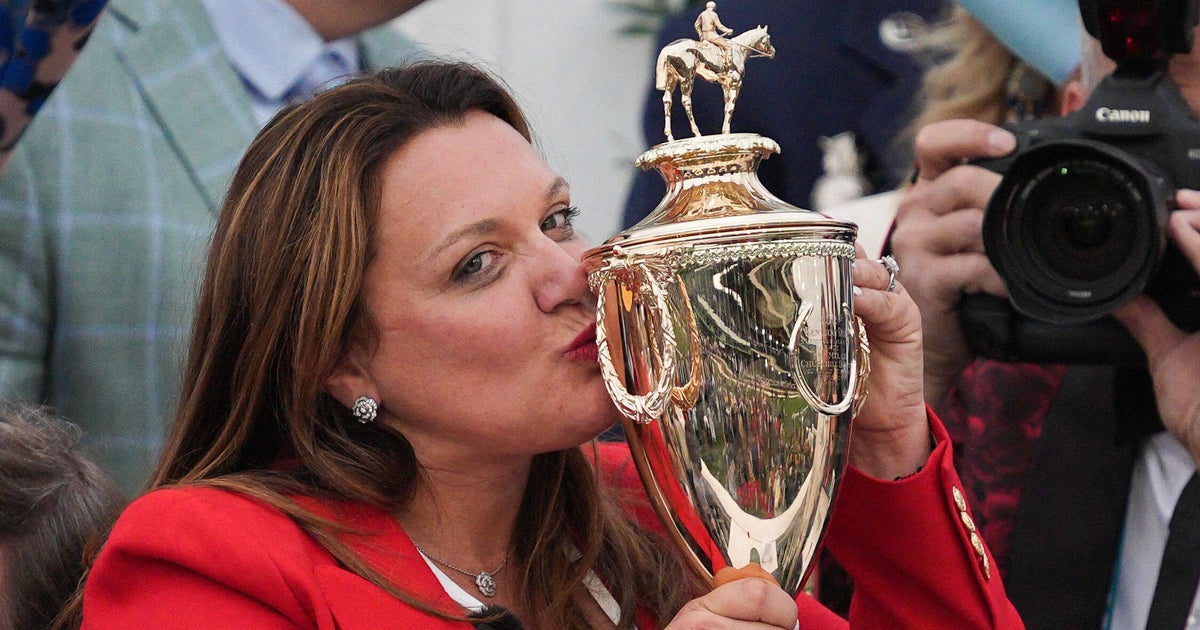
When Golden Tempo crossed the finish line at Churchill Downs this past weekend, it wasn’t just another thrilling Kentucky Derby victory—it was a groundbreaking moment that shattered one of horse racing’s most persistent glass ceilings. Cherie DeVaux became the first woman in the Derby’s storied 150-year history to train a winning horse, accomplishing what seventeen other women before her had attempted but never achieved. The significance of this moment hasn’t been lost on DeVaux, who spent the days following her historic win reflecting on what it means not just for her career, but for women everywhere who dream of making their mark in the traditionally male-dominated world of thoroughbred racing. Despite the magnitude of her achievement, DeVaux remains characteristically humble about her place in history, telling CBS News that she’s always simply considered herself “a horse trainer that happens to be female.” Yet even as she downplays the gender aspect of her success, she recognizes the powerful symbolism of her victory and the doors it might open for future generations of women in the sport.
Opening Doors for the Next Generation
The weight of being “the first” carries both honor and responsibility, something DeVaux seems to understand deeply as she processes her historic achievement. When she speaks about her victory, her thoughts quickly turn to the young women and girls who might see themselves reflected in her success story. “It’s an honor, honestly, to just be that person that other women, young girls can look up to,” she shared with genuine emotion. The statistics paint a stark picture of gender inequality in horse racing—only seventeen other women have ever trained horses that competed in the Derby, with the most recent being in 2021, five years before DeVaux’s breakthrough. The fact that it took until 2026 for a woman to finally win speaks volumes about the challenges women face in this industry. DeVaux herself admits puzzlement at why women remain so underrepresented in racing, but her tone shifts from confusion to optimism when she expresses hope that her victory will serve as a catalyst for change. Her win proves that women can compete at the highest levels of the sport, and perhaps more importantly, it provides a visible example for young women who might have previously thought a career as a top-level racehorse trainer was beyond their reach.
An Unexpected Journey to Churchill Downs
What makes DeVaux’s story even more compelling is that her path to the Derby winner’s circle was anything but conventional or predetermined. Unlike many trainers who grew up in racing families or knew from childhood that they wanted to work with thoroughbreds professionally, DeVaux took a winding road to her eventual calling. During her college years, she pursued a pre-med track with aspirations of becoming a physical therapist—a career choice that might seem worlds apart from training racehorses. Her reasoning was practical and honest: she wanted a career that would provide the financial stability to support her lifelong passion for horses. “I wanted to have a life that afforded horses ’cause they’re not cheap,” she explained with the straightforward pragmatism that seems to characterize her approach to life. Though she had ridden horses throughout her life, she initially saw it as a beloved hobby rather than a viable career path. However, life has a way of leading us where we’re meant to be, and DeVaux’s journey gradually shifted from human physical therapy toward exercising and training horses. “This kind of just happened, this wasn’t a linear journey,” she reflected, acknowledging the serendipitous nature of her career evolution. Her story serves as an important reminder that success rarely follows a straight line, and that sometimes the best careers are the ones we don’t meticulously plan from the beginning.
Building Something from Nothing
The decision to become an independent horse trainer came just eight years ago, following another significant life event—meeting her husband. Taking the leap to train horses on her own was a bold move that required not just skill and knowledge, but also courage and determination. Like many entrepreneurs starting from scratch, DeVaux faced significant challenges in those early years. “The first three years were really slow to get started,” she admitted, drawing a parallel between her own gradual rise and Golden Tempo’s racing style. The comparison is apt and telling—just as Golden Tempo famously surged from last place to first in the Derby’s final stretch, DeVaux’s career followed a similar trajectory of patient persistence followed by dramatic success. Those first three years of slow progress could have discouraged someone with less determination, but DeVaux stuck with it, building her reputation one horse and one race at a time. Her willingness to start at the bottom and work her way up, combined with her unconventional background, likely gave her perspectives and approaches that more traditional trainers might lack. The fact that she achieved Derby glory just eight years after going out on her own is remarkable and speaks to both her natural talent and her work ethic. Her story embodies the classic American dream—someone who followed their passion, worked incredibly hard, and ultimately achieved something that had never been done before.
Golden Tempo’s Stunning Performance
The race itself provided the perfect dramatic backdrop for DeVaux’s historic achievement. Golden Tempo, a bay colt, executed one of the most thrilling finishes in recent Derby memory by coming from dead last in the early stages of the race to surge past the competition in a breathtaking stretch run. This come-from-behind victory mirrored DeVaux’s own journey in poetic fashion, making the win feel almost destined. The strategy and training that enabled Golden Tempo to have the stamina and speed to mount such a comeback in the final moments of the race showcase DeVaux’s skills as a trainer. Knowing when to hold a horse back and when to let them run requires not just technical knowledge but an intuitive understanding of the individual horse’s capabilities and temperament. The fact that Golden Tempo had enough left in the tank to overtake the field when it mattered most speaks to the quality of his conditioning and preparation. DeVaux’s training regimen clearly worked to perfection, producing a horse that could not only compete at the highest level but could do so in spectacular fashion. The image of Golden Tempo charging from behind to claim victory will be replayed for years to come, and it will always represent not just an exciting race, but a barrier-breaking moment in sports history.
Looking Ahead to the Preakness and Beyond
With the Kentucky Derby now in the record books, attention naturally turns to the next leg of horse racing’s prestigious Triple Crown—the Preakness Stakes, scheduled for May 16th. For any Derby winner, the question of whether to pursue the Triple Crown becomes immediate and pressing. The Triple Crown, which also includes the Belmont Stakes, has only been won thirteen times in history, most recently by Justify in 2018. The decision of whether to run Golden Tempo in the Preakness carries significant weight, balancing the historic opportunity against the welfare of the horse. When asked about her plans, DeVaux demonstrated the same horse-first philosophy that likely contributed to Golden Tempo’s Derby success. “It’s up to him,” she said simply, making clear that the horse’s condition, health, and readiness will determine whether they pursue the Triple Crown. This approach reflects a trainer who puts her horse’s wellbeing above the glory and financial rewards that would come with additional victories. As DeVaux moves forward, she does so not just as a horse trainer with a Derby win under her belt, but as a pioneer whose achievement has changed the landscape of her sport. While she may prefer to simply be known as “a horse trainer that happens to be female,” her place in history is now secure as the woman who proved that the Derby’s winner’s circle is no longer exclusively male territory. Whatever comes next—whether Golden Tempo runs in the Preakness, whether DeVaux trains more Derby winners, or whether more women follow in her footsteps—this moment will always stand as a turning point when possibility became reality and a long-standing barrier finally fell.