


Supreme Court Steps In: The Battle Over Abortion Pills and Mail-Order Access
Temporary Pause on Restrictive Order
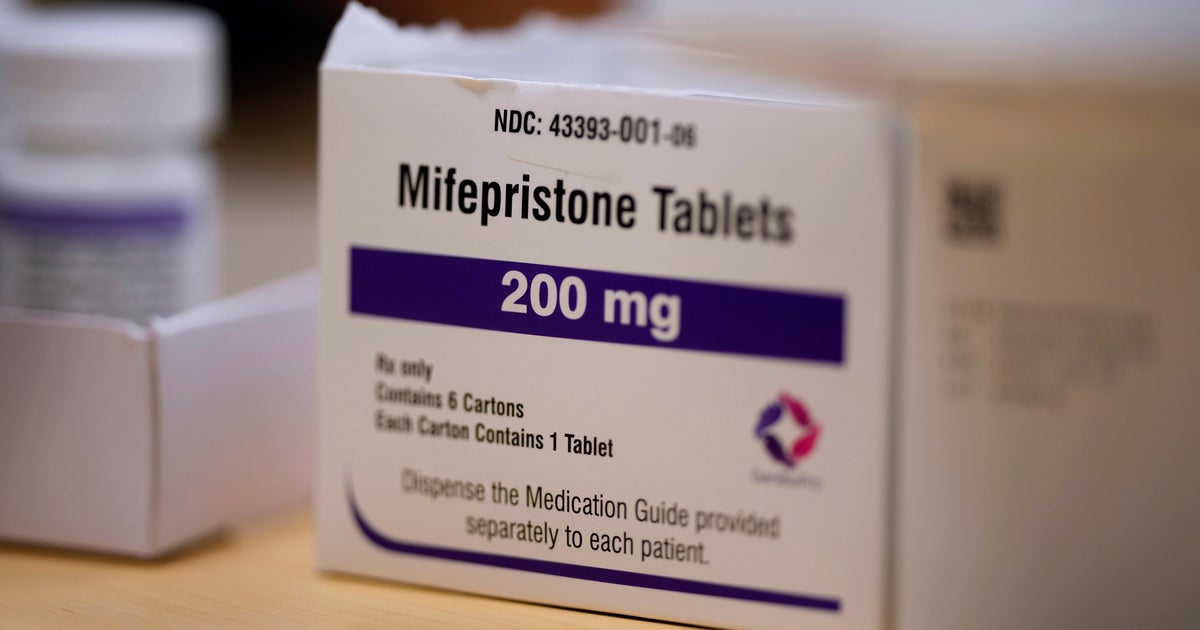
In a significant development that affects abortion access across the United States, Justice Samuel Alito has temporarily halted a lower court decision that would have blocked the ability to obtain mifepristone—the abortion pill—through online prescriptions and mail delivery. This administrative pause, issued on a Monday, provides breathing room until May 11th for the nation’s highest court to carefully examine the complex legal issues at stake. The temporary relief benefits both Danco Laboratories, the original manufacturer of mifepristone, and GenBioPro, which produces a generic version of the medication. Rather than making an immediate final decision, Justice Alito’s move gives the Supreme Court justices time to thoroughly review the drugmakers’ requests to block the appellate court’s restrictive order while the underlying lawsuit continues through the legal system. The drug companies have also asked the Supreme Court to take on the case fully and decide its legal merits once and for all, demonstrating the urgency and importance of this issue. Justice Alito has set a deadline of Thursday for Louisiana state officials to submit their response to the pharmaceutical companies’ emergency appeals, setting up what promises to be a closely watched legal showdown over abortion access in post-Roe America.
The Ongoing Fight Over Abortion Pill Access
This latest legal battle represents the second time the Supreme Court has been asked to weigh in on mifepristone’s availability since the landmark 2022 decision that overturned Roe v. Wade and eliminated the constitutional right to abortion. Anti-abortion groups have made restricting access to this widely used abortion medication a top priority, arguing that the Food and Drug Administration cut corners when it initially approved mifepristone back in 2000 and later made it easier to obtain over the past decade. These groups claim the FDA didn’t adequately study the drug’s safety and effectiveness before allowing Americans to use it. Just last year, in 2024, the Supreme Court unanimously rejected one such challenge brought by a coalition of anti-abortion doctors and medical organizations who wanted to severely limit mifepristone’s availability. However, that case was dismissed not because the court found the FDA had acted properly, but rather because the justices ruled that the plaintiffs—the doctors and medical groups—didn’t have the legal standing to sue the FDA in the first place. That earlier challenge specifically targeted a series of changes the FDA made starting in 2016 that progressively made the abortion pill more accessible to women seeking to end pregnancies. These regulatory changes included allowing mifepristone to be taken later into a pregnancy than previously permitted, expanding the types of healthcare workers authorized to prescribe the medication beyond just physicians, and most controversially, eliminating the requirement that patients pick up the drug in person from a healthcare provider—instead allowing it to be mailed directly to patients’ homes.
How COVID Changed Abortion Pill Distribution
The story of how mifepristone became available by mail is closely tied to the COVID-19 pandemic and the dramatic changes it forced in healthcare delivery. Before the pandemic, strict FDA rules required patients to obtain mifepristone directly from healthcare providers during in-person visits, a requirement that created significant barriers for many women, particularly those living in rural areas far from abortion providers or those facing transportation, childcare, or work schedule challenges. When the coronavirus pandemic swept across the country, forcing dramatic changes in how Americans accessed healthcare, the FDA temporarily suspended enforcement of this in-person dispensing requirement as part of broader efforts to minimize unnecessary face-to-face medical visits. After studying the issue during this suspension period, the agency concluded that mifepristone “may be safely used without in-person dispensing,” finding that the medication could be prescribed and used effectively through remote healthcare appointments. Building on this pandemic-era experience, the FDA made the change permanent in 2023, formally allowing healthcare providers to prescribe mifepristone during telehealth appointments conducted over video or phone, with the medication then shipped directly to patients through the mail. This regulatory change represented a major expansion of abortion access, particularly for women in states where abortion remained legal but clinics were scarce or located far from where many women lived.
Louisiana’s Challenge and the Fifth Circuit’s Decision
After the Supreme Court’s 2024 decision that preserved access to mifepristone by rejecting the anti-abortion doctors’ lawsuit on technical grounds, Louisiana officials took a different approach by filing their own lawsuit as a state government. Louisiana specifically challenged the FDA’s 2023 rule allowing mifepristone to be prescribed remotely and delivered by mail, arguing that this federal regulation conflicted with and undermined Louisiana’s own strict abortion laws. Initially, a federal district court in Louisiana paused the litigation in April, which meant the relaxed rules for obtaining mifepristone remained in effect nationwide while the FDA conducted an additional safety review of the medication. However, Louisiana state officials weren’t satisfied with this outcome and appealed to the U.S. Court of Appeals for the Fifth Circuit, known as one of the most conservative federal appellate courts in the country. On Friday, a unanimous three-judge panel of the Fifth Circuit agreed with Louisiana and issued a temporary order blocking the 2023 FDA rule that allows remote prescribing and mail delivery of mifepristone. The appellate judges found that Louisiana had legal standing to bring the lawsuit—avoiding the problem that doomed the previous challenge—because the state’s Medicaid program had paid for emergency room care for two women who experienced complications after receiving abortion pills from out-of-state providers. In the court’s reasoning, the 2023 FDA regulation “injures Louisiana by undermining its laws protecting unborn human life and also by causing it to spend Medicaid funds on emergency care for women harmed by mifepristone.” The judges went further, writing that “every abortion facilitated by FDA’s action cancels Louisiana’s ban on medical abortions and undermines its policy that ‘every unborn child is [a] human being from the moment of conception and is, therefore, a legal person.'”
Louisiana’s Strict Abortion Laws
Louisiana has enacted some of the nation’s most restrictive abortion laws following the Supreme Court’s reversal of Roe v. Wade. The state banned virtually all abortions, with only narrow exceptions for specific medical emergencies, immediately after that landmark decision eliminated federal constitutional protection for abortion rights. Going even further, Louisiana in 2024 became the first state in the nation to classify mifepristone and misoprostol—the two medications used together in medication abortions—as controlled dangerous substances, placing them in the same legal category as potentially addictive drugs that are subject to strict regulation and tracking. This unprecedented law makes it a crime to possess these abortion medications without a valid prescription, even though medical experts widely consider them safe medications that are used not only for abortions but also for other medical purposes like managing miscarriages. The state’s aggressive approach to restricting abortion access through both outright bans and medication reclassification demonstrates how some states have moved quickly to severely limit reproductive rights following the Supreme Court’s decision to return abortion regulation to individual states rather than maintaining it as a federally protected constitutional right.
The Impact on Patients and Providers Nationwide
The pharmaceutical companies that manufacture mifepristone rushed to the Supreme Court seeking emergency relief immediately after the Fifth Circuit issued its restrictive decision, warning that the appellate court’s order would create immediate chaos for abortion access across the entire country—not just in Louisiana. Danco Laboratories argued in its emergency filing that the decision “injects immediate confusion and upheaval into highly time-sensitive decisions” about reproductive healthcare. The company emphasized the real-world human impact, writing that “the Fifth Circuit’s unprecedented order forces patients, providers, and pharmacies into immediate uncertainty, with no transition period and no practical guidance.” Danco painted a vivid picture of the disruption: “Patients who have appointments—as soon as this morning—are in limbo. Providers who have already screened, counseled, and prepared patients for care may have to stop midstream, potentially unable to complete treatment plans that were set in motion days earlier.” GenBioPro, in its own emergency appeal, described the Fifth Circuit’s decision as having “unleashed regulatory chaos” that threatens to suddenly cut off mifepristone access for patients nationwide, including women living in states where abortion remains fully legal and protected. The generic manufacturer emphasized that “patients and clinicians have, for years, relied on dispensing mifepristone without an in-clinic visit, particularly for women from rural areas and those for whom transportation, childcare, or occupational constraints make it difficult to see providers in person.” GenBioPro warned that “as a direct result of the Fifth Circuit’s order, patients nationwide may face delay or denial of access to time-sensitive medical care, supply-chain disruptions, and attendant health risks”—concerns that underscore how a lawsuit filed by one state can potentially affect abortion access for women throughout the country, illustrating the complex and far-reaching implications of post-Roe abortion litigation.