


Wall Street’s Tokenization Dream Hits a Regulatory Roadblock, Says Kevin O’Leary
The Hype Versus Reality of Blockchain Adoption
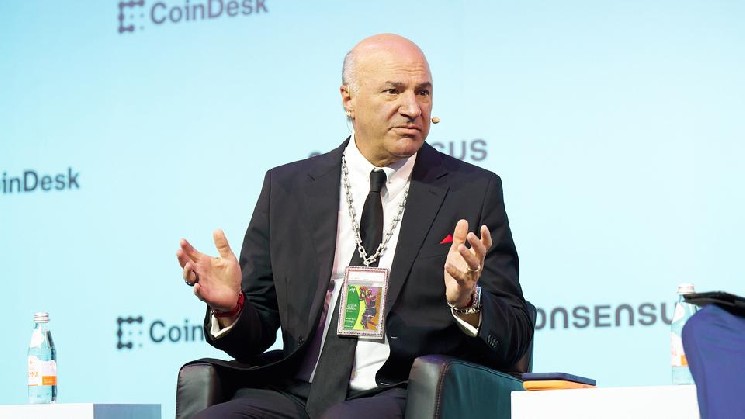
Kevin O’Leary, the outspoken investor and “Shark Tank” personality, isn’t mincing words when it comes to the current state of cryptocurrency and tokenization on Wall Street. Speaking at the Consensus conference in Miami Beach, Florida, O’Leary delivered a sobering reality check to an industry that’s been buzzing with excitement about blockchain’s potential to revolutionize finance. According to O’Leary, all the enthusiasm surrounding tokenization is essentially just noise until the United States Congress steps up and provides the comprehensive regulatory framework that institutional investors desperately need. His central argument is straightforward yet profound: without clear rules from federal authorities, major financial institutions will continue to keep their distance from digital assets, treating them as speculative fringe investments rather than legitimate components of diversified portfolios. O’Leary specifically called out both tokenization initiatives and bitcoin, stating that institutional indexers—the massive financial firms that manage trillions of dollars—won’t truly adopt these technologies in any meaningful way until regulatory clarity arrives. For these conservative financial giants, the risk of running afoul of securities laws or facing unexpected regulatory action far outweighs any potential benefits that blockchain technology might offer.
The Missing Piece: Comprehensive Federal Regulation
O’Leary’s prescription for unlocking institutional capital is remarkably specific. He believes the transformative moment for digital assets will only arrive when the United States establishes a complete legal framework that brings crypto firmly under the oversight of the Securities and Exchange Commission through actual legislation passed by Congress. “It has to become compliant globally within the SEC with an actual passage of a bill,” O’Leary explained to the conference attendees. “When that occurs, it’s going to change everything.” This isn’t just about vague guidance or regulatory statements—O’Leary is talking about comprehensive laws that define exactly what digital assets are, how they should be classified, what compliance requirements apply, and what protections investors have. The current regulatory environment, characterized by enforcement actions and contradictory signals from different agencies, simply isn’t enough to satisfy the legal and compliance departments at major financial institutions. These organizations operate under strict fiduciary responsibilities and cannot afford to make significant investments in assets that might suddenly be deemed illegal securities or that lack clear tax treatment, custody requirements, and investor protections. O’Leary’s comments reflect a broader frustration within the crypto industry, where entrepreneurs and investors have long argued that the lack of regulatory clarity in the United States has pushed innovation overseas and prevented American firms from competing globally in blockchain technology.
Tokenization’s Promise Meets Institutional Caution
The context for O’Leary’s remarks is important. Wall Street has been increasingly experimenting with tokenization—a process that converts traditional assets like stocks, bonds, real estate, or investment funds into digital tokens that exist on blockchain networks. The theoretical advantages are compelling: tokenized assets could trade around the clock rather than being limited to traditional market hours, settlement could happen instantly rather than taking days, fractional ownership could make expensive assets accessible to smaller investors, and overall transaction costs could drop significantly. Major financial institutions including BlackRock, JPMorgan, and Franklin Templeton have all launched tokenization initiatives or pilot programs. The technology promises to modernize financial infrastructure that, in many cases, still relies on processes developed decades ago. However, O’Leary’s point is that these experiments remain just that—experiments and pilot programs rather than full-scale institutional adoption. The major indexers and asset allocators who control the vast majority of investment capital are still sitting on the sidelines, watching and waiting. Without regulatory clarity, these institutions cannot justify putting client money into tokenized assets, no matter how promising the technology appears. The legal uncertainty creates too many potential pitfalls, from unclear tax treatment to questions about custody and investor protection to concerns about whether certain tokens might be unregistered securities.
Stablecoins Show the Path Forward
To illustrate how regulation can catalyze adoption, O’Leary pointed to stablecoins—cryptocurrencies designed to maintain a stable value by being pegged to traditional assets like the U.S. dollar. He referenced the GENIUS Act, recent U.S. legislation addressing stablecoin regulation, as a case study in how clear rules can immediately unlock institutional use. According to O’Leary, once policymakers provided a regulatory framework for stablecoins, adoption by businesses and financial institutions happened “almost immediately.” The value proposition became undeniable once compliance concerns were addressed: cross-border payments that traditionally take three days and involve significant fees could now be completed in minutes at a fraction of the cost, all while maintaining full compliance and transparency. This real-world example demonstrates O’Leary’s broader argument—the technology isn’t the bottleneck, regulation is. Blockchain’s technical capabilities have been proven; what’s missing is the legal permission structure that allows institutions to use these capabilities without fear of regulatory reprisal. The stablecoin example also highlights a critical point: regulation doesn’t necessarily stifle innovation, as some crypto advocates fear. Instead, thoughtful regulation can actually accelerate adoption by providing the certainty that risk-averse institutions require before committing capital and resources to new technologies.
The Narrowing Focus of Institutional Crypto Investment
Beyond the regulatory discussion, O’Leary also offered insights into how institutional investors are actually approaching the cryptocurrency market today. According to his analysis, institutional focus has narrowed dramatically to just two assets: bitcoin and ethereum. “97% of the entire value of the entire market is simply BTC and ether,” O’Leary stated, noting that the thousands of smaller cryptocurrency tokens have been “slaughtered” in terms of both value and institutional interest. This concentration reflects a maturation of the market and a growing divide between speculative crypto assets—the meme coins and unproven projects that proliferated during previous crypto booms—and blockchain infrastructure with genuine enterprise adoption potential. Institutional investors, when they do venture into crypto, are focusing on the most established, liquid assets with the longest track records rather than betting on speculative alternatives. O’Leary’s observation suggests that the narrative of thousands of different cryptocurrencies all competing for attention may be giving way to a more consolidated market where a few major blockchain platforms dominate. For O’Leary, the real long-term opportunity isn’t in speculative tokens at all, but in identifying which blockchain platform will become the standard that large corporations adopt for practical business applications. “You show me the adoption onto the platform that becomes a moat,” he said, using business terminology to describe a sustainable competitive advantage. Whether it’s logistics tracking, contract management, supply chain coordination, or inventory systems, the blockchain platform that becomes the enterprise standard could generate enormous value—but that value might accrue to the platform operators and service providers rather than to cryptocurrency token holders.
Infrastructure: The Real Value Behind Digital Assets
Perhaps O’Leary’s most provocative argument tied the future of blockchain and artificial intelligence not to digital assets themselves, but to the physical infrastructure that supports them. In a statement that likely raised eyebrows among cryptocurrency enthusiasts, O’Leary declared that “power is more valuable than bitcoin.” This perspective reflects a growing recognition that as both blockchain networks and AI systems become more sophisticated and widely adopted, the energy required to run them and the data centers that house the computing equipment become increasingly valuable resources. Bitcoin mining already consumes enormous amounts of electricity, and the computational demands of AI training and deployment are even more energy-intensive. O’Leary’s investment thesis seems to be that rather than betting on which digital asset will win, investors might be better positioned investing in the energy companies and data center operators that will profit regardless of which specific cryptocurrencies or AI models succeed. This infrastructure-focused view represents a more mature, diversified approach to positioning for the digital asset revolution. Instead of making concentrated bets on specific tokens or platforms, investors can gain exposure to the broader trend by investing in the foundational resources—energy, computing power, data storage—that all digital technologies require. It’s a reminder that in previous technological revolutions, from railroads to the internet, some of the most successful investments weren’t in the most hyped companies or technologies, but in the infrastructure providers who enabled the entire ecosystem. O’Leary’s perspective suggests he’s applying these historical lessons to today’s blockchain and AI landscape, looking past the hype to identify where sustainable value will actually be created and captured.