


Ripple CEO Brad Garlinghouse Reaffirms Commitment to XRP and Addresses Key Industry Concerns
Ripple’s Unwavering Dedication to XRP’s Success
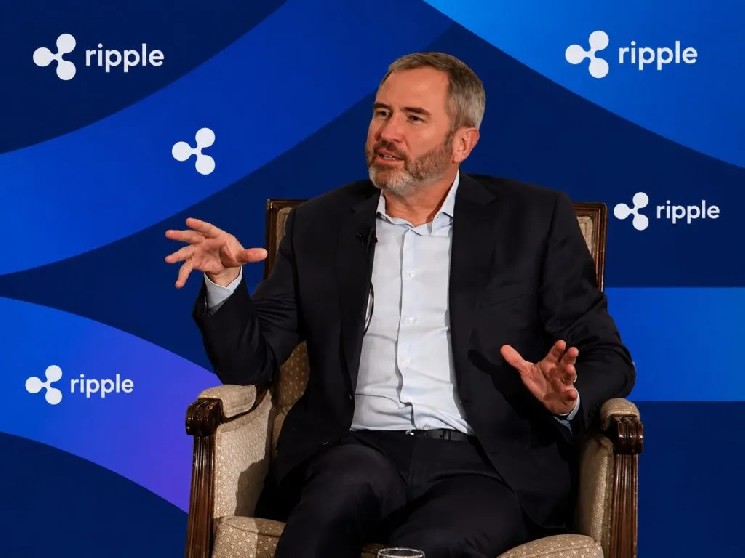
During a highly anticipated community event in Las Vegas, Ripple CEO Brad Garlinghouse took center stage to address the XRP community’s most pressing concerns and clarify misconceptions that have been circulating in the cryptocurrency space. In his characteristically direct manner, Garlinghouse tackled head-on the rumors suggesting that Ripple might be distancing itself from XRP, a notion that has caused anxiety among some community members. He emphatically dismissed these claims, reminding everyone of a fundamental fact that often gets overlooked in the noise of crypto speculation: Ripple is the world’s largest holder of XRP, which means the company has more skin in the game than anyone else. This simple yet powerful statement underscores that Ripple’s success is intrinsically tied to XRP’s performance, making it impossible for the company to abandon or sideline the digital asset that forms the foundation of its business model.
The CEO’s remarks came at a crucial time when the community needed reassurance about the company’s direction, especially following the announcement of Ripple’s new stablecoin project, RLUSD. Garlinghouse explained that the introduction of this stablecoin wasn’t meant to replace XRP but rather to complement it by serving as a bridge for institutional clients who might require different tools for their specific use cases. He articulated that Ripple’s overarching strategy has always revolved around three core objectives: increasing XRP’s liquidity in global markets, expanding its practical use cases across various industries, and building trust among both retail and institutional participants. The stablecoin, he clarified, would help achieve these goals by attracting more institutional players into the ecosystem, which would ultimately benefit XRP holders by creating a more robust and interconnected financial network.
Navigating the Complex Landscape of US Cryptocurrency Regulation
One of the most significant portions of Garlinghouse’s address focused on the regulatory environment in the United States, particularly regarding the much-discussed Clarity Act that has been making its way through the legislative process. The CEO identified the third week of May as a pivotal moment that could determine the future of comprehensive cryptocurrency regulation in America. His assessment of the situation was both optimistic and cautiously realistic—he expressed confidence that if the bill successfully emerges from the Senate Banking Committee, it would likely pass into law, providing the industry with the long-awaited regulatory framework that could unlock tremendous growth and innovation. However, he also warned that failure at this critical juncture could result in the legislative process being delayed significantly, potentially setting back the industry’s progress in the United States by months or even years.
What makes Ripple’s position particularly interesting in this regulatory discussion is the unique legal clarity that XRP has already achieved through the courts. Garlinghouse reminded his audience of a landmark judicial determination that sets XRP apart from many other digital assets currently operating in a regulatory gray area. A federal judge has explicitly ruled that XRP, in and of itself, is not an investment contract and therefore not a security under US law. This distinction is absolutely crucial because it means that regardless of what happens with the Clarity Act or other regulatory initiatives, XRP already has a level of legal certainty that most cryptocurrencies can only dream of achieving. This judicial clarity provides a solid foundation for Ripple and XRP to continue operating and expanding, even if broader regulatory reform takes longer than anticipated. Garlinghouse emphasized that this clarity represents the most important regulatory achievement for the company and offers a competitive advantage that shouldn’t be underestimated in an industry where regulatory uncertainty remains one of the biggest obstacles to mainstream adoption.
Strategic Decisions Around Going Public and Maintaining Independence
The discussion of Ripple’s corporate strategy revealed interesting insights into the company’s thinking about its future structure and relationship with public markets. When addressing questions about a potential initial public offering, Garlinghouse made it clear that Ripple is in no rush to become a publicly traded company, despite recently conducting share buybacks at an impressive valuation of $50 billion. This valuation demonstrates that Ripple has achieved significant worth as a private entity, giving it considerable leverage in deciding when and if to pursue an IPO. The CEO pointed to the challenging experiences of other cryptocurrency companies like Gemini and Kraken, which have faced considerable difficulties in their attempts to go public, navigating complex regulatory requirements and market conditions that haven’t always been favorable to crypto-related businesses.
Garlinghouse articulated that remaining private offers Ripple substantial advantages that might be lost if the company were to go public prematurely. As a private company, Ripple enjoys greater freedom of expression, allowing its leadership to speak more candidly about industry issues, regulatory challenges, and competitive dynamics without the constraints that public company executives often face. Additionally, staying private provides more room for strategic maneuver, enabling Ripple to make bold decisions, pursue long-term projects, and weather market volatility without the quarterly earnings pressure and short-term thinking that often plague public companies. This approach suggests that Ripple is playing a long game, building a sustainable business model that prioritizes lasting value creation over the immediate capital infusion that an IPO might provide. For XRP holders, this strategy implies that Ripple will continue making decisions based on what’s best for the ecosystem’s long-term health rather than satisfying the expectations of public market investors who might prioritize short-term returns.
Political Engagement and Industry Advocacy Efforts
Garlinghouse didn’t shy away from addressing the increasingly politicized nature of cryptocurrency regulation, describing the phenomenon as “madness” while simultaneously acknowledging that political engagement has become essential for the industry’s survival and growth. This pragmatic recognition has translated into concrete action, with Ripple committing significant resources to supporting political candidates who demonstrate a “pro-innovation” stance on cryptocurrency and blockchain technology. Importantly, the CEO emphasized that this support isn’t partisan—Ripple is backing favorable candidates from both Democratic and Republican parties, recognizing that the future of cryptocurrency regulation will require bipartisan support to be effective and lasting.
The company has already demonstrated its commitment to this approach through a substantial $50 million donation to super PACs like Fairshake, which focus on supporting candidates who understand the potential of blockchain technology and are willing to craft sensible regulatory frameworks rather than implementing restrictive measures that could stifle innovation. Garlinghouse’s comments at the Las Vegas event signaled that this level of political engagement will continue and possibly expand, as Ripple views regulatory advocacy as an essential investment in creating an environment where XRP and other cryptocurrencies can thrive. This strategy reflects a mature understanding that technological innovation alone isn’t sufficient—creating the right regulatory and political conditions is equally important for achieving mainstream adoption and unlocking the full potential of blockchain technology to transform global finance.
The Sphere Controversy and Community Mobilization
An unexpected and somewhat entertaining moment in Garlinghouse’s address came when he revealed an interesting anecdote about attempted advertising on The Sphere, the massive and iconic structure that has become one of Las Vegas’s most recognizable landmarks. According to the CEO, Ripple had approached The Sphere’s management about advertising XRP on the enormous LED display that wraps around the building, creating spectacular visual presentations visible from across the city. However, despite The Sphere accepting advertisements for Bitcoin and Ethereum, management rejected Ripple’s proposal to advertise XRP. This decision struck Garlinghouse as unfair and potentially discriminatory, suggesting a bias against certain cryptocurrencies that he found unacceptable.
In response to this rejection, the CEO took the unusual step of calling on the XRP community to boycott The Sphere, turning what might have been a minor business disappointment into a rallying point for community action. This call to action demonstrates Garlinghouse’s willingness to leverage the passionate and engaged XRP community as a force for change, while also highlighting ongoing challenges that XRP faces in terms of public perception and acceptance compared to more established cryptocurrencies like Bitcoin and Ethereum. The incident serves as a reminder that despite XRP’s legal clarity and technological capabilities, the asset still encounters resistance in some quarters, whether due to lingering confusion about its regulatory status, the lengthy legal battle with the SEC, or simply preference for more widely recognized cryptocurrencies. Garlinghouse’s public response to this situation sends a message that Ripple won’t accept being treated as a second-class citizen in the cryptocurrency space.
Addressing Community Questions About Token Economics and Wealth Sharing
Perhaps the most delicate portion of Garlinghouse’s presentation came when he addressed direct questions from the community about whether XRP holders would have opportunities to directly share in Ripple’s considerable wealth, particularly through mechanisms like token buyback programs. The host posed a straightforward question that many XRP holders have pondered: given Ripple’s success and high valuation, shouldn’t there be a plan for XRP token buybacks that would allow the community to benefit more directly from the company’s prosperity? Garlinghouse’s response was honest but perhaps not what some community members hoped to hear—he stated clearly that a token buyback program is not on the short-term agenda.
However, the CEO offered a philosophical framework for understanding how XRP holders do benefit from Ripple’s success, even without direct buyback programs. He argued that the most valuable contribution Ripple can make to XRP holders is continuing to invest in expanding the XRP ecosystem, increasing its utility across various use cases, and driving institutional adoption that brings more liquidity and stability to the market. From this perspective, every acquisition Ripple makes, every partnership it announces, and every technological advancement it achieves ultimately benefits XRP holders by making the asset more useful, more widely accepted, and more valuable in the long term. This approach prioritizes ecosystem growth over direct financial mechanisms, betting that a rising tide will lift all boats rather than implementing redistributive programs that might provide short-term satisfaction but potentially limit the company’s ability to invest in growth.
When specifically asked whether Ripple might do “something special” for XRP holders in connection with a future IPO, Garlinghouse maintained his measured approach, stating that while such possibilities aren’t entirely ruled out, there are no concrete plans currently on the table. This response reflects the complexity of Ripple’s relationship with XRP and its holders—the company must balance its obligations to its own shareholders and business objectives with the interests of a community that has supported XRP through years of regulatory uncertainty and market volatility. While some might wish for more definitive commitments to wealth-sharing mechanisms, Garlinghouse’s focus remains on building sustainable value through ecosystem development rather than implementing financial engineering that might provide short-term gains at the expense of long-term strategic positioning.