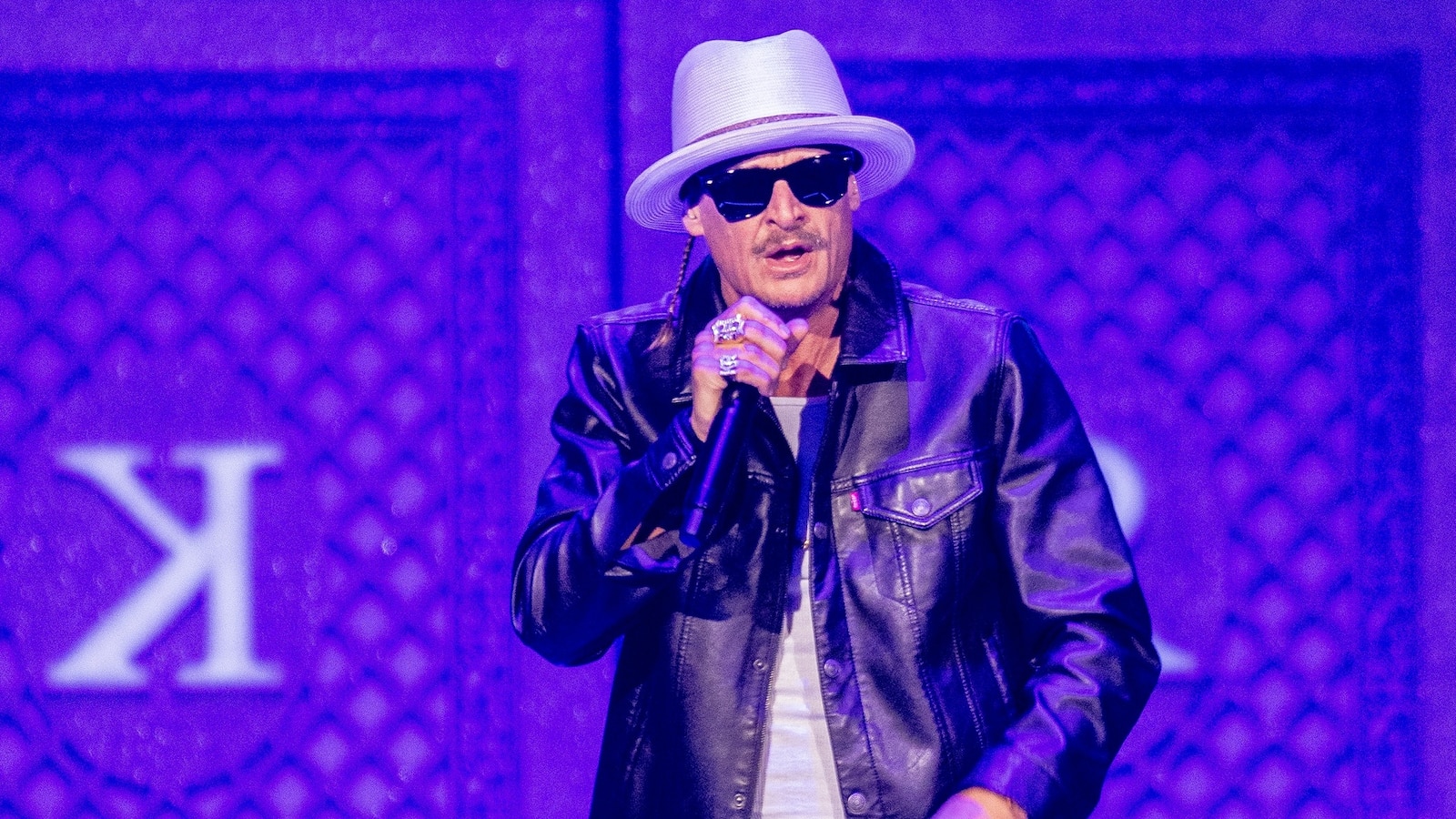

Kid Rock’s Counter-Programming: The Story Behind the Alternative Halftime Show
A Bold Challenge to the Super Bowl’s Main Event
In an unprecedented move that highlighted America’s cultural divide, Kid Rock headlined an alternative halftime show that aired simultaneously with Bad Bunny’s official Apple Music Super Bowl halftime performance on Sunday night. Organized by Turning Point USA, a prominent conservative advocacy organization, “The All-American Halftime Show” positioned itself as a patriotic alternative for viewers who wanted something different from the NFL’s official entertainment. The event featured a lineup of country music stars including Brantley Gilbert, Lee Brice, and Gabby Barrett, all known for their distinctly American musical styles and themes. According to ABC News observations, Turning Point USA’s YouTube stream peaked at just over six million concurrent viewers during the live broadcast, though the organization later claimed much higher total viewership numbers across multiple platforms. The counter-programming effort represented more than just an alternative entertainment option—it became a statement about cultural values and what certain groups believe represents authentic American entertainment during the nation’s biggest sporting event.
The Numbers Game and Future Plans
The success of the alternative halftime show has become a point of contention, with Turning Point USA spokesperson Andrew Kolvet claiming impressive viewership figures that paint the event as a major triumph. In a tweet following the show, Kolvet announced that “The All-American Halftime Show pulled in OVER 25 MILLION views on just YouTube and Rumble alone,” though these numbers remain unverified by independent sources. As of Monday morning, the YouTube replay showed approximately 19 million views, falling short of the organization’s claimed total. Despite questions about the exact viewership numbers, Turning Point USA confidently announced their intention to make this alternative halftime show an annual tradition. Kolvet’s tweet declared, “Based on tonight’s success, we have committed to running it back again next year. The All-American Halftime Show will be back in 2027.” This commitment suggests that the organization views the event as successful enough to warrant continuation, regardless of how the numbers compare to the NFL’s official halftime show, which traditionally draws over 100 million viewers. The show was broadcast across multiple conservative-leaning platforms including TPUSA’s social media channels, Daily Wire+, TBN, Real America’s Voice, and OANN, creating a wide distribution network for viewers seeking alternatives to mainstream entertainment.
The Performers and Their Message
The lineup of performers chosen for the All-American Halftime Show reflected a deliberate selection of country artists known for patriotic themes and traditional American values in their music. Brantley Gilbert, famous for his song “Bottoms Up,” opened the show, setting the tone for what would be an evening of distinctly country and rock performances. Lee Brice, known for his emotional ballad “I Drive Your Truck,” took the stage and made specific reference to Charlie Kirk during his performance, acknowledging the Turning Point USA founder and CEO with words that highlighted the organization’s mission: “gave people microphones to say what’s on their mind. This is what’s on mine.” Gabby Barrett, whose song “I Hope” became a country music hit, also contributed to the lineup. The headliner, Kid Rock, had positioned himself as a cultural warrior taking on a challenge of biblical proportions. In an earlier news release before the event, he framed the competition in dramatic terms: “We’re approaching this show like David and Goliath. Competing with the pro football machine and a global pop superstar is almost impossible… or is it?” He then took a pointed jab at Bad Bunny, adding, “We plan to play great songs for folks who love America.” After the performances concluded, Turning Point USA posted a tribute dedicating the entire show to Charlie Kirk, reinforcing the connection between the entertainment event and the organization’s broader political and cultural mission.
The Context: Why Bad Bunny Became Controversial
To understand why Turning Point USA felt compelled to create an alternative halftime show, it’s important to examine the conservative backlash that followed the NFL’s announcement of Bad Bunny as the Super Bowl LX halftime performer. The decision, announced months before the game, sparked criticism from conservative circles who viewed the choice of a primarily Spanish-language artist as inappropriate for America’s biggest sporting event. Bad Bunny, who was born in Puerto Rico and is an American citizen, sings almost exclusively in Spanish and performed primarily in Spanish during the actual Super Bowl halftime show, joined by Lady Gaga for a performance of their collaborative song “Die With a Smile.” The controversy intensified due to Bad Bunny’s recent outspoken advocacy for immigrants in the United States, particularly in light of recent ICE enforcement actions. During the Grammy Awards on Sunday night, just hours before the Super Bowl, Bad Bunny made powerful political statements while accepting awards. Upon receiving the award for best música urbana album, he declared, “Before I say thanks to God, I’m going to say ICE OUT. We’re not savages, we’re not animals. We are humans, and we are Americans.” He encouraged people to “fight hate with love,” stating that “the only thing that is more powerful than hate is love.” These statements, combined with his album of the year acceptance speech where he dedicated the award “to all the people that had to leave their homeland, their country, to follow their dreams,” created a political context that made the alternative halftime show feel like more than just counter-programming—it became a cultural statement.
The Broader Cultural Divide on Display
The simultaneous halftime shows represented something larger than competing entertainment options—they illustrated the deep cultural divisions that characterize contemporary American society. On one side, the NFL’s choice of Bad Bunny reflected the league’s embrace of America’s increasing cultural diversity, recognition of the significant Latino fanbase, and acknowledgment of global music trends. Bad Bunny is not only a Grammy-winning artist but a global phenomenon whose music transcends language barriers for millions of fans. His presence at the Super Bowl represented an America that is multicultural, multilingual, and connected to global trends. On the other side, the All-American Halftime Show represented a vision of American culture rooted in traditional country music, English-language performance, and explicitly patriotic messaging. Turning Point USA spokesman Andrew Kolvet’s earlier statement captured this positioning: “We set out to provide an entertainment option that will be fun, excellent, and exciting for the entire family while millions are gathered together for the big game. These performers will deliver exactly that, and we can’t wait to watch the incredible show they’re about to put on.” The implication was clear—that some families might not find the official halftime show appropriate or appealing, and needed an alternative that better aligned with their values and cultural preferences.
What This Means for America’s Cultural Future
The dueling halftime shows of Super Bowl LX may well be remembered as a watershed moment in America’s ongoing cultural conversation about identity, inclusion, and what it means to be American. The fact that a conservative organization felt it necessary—and found it viable—to create an entirely separate entertainment event speaks volumes about the fragmentation of American culture and media consumption. In previous eras, the Super Bowl halftime show served as one of the few remaining shared cultural experiences, where the vast majority of Americans watched the same performance regardless of their political beliefs, geographic location, or cultural background. The success of the alternative show, whatever the exact viewership numbers, suggests that this shared experience may be fracturing along the same lines that divide Americans politically. The commitment to continue the All-American Halftime Show in future years indicates that this split may become institutionalized rather than remaining a one-time protest. At the same time, Bad Bunny’s unapologetic performance in Spanish, combined with his political statements about immigration and human dignity, represents a different vision of America’s future—one that embraces linguistic diversity and sees immigrants as integral to the American story rather than threats to it. As both sides claim victory and plan for the future, one thing is clear: the days when all Americans gathered around a single halftime show may be coming to an end, replaced by a cultural landscape where even the Super Bowl cannot unite a divided nation.