
Liza Minnelli Opens Her Heart: A Life of Stardom, Struggle, and Survival
Growing Up in Hollywood’s Golden Spotlight
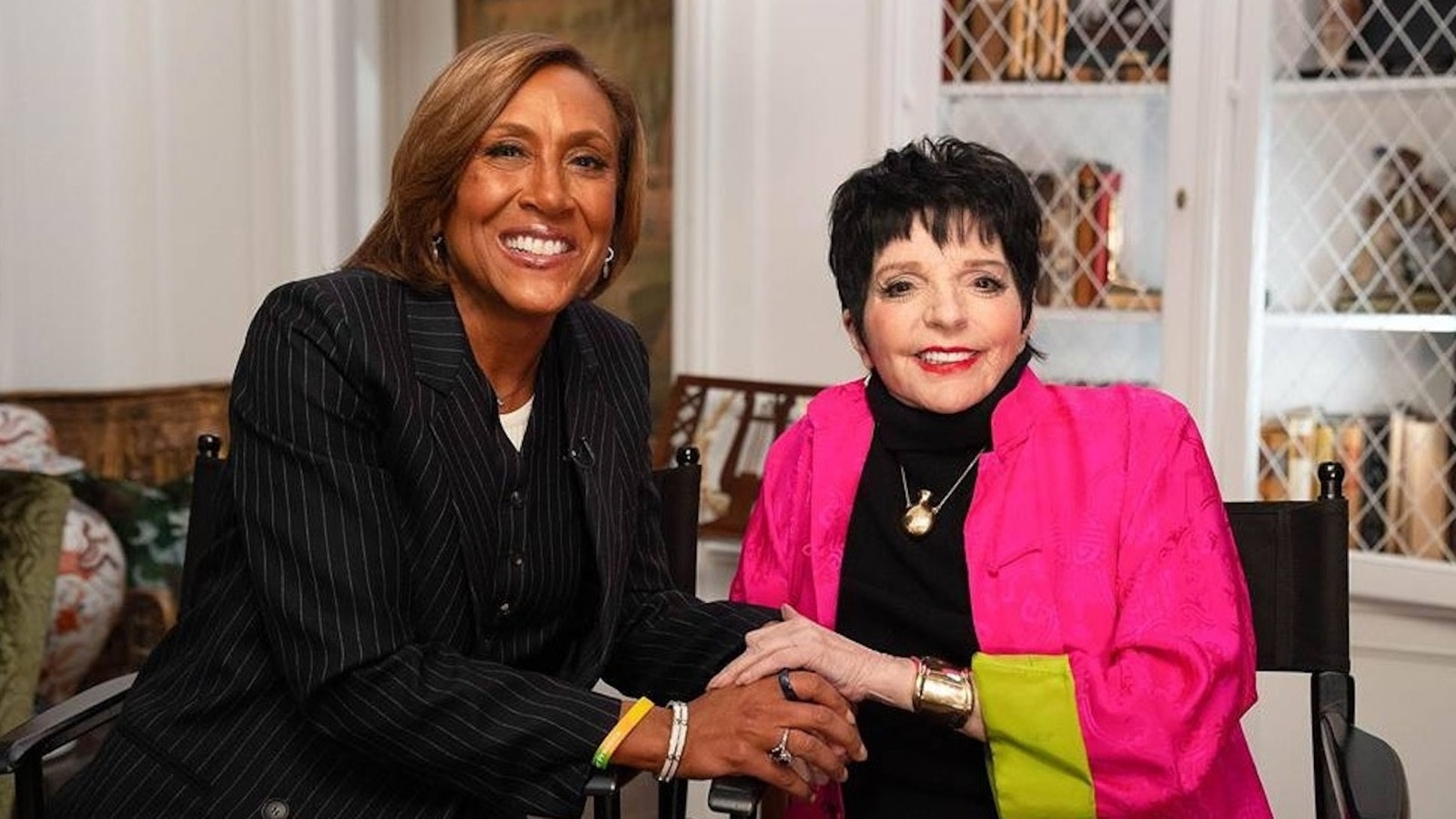
Liza Minnelli, the legendary actress and singer who captured hearts on stage and screen for decades, is finally sharing her story in her own words. In a candid conversation with “Good Morning America” co-anchor Robin Roberts, Minnelli discussed her new memoir, “Kids, Wait Till You Hear This! My Memoir,” a deeply personal account co-written with her best friend of four decades, renowned pianist and vocalist Michael Feinstein. Born on March 12, 1946, in Los Angeles to two of Hollywood’s most iconic figures—actress and singer Judy Garland and acclaimed director Vincente Minnelli—Liza never had a choice about fame; it was her birthright. Yet as she approaches her 80th birthday, she’s determined to tell her own story before others define it for her. The memoir offers an intimate look at what it was really like growing up in a household where creativity flourished but darkness also lurked, where laughter filled the rooms but pain often hid just beneath the surface.
Describing her childhood home to Roberts, Minnelli painted a picture of a place where “the humor was everywhere, everywhere.” This wasn’t just any family—this was Hollywood royalty, where dinner conversations might involve the greatest directors, actors, and artists of the era. Young Liza absorbed not just the glamour but the incredible work ethic that defined her parents’ lives. She began acting at a remarkably young age, following in footsteps that were already legendary. Her meteoric rise seemed almost inevitable, yet it was fueled by more than just her famous last name. Minnelli possessed a raw talent and magnetic stage presence that was entirely her own, something that would become undeniable as she collected accolades throughout her career, including an Oscar for her unforgettable 1972 performance in “Cabaret,” five Emmy nominations with one win, and three Tony Awards for her electrifying work in Broadway productions like “Flora the Red Menace” and “Liza’s at The Palace…”
The Complex Bond Between Mother and Daughter
Perhaps one of the most touching aspects of Minnelli’s memoir is her honest portrayal of her relationship with her mother, Judy Garland. This wasn’t the typical mother-daughter dynamic—it was something much more complex, forged in the unique circumstances of two people who both understood what it meant to live under the unforgiving glare of public scrutiny. “We just knew each other, so we talked like friends,” Minnelli revealed to Roberts, her voice carrying the weight of memories both beautiful and painful. “And I was there for her, you know, and she would come to me, and it could be about anything.” This reversal of traditional roles, where the daughter often became the confidante and supporter, speaks to the unusual pressures that shaped their bond.
Minnelli didn’t shy away from discussing the darker chapters of her mother’s life—the romantic troubles, the professional setbacks, and perhaps most significantly, the substance abuse issues that plagued Garland throughout her career. With a mixture of love and righteous anger, Liza reflected on how the industry treated her mother: “They kept mama working so hard. They had beat her up so badly. When you’re this high to be put on the stage, that’s not a very good thing. But she fought her way through all of it.” These words paint a devastating picture of child stardom in Hollywood’s Golden Age, where Judy Garland, after becoming famous as a teenager playing Dorothy in “The Wizard of Oz,” was essentially consumed by an industry that demanded everything and offered little protection in return. Watching her mother’s struggles gave Liza a front-row seat to both the heights of stardom and its potential to destroy, lessons that would prove both valuable and haunting in her own life.
The Making of an Icon Through Hard Work and Determination
Michael Feinstein, Minnelli’s co-author and friend of 40 years, offered his perspective on what made Liza not just famous but iconic. “I think one of the things about Liza is that her fame and her having become an icon is not accidental,” Feinstein explained to Roberts. “It’s something that she created through extraordinary hard work that she saw in her parents.” This observation cuts to the heart of what distinguishes Minnelli from many other second-generation stars who might have coasted on their famous names. She witnessed firsthand the relentless dedication her parents brought to their craft—the late nights, the perfectionism, the sacrifice—and she internalized those values.
That work ethic translated into a career that spanned multiple mediums and generations. From her show-stopping musical performances to her later work in high-profile comedies like “Arrested Development” and “Sex and the City 2,” Minnelli demonstrated remarkable versatility and staying power. Her image—the distinctive short haircut, the bold stage presence, the powerful voice—became so embedded in popular culture that countless references and imitations followed. Yet this widespread recognition came with its own complications. As Feinstein noted, the co-opting of her image and the many stories others told about her life eventually pushed Minnelli to take control of her own narrative: “You came to the point where you wanted to tell about your life, because, otherwise, other people will tell the story.” In an age where celebrity stories are constantly being rewritten, reinterpreted, and sometimes distorted, Minnelli’s decision to share her truth represents an act of reclamation.
Confronting the Demons of Addiction
Among the most courageous aspects of Minnelli’s memoir is her candid discussion of her own battles with substance abuse, a struggle that echoed her mother’s challenges in painful ways. In an excerpt shared with ABC News, Minnelli writes with stark honesty about her first experience with drugs: “It was the first time I took any such drug, and I marveled at how quickly it took the edge off. What began as a one-day blessing soon turned into a habit, then a full-blown case of addiction in the years ahead.” These words capture the insidious nature of addiction—how something that initially provides relief or escape can gradually tighten its grip until it controls your life.
What makes Minnelli’s account particularly powerful is her recognition that addiction isn’t something you simply overcome and forget; it’s an ongoing battle. She writes in her book that she fights every day to keep the “disease” of addiction at bay, acknowledging both the medical nature of substance abuse disorders and the constant vigilance required to maintain sobriety. This level of vulnerability from someone who has spent most of her life in the public eye is remarkable. In sharing her struggles so openly, Minnelli offers hope and solidarity to others facing similar battles, demonstrating that addiction doesn’t discriminate based on fame, talent, or success. Her willingness to discuss this aspect of her life also serves as a tribute to her mother, perhaps helping to destigmatize the struggles that Judy Garland faced in an era when such issues were often hidden or misunderstood.
Finding Peace as Time Marches On
As Minnelli prepares to celebrate her 80th birthday on March 12th, there’s a sense of hard-won serenity in her reflections. Speaking with Roberts, she described having lived a full life and finding “sweet peace” in the quieter times—a statement that speaks volumes about her journey from the chaos of early fame to a more settled present. This peace wasn’t given to her; she earned it through survival, through choosing recovery, through the simple act of enduring when the spotlight burned too bright and the pressures became too intense.
When Roberts asked about her birthday plans, Minnelli’s response was delightfully unexpected: “I don’t know. Let’s go to Disneyland.” This lighthearted answer reveals something essential about who Liza Minnelli is beneath all the awards, the iconic performances, and the dramatic life story—someone who can still embrace joy and spontaneity, who hasn’t lost the ability to imagine simple pleasures even after eight decades of extraordinary experiences. It’s a reminder that behind the legend is a real person who has known both tremendous highs and devastating lows, who has celebrated on the world’s biggest stages and fought private battles in the dark, and who has emerged with her spirit not just intact but somehow still capable of wonder. Her memoir, “Kids, Wait Till You Hear This! My Memoir,” now available, promises to be more than just another celebrity autobiography—it’s a testament to resilience, a love letter to the parents who shaped her, and an honest reckoning with both the gifts and curses of a life lived in the spotlight from the very beginning.