
The Year of the Horse: A Global Celebration Blending Ancient Traditions with Modern Innovation
Traditional Festivities Welcome the Lunar New Year Across Continents
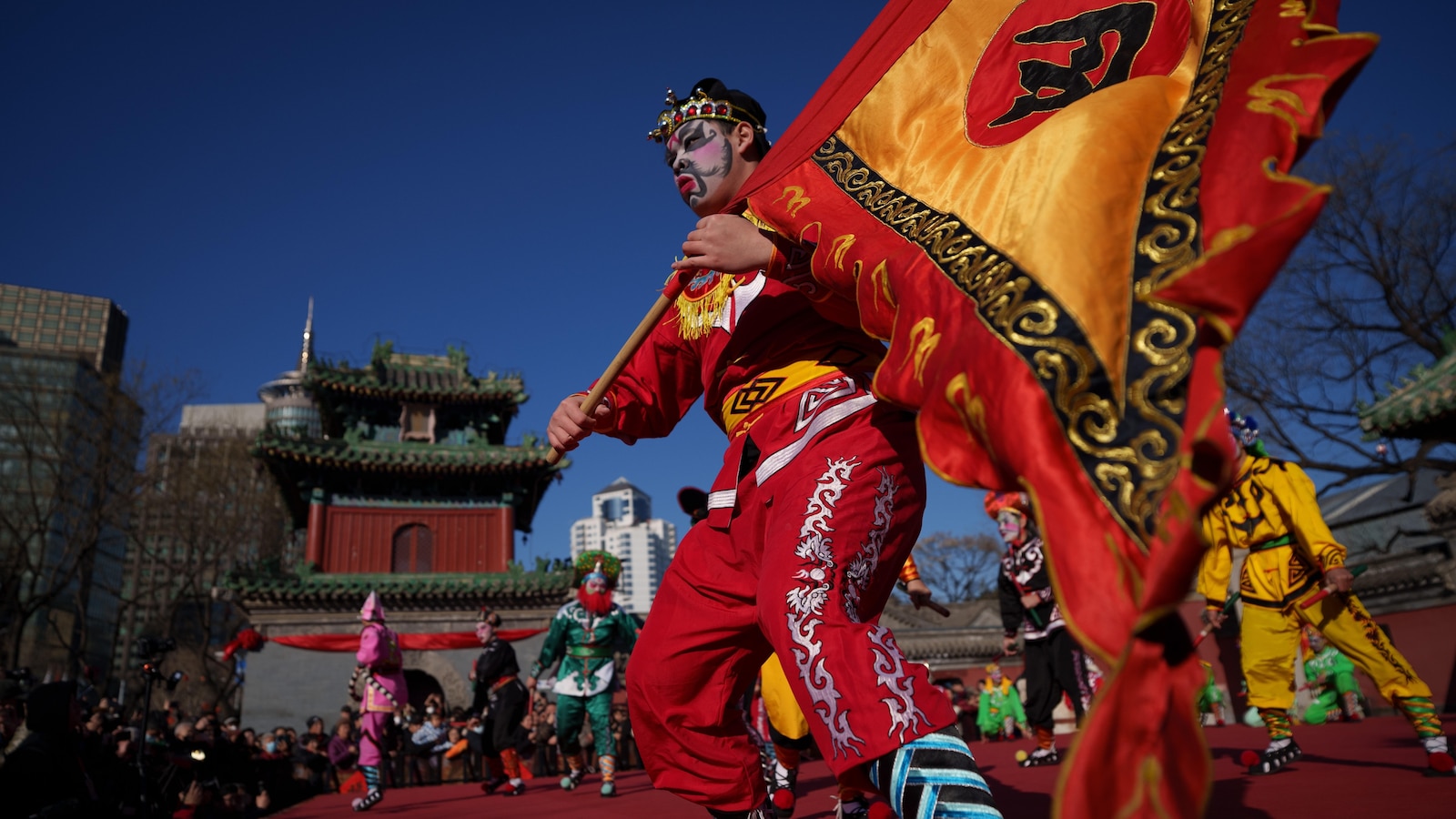
As Tuesday dawned across Asia and beyond, millions of people gathered to celebrate one of the world’s most cherished holidays—the Lunar New Year. This year marks the transition from the Year of the Snake to the Year of the Horse, one of the twelve animals in the ancient Chinese zodiac. From Beijing’s historic temples to the bustling streets of Buenos Aires, the celebrations showcased a fascinating blend of centuries-old customs and cutting-edge technology. In China’s capital, thousands descended upon the former Temple of Earth, transforming it into a vibrant marketplace where vendors sold traditional snacks, colorful toys, and commemorative trinkets. Sun Jing, who had brought her parents to Beijing for the festivities, captured the sentiment of many when she remarked that the atmosphere felt as lively and authentic as she remembered from her childhood. “I haven’t felt such a strong sense of Lunar New Year festivity in a very, very long time,” she shared, her words reflecting a collective nostalgia and joy that permeated the celebrations. The Lunar New Year holds profound significance as the most important annual holiday in China and several other East Asian nations, and its influence has spread far beyond the region, creating a truly global celebration of renewal, family, and hope.
When Ancient Prayers Meet Artificial Intelligence
The most striking feature of this year’s Lunar New Year celebration was undoubtedly the prominent role of humanoid robots, particularly during China’s iconic CCTV Spring Festival Gala broadcast on Monday night. This televised extravaganza, watched by hundreds of millions of people annually, has long served as a cultural touchstone for Chinese communities worldwide. This year’s production featured an unforgettable martial arts performance that brought together children and advanced humanoid robots from Unitree Robotics in a carefully choreographed display. For several mesmerizing minutes, these machines executed complex movement sequences alongside young performers, even demonstrating the precision required to wield traditional Chinese swords. The performance wasn’t merely entertainment—it represented China’s determined push to develop increasingly sophisticated robotics powered by enhanced artificial intelligence capabilities. The juxtaposition of ancient martial arts traditions with state-of-the-art technology created a visual metaphor for China’s broader ambitions: honoring the past while aggressively pursuing technological leadership in the future. While many viewers applauded the innovation, praising the robots for providing inspiration and direction for young people, the performance also sparked reflection about what might be lost in such rapid modernization.
The Generational Divide: Progress Versus Nostalgia
Not everyone embraced the high-tech additions to the traditional celebration with equal enthusiasm. Li Bo, one viewer interviewed about the robot performance, articulated a sentiment that likely resonated with many in older generations. While acknowledging China’s impressive advances in robotics, he expressed concern about what these innovations meant for the holiday experience itself. “It lacks a bit of the New Year atmosphere,” Li Bo explained. “It’s not as enjoyable as when I was little watching the gala.” His comments highlight a fundamental tension that exists in rapidly modernizing societies: the challenge of preserving cultural authenticity and emotional resonance while simultaneously embracing technological progress. The debate reflects broader questions about identity and tradition in an age of accelerating change. For younger Chinese viewers, the robots likely represent pride in their nation’s technological achievements and a vision of an exciting future. For older generations, the same robots might symbolize a departure from the warmth and human connection they associate with cherished childhood memories. This generational divide isn’t unique to China—it mirrors conversations happening worldwide about the role of technology in our lives and whether innovation should have limits when it comes to preserving cultural heritage. The robots at the Spring Festival Gala have become an unexpected focal point for these larger questions about what we preserve and what we’re willing to transform in the name of progress.
Sacred Traditions Endure Across Asia
Despite the technological innovations making headlines, the heart of Lunar New Year celebrations remained deeply rooted in spiritual practices that have endured for generations. In temples throughout the region, the ancient ritual of burning incense and offering prayers continued as it has for centuries. In Hong Kong, devoted worshippers formed long queues outside temples, waiting patiently for their chance to make wishes as midnight arrived and the new year officially began. Holding clusters of fragrant incense sticks, people bowed their heads reverently multiple times before placing their offerings in large containers positioned before temple halls, the smoke carrying their hopes and prayers skyward. In Taipei, Taiwan’s capital, the solemn sound of temple bells resonated through the morning air, rung precisely 108 times—a number considered deeply auspicious in Buddhist tradition. At the Baoan Temple, worshippers gathered in large numbers, lighting incense, bowing in prayer, and leaving beautifully arranged bouquets of colorful flowers on outdoor tables throughout the temple grounds. These spiritual observances represent continuity with the past and provide a sense of grounding during times of rapid change. Meanwhile, in Vietnam, where the festival is known as Tet, the celebrations took on their own distinctive character with outdoor countdown events featuring live entertainment, traditional songs, and spectacular fireworks displays that illuminated bridges and skyscrapers across multiple cities. Crowds gathered in public spaces, clapping rhythmically to pop music performances while enjoying the visual spectacle, demonstrating how each culture adds its own flavor to the broader Lunar New Year tradition.
A Truly Global Celebration from Moscow to Buenos Aires
The reach of Lunar New Year celebrations extends far beyond Asia, reflecting both the global Chinese diaspora and the holiday’s growing universal appeal. In Moscow, the third annual Lunar New Year celebration took place amid a backdrop of strengthening China-Russia relations—ties that have generated concern among European governments due to Russia’s ongoing conflict in Ukraine. Nevertheless, the festivities proceeded with enthusiasm as people sampled authentic Chinese cuisine from numerous food stalls and strolled along snow-covered streets beautifully decorated with traditional red lanterns and dragon motifs. The two-week festival, held at various venues throughout the Russian capital, represents a cultural bridge between two major powers and demonstrates how holiday celebrations can transcend geopolitical tensions. Perhaps even more remarkable was the enthusiastic celebration in Buenos Aires, Argentina, where thousands gathered in the city’s Chinatown district to participate in the festivities. The Chinese immigrant community in Argentina, numbering more than 180,000 people, ranks among the South American country’s most dynamic and economically significant populations. Spectators enjoyed spectacular dragon and lion dances performed on main stages, alongside impressive martial arts demonstrations that showcased traditional Chinese culture. The Buenos Aires celebration illustrates how immigrant communities maintain connections to their cultural heritage while simultaneously enriching the diverse cultural tapestry of their adopted homelands.
Looking Forward: Tradition and Innovation in Harmony
As the Year of the Horse begins, the global Lunar New Year celebrations of 2025 have offered a fascinating snapshot of tradition and modernity coexisting in sometimes comfortable, sometimes uneasy harmony. The image of humanoid robots performing martial arts alongside children on China’s most-watched television program will likely be remembered as a defining moment—one that captures both the nation’s technological ambitions and the questions these ambitions raise about cultural preservation. Yet the enduring appeal of incense-filled temples, family gatherings, traditional foods, and ancient prayers demonstrates that technology, no matter how advanced, cannot entirely replace the human need for ritual, connection, and continuity with the past. The debates sparked by innovations like the robot performers are healthy and necessary, pushing communities to consciously decide which traditions to preserve, which to adapt, and which new practices to embrace. As the festival continues over the coming weeks, with celebrations planned across dozens of countries and countless cities, it serves as a powerful reminder of humanity’s shared desires for renewal, prosperity, and connection. Whether through thousand-year-old prayer rituals or cutting-edge robotic demonstrations, people worldwide are expressing essentially the same hopes: for happiness, success, and a better future for themselves and those they love. The Year of the Horse, with its symbolism of energy, freedom, and forward momentum, seems particularly fitting for a world navigating the complex relationship between honoring the wisdom of the past and galloping confidently toward an uncertain but potentially extraordinary future.