

California Warehouse Arson: Worker Allegedly Sets $500 Million Fire Over Wage Dispute
The Incident and Federal Charges
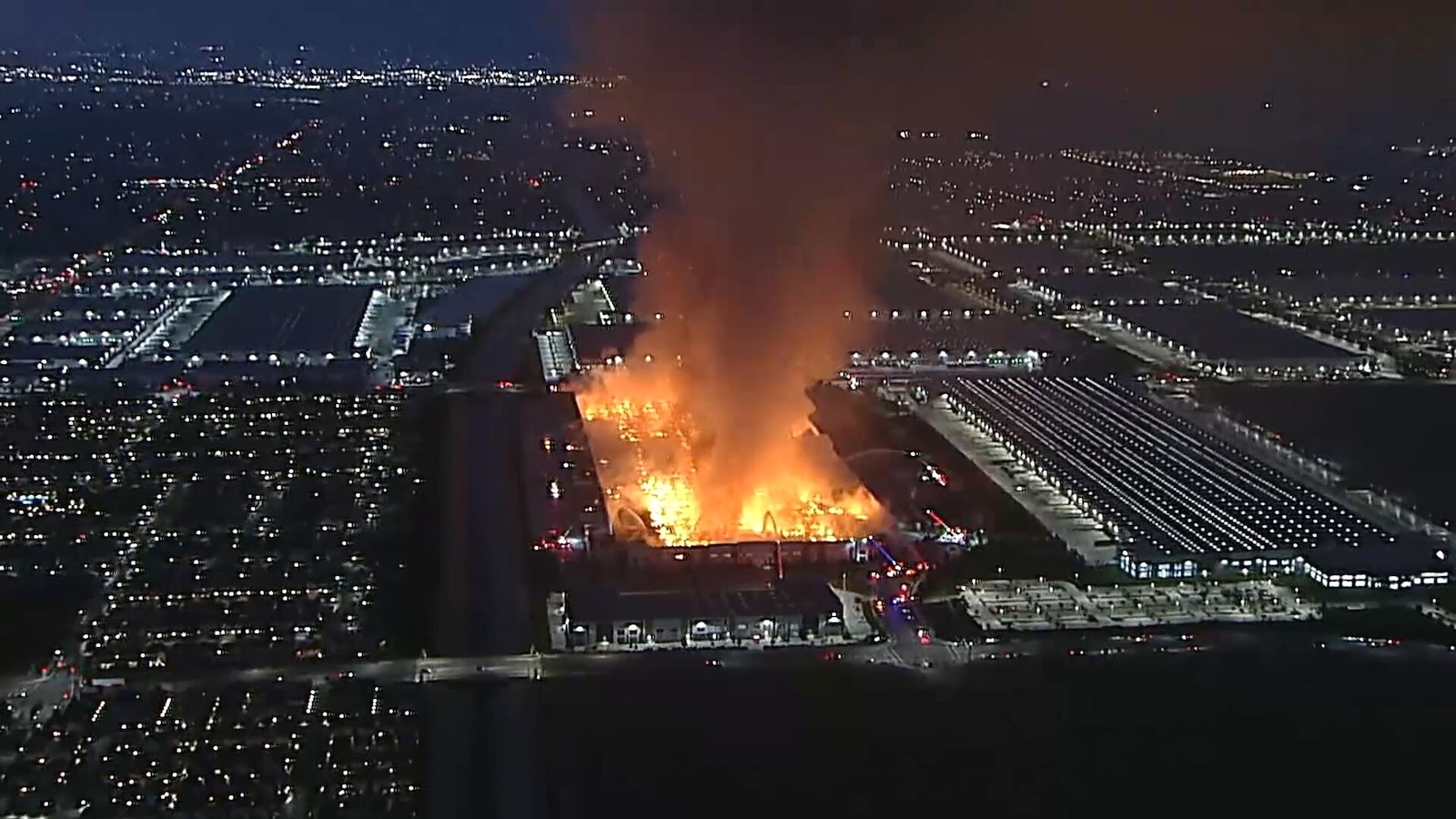
A devastating warehouse fire in Southern California has led to federal charges against a 29-year-old worker who allegedly deliberately set the blaze that caused approximately $500 million in damages. Chamel Abdulkarim of Highland, California, now faces serious federal charges including arson of a building used in interstate and foreign commerce, according to the Department of Justice announcement made on Friday. The massive fire, which occurred on April 7 at a distribution center in Ontario, California, completely destroyed the enormous 1.2 million-square-foot facility. While the financial losses were staggering, authorities have confirmed that fortunately no injuries were reported during the incident, according to the Ontario Fire Department. Abdulkarim was taken into custody on Tuesday, initially on state charges, and was expected to face arraignment in state court, meaning he will be dealing with both federal and state legal proceedings for his alleged actions.
Self-Documentation of the Alleged Crime
What makes this case particularly unusual and damning from a prosecutorial standpoint is that Abdulkarim allegedly documented his own criminal activity through video recordings. According to prosecutors, on the day of the fire, the suspect recorded himself on video actually setting fire to paper goods inside the Ontario distribution center. This self-made evidence could prove crucial in the legal proceedings against him. Beyond simply recording the act itself, Abdulkarim allegedly made his motivations crystal clear in the video footage. In the recording, he reportedly stated, “If you’re not going to pay us enough to [expletive] live or afford to live, at least pay us enough not to do this [expletive],” according to the Department of Justice statement. This statement suggests the alleged arson was a direct response to what the suspect perceived as inadequate wages and compensation from his employer. The decision to film himself committing the crime and articulating his grievances demonstrates either a desire to make a public statement about worker treatment or a significant lapse in judgment about the legal consequences of his actions.
Social Media Posts and Subsequent Communications
The alleged documentation of the crime didn’t stop with the initial video. Prosecutors say that Abdulkarim posted videos on social media showing him starting the fire, essentially broadcasting his alleged criminal activity to a potentially wide audience. This social media activity would provide investigators with additional evidence and could help establish a timeline of events. Following the fire, Abdulkarim allegedly engaged in text messages and phone calls where he continued to make incriminating statements about his actions. According to prosecutors, in these communications he reportedly boasted, “I just cost these [expletive] billions,” seemingly taking pride in the massive financial damage caused by the warehouse destruction. In other messages, he allegedly expressed his frustration with wage issues, stating, “All you had to do was pay us enough to live. … Didn’t see the shareholders picking up a shift.” These statements paint a picture of someone who felt deeply aggrieved by what he perceived as unfair treatment by his employer, particularly regarding the disparity between worker compensation and corporate profits. The reference to shareholders not “picking up a shift” suggests resentment toward the corporate structure where those who benefit most financially from the company don’t perform the day-to-day labor.
Comparison to Other High-Profile Cases
Perhaps most troubling from a broader societal perspective, court documents reveal that in one phone call, Abdulkarim allegedly compared his own actions to those of Luigi Mangione, the man accused of killing United Healthcare CEO Brian Thompson. This comparison suggests that Abdulkarim may have viewed his alleged arson as part of a larger narrative of workers or ordinary citizens striking back against corporate entities they perceive as exploitative or harmful. The reference to Mangione, whose case received significant media attention and sparked widespread discussion about healthcare industry practices and corporate accountability, indicates that Abdulkarim may have seen himself as making a similar statement about worker treatment and corporate responsibility. This connection raises concerns among law enforcement and security professionals about the potential for copycat incidents inspired by high-profile acts of violence or destruction targeting businesses or corporate leaders. It also highlights the complex social tensions surrounding issues of income inequality, worker compensation, and the relationship between employees and corporations in contemporary America.
The Scale of Destruction and Investigation
The warehouse that was destroyed in this alleged arson attack was truly massive in scale. At 1.2 million square feet, the facility represented a significant piece of distribution infrastructure in Southern California. The complete destruction of such a large building naturally resulted in enormous financial losses, with prosecutors estimating the damage at approximately $500 million. This figure likely includes not only the physical structure itself but also inventory, equipment, and business interruption costs. The distribution center’s role in interstate and foreign commerce—a key element of the federal charges—means that its destruction potentially affected supply chains and business operations across state lines and possibly internationally. The investigation into this fire would have involved multiple agencies, including local fire investigators, state authorities, and federal investigators from agencies like the Bureau of Alcohol, Tobacco, Firearms and Explosives (ATF), which typically takes the lead in major arson investigations. The extensive video evidence, social media posts, and electronic communications allegedly created by the suspect likely made the investigative process more straightforward than many arson cases, where determining the cause and identifying the perpetrator can be extremely challenging.
Legal Implications and Broader Context
Chamel Abdulkarim now faces a complex legal situation involving both federal and state charges. The federal charge of arson of a building used in interstate and foreign commerce is a serious offense that carries potentially severe penalties, including lengthy prison sentences if he is convicted. The dual prosecution at both state and federal levels is not uncommon in cases involving significant interstate commerce implications or particularly serious crimes. As of the latest reports, attorney information for Abdulkarim was not immediately available, though he will certainly need robust legal representation given the severity of the charges and the apparent evidence against him. This case raises important questions about workplace grievances, appropriate channels for addressing employment concerns, and the devastating consequences that can result when individuals take extreme actions. While debates about fair wages, income inequality, and worker treatment are legitimate and important societal discussions, this alleged act of arson demonstrates the line between lawful protest or advocacy and criminal destruction. The case may also prompt businesses to examine their compensation structures, workplace culture, and employee satisfaction measures, not just from a legal liability standpoint but as a matter of maintaining a healthy, functional work environment where grievances can be addressed constructively. As this case proceeds through both state and federal court systems, it will likely continue to attract attention as an extreme example of workplace grievance gone criminally wrong, and may contribute to ongoing national conversations about labor relations, corporate responsibility, and economic justice in America.