


The Mediterranean’s Hidden Tragedy: When Migrants Vanish Without a Trace
A Crisis of Silence in the World’s Deadliest Waters
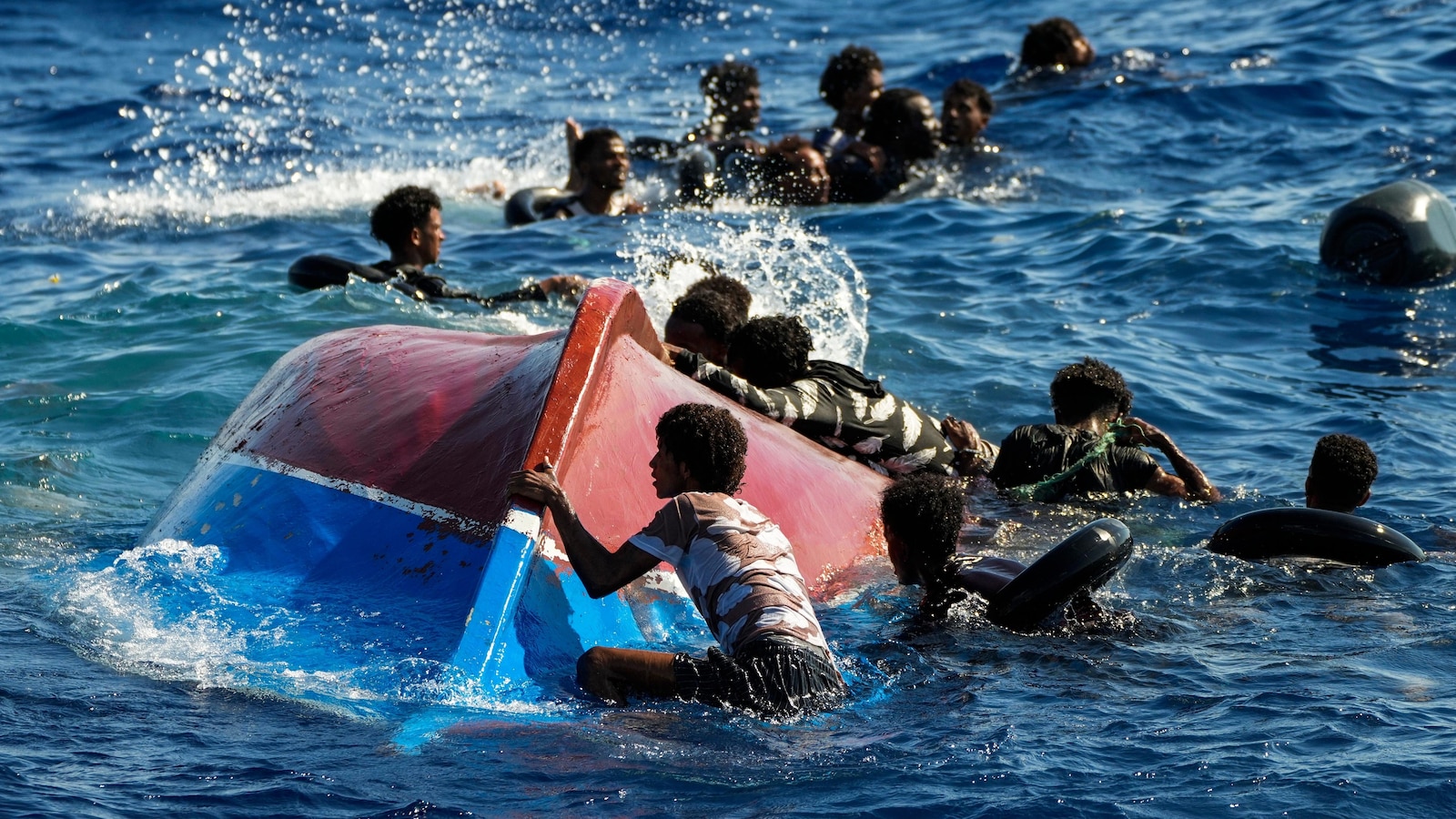
The Mediterranean Sea has become a graveyard shrouded in secrecy. Day after day, bodies wash up on beaches across southern Europe and North Africa. Families desperately dial phone numbers that ring endlessly with no answer. Makeshift migrant camps stand empty, their inhabitants having vanished overnight without a trace. What’s happening in the Mediterranean represents one of the most heartbreaking humanitarian crises of our time, yet it’s increasingly happening in the shadows, hidden from public view by governments that refuse to share what they know.
The early months of 2026 have marked the deadliest start to any year for people attempting the perilous journey across the Mediterranean Sea. According to the United Nations’ International Organization for Migration, at least 682 people have been confirmed missing or dead as of mid-March. But experts and humanitarian workers believe this number barely scratches the surface of the actual tragedy unfolding. The real death toll is almost certainly much higher, possibly several times the confirmed count. What makes this crisis particularly troubling is not just the loss of life, but the deliberate curtain of silence that has fallen over the region. Italy, Tunisia, and Malta—the three countries most responsible for search and rescue operations in this area—have quietly begun restricting information about migrant rescues and shipwrecks. This policy of opacity has made it nearly impossible for journalists to report accurately on what’s happening and for families to learn the fate of their loved ones.
The Cyclone That Revealed a Strategy of Concealment
The extent of this information blackout became starkly apparent in late January when Cyclone Harry tore through the region with devastating force. The storm brought torrential rains, winds reaching 100 kilometers per hour, and waves towering nine meters high—conditions that would challenge even well-equipped vessels, let alone the overcrowded, unseaworthy boats typically used by migrants. In the cyclone’s aftermath, human rights organizations like Refugees in Libya began receiving alarming reports suggesting that more than 1,000 people had gone missing after attempting crossings from Tunisia during the storm. Yet government authorities have offered no confirmation, no denial, no correction—just silence.
In the weeks following Cyclone Harry, the sea began giving up its dead. More than twenty decomposing bodies washed ashore in Italy and Libya. Other remains were spotted floating in the open water. Matteo Villa, a migration researcher at the Italian Institute for International Political Studies, characterized what’s happening as “a strategy of silence”—a deliberate effort to keep the public from knowing the full scope of the tragedy. The organization Refugees in Libya has been attempting to piece together information from migrants still in Tunisia and from relatives abroad, but they acknowledge the difficulty of getting accurate numbers “because there is no central system recording departures, losses, or recoveries.” Their founder, David Yambio, noted the particular challenge of accounting for children: “We are looking at boats that never counted how many kids are inside.” The only confirmed survivor from the boats lost during Cyclone Harry was pulled from the water by a merchant vessel on January 22. According to the rescue crew, he had been traveling with about fifty other people, some of whose bodies could be seen floating nearby in video footage. He was reportedly evacuated to Malta, but Maltese authorities have refused to respond to questions about him or the recovery of any bodies.
Families Left in Agonizing Limbo
For the families of missing migrants, the lack of information transforms grief into something even more unbearable—a limbo of not knowing. Josephus Thomas, a migrant from Sierra Leone who serves as a community leader in Tunisia’s coastal town of El Amra, expressed the human dimension that statistics can’t capture: “Europe should know that these people who got drowned in the sea have family members, have dreams, have passions.” These weren’t just numbers; they were sons and daughters, mothers and fathers, people with hopes for better lives who made desperate choices in desperate circumstances.
In early February, migrants gathered in olive groves near Sfax, Tunisia, for a memorial ceremony. They prayed and cried for loved ones they presumed dead after weeks without any word. Dr. Ibrahim Fofana, whose relatives went missing in late January, spoke in a video that captured the raw anguish of the moment: “All of us here are in deep trauma, are in deep agony.” He pleaded with authorities to at least identify the bodies that had washed ashore in Italy, so families could have some closure, some certainty, some ability to properly mourn. The inability to verify deaths has become so widespread that even the UN’s International Organization for Migration struggles to maintain accurate records. Julia Black, who leads the organization’s Missing Migrants Project, revealed that in the previous year alone, at least 1,500 people were reported missing whose fates could not be confirmed. The problem has only worsened in 2026. “We started a new secondary data set of what we are calling unverifiable cases because it’s just become so many,” Black explained. By mid-March of this year, they already had more than 400 missing people they could not verify—people who exist in a bureaucratic and human limbo, neither confirmed dead nor accounted for alive.
The Systematic Erosion of Transparency
The information drought didn’t happen overnight but represents a gradual erosion of transparency that has accelerated dramatically in recent years. The Associated Press made repeated requests to authorities in Tunisia, Italy, and Malta, asking why they weren’t sharing information about migrant rescues and what their policies were regarding such disclosures. Not a single government responded. In Tunisia, the shutdown of information coincided with a controversial 2023 deal with the European Union to curb migration in exchange for financial aid. Initially, Tunisian authorities regularly shared numbers on migrants they were intercepting at sea, eager to demonstrate compliance with their European partners. But the deal was followed by a brutal crackdown on migrants within Tunisia, with thousands detained or reportedly dumped in desert areas. By June 2024, Tunisia’s Ministry of Interior stopped releasing any information on migrants, officially citing security reasons. Romdhane Ben Amor, spokesperson for the Tunisian Forum for Economic and Social Rights (FTDES), believes the motives were actually political—the real numbers were incompatible with Tunisia’s narrative that it wasn’t serving as Europe’s border guard.
Italy’s retreat from transparency has an even longer history. The Italian coast guard once provided detailed monthly data on migrants rescued at sea. Those monthly reports became quarterly, then stopped entirely in 2020. In 2022, even previous reports were scrubbed from the coast guard’s website. Despite nearly 5,000 migrants disembarking on Italian shores by March 2026 according to Interior Ministry statistics, the coast guard issued not a single migration-related press release. When the AP sent five separate email requests seeking information about boats reported missing during Cyclone Harry and related search efforts, they received no response. A coast guard officer who answered the phone said only that they had no “further verified and confirmed information regarding the circumstances.” The AP also filed a Freedom of Information request, which remained pending. Researcher Matteo Villa minced no words about what’s happening: “It is very clearly a political strategy to repress as much information as possible from the public.”
The Shrinking Space for Humanitarian Oversight
Making matters worse, the organizations that previously helped fill information gaps are increasingly unable to do so. A global wave of funding cuts combined with government-imposed restrictions across the region has severely limited the capacity of humanitarian groups to monitor the situation. Julia Black of the IOM’s Missing Migrants Project noted this troubling trend: “We’ve seen the restriction of access for humanitarian actors, which is not right. And now we’re seeing even the restriction of information.” When both official channels and independent monitors are silenced, tragedies can unfold almost entirely in the dark. The European Union’s border agency Frontex provided one of the few glimpses into what happened during Cyclone Harry. They reported spotting eight boats carrying approximately 160 migrants between January 14 and 24, when the cyclone struck. Six boats were rescued by Italian authorities, Frontex said, but the fate of the other two remains unknown—a bureaucratic phrase that likely represents dozens of deaths that will never be officially counted or acknowledged.
A Humanitarian Catastrophe Hidden in Plain Sight
What’s unfolding in the Mediterranean represents not just a migration crisis but a crisis of accountability and human dignity. The world’s deadliest migration route is becoming deadlier still, not necessarily because conditions at sea have worsened but because the systems meant to save lives and document losses have been deliberately dismantled or muted. When governments withhold information about search and rescue operations, when bodies wash ashore without investigation or identification, when families cannot learn the fate of their loved ones, the message sent is chilling: these lives don’t matter enough to count. The implications extend beyond migration policy. The systematic suppression of information prevents journalists from reporting accurately, which keeps the public uninformed. An uninformed public cannot hold governments accountable for their policies and actions. This creates a vicious cycle where tragedies can multiply in the darkness, unseen and unremarked upon, while political leaders face no pressure to change course or improve rescue operations.
Behind every statistic—confirmed or unverifiable—is a human story. These are people who made the agonizing decision to risk death for the possibility of a better life, often fleeing violence, persecution, or grinding poverty. They trusted their lives to dangerous journeys across one of the world’s most perilous stretches of water. When they disappear, they leave behind parents who will never stop wondering, children who will grow up without answers, and communities traumatized by loss. The strategy of silence may serve various political purposes, but it comes at an enormous human cost. As Dr. Fofana’s plea reminds us, the people drowning in the Mediterranean have families, dreams, and passions—they have humanity that doesn’t disappear just because governments refuse to acknowledge their deaths. Until transparency is restored and accountability demanded, the Mediterranean will continue to claim lives that go uncounted, creating invisible shipwrecks that haunt the conscience of a world that has chosen not to look.