
A Mother’s Love Stitched in Yarn: How Handmade Octopi Are Helping Premature Babies in Detroit
When Joelle Haley went into labor on Christmas Day, she could never have imagined that her personal struggle would spark a movement of compassion that would help countless premature babies. Her son Kieran arrived two days after Christmas, born at just 24 weeks — far too early. As she sat in the dimmed hospital room at the Children’s Hospital of Michigan Neonatal Intensive Care Unit at DMC Hutzel Women’s Hospital, watching her tiny son connected to various life-sustaining tubes and wires, Haley felt a profound sense of helplessness. What could she do to comfort her baby when she couldn’t be there? The answer came to her in the form of a craft she’d known since childhood: crocheting. Specifically, she would create small, colorful octopi that would serve as both comfort objects and practical safety tools for her son and other premature infants fighting for their lives in the NICU.
From Overheard Conversation to Community Movement
The inspiration for Haley’s project came from an unlikely source — a casual comment from a nurse. While visiting her son in the NICU, Haley overheard a nurse mentioning that these small crocheted octopi would be helpful for the premature babies in the unit. For Haley, who had been crocheting since second grade, this was the perfect opportunity to channel her anxiety and helplessness into something productive. The 30-year-old mother immediately got to work, and before long, she had created about 20 of these small plush creatures. But Haley didn’t stop there. Understanding that there were many babies in need and wanting to extend this comfort to as many families as possible, she reached out through social media, asking others who shared her crafting skills to join her mission. The response was overwhelming and heartwarming — demonstrating the power of community when rallied around a cause that touches people’s hearts.
A Growing Wave of Compassion Across Michigan
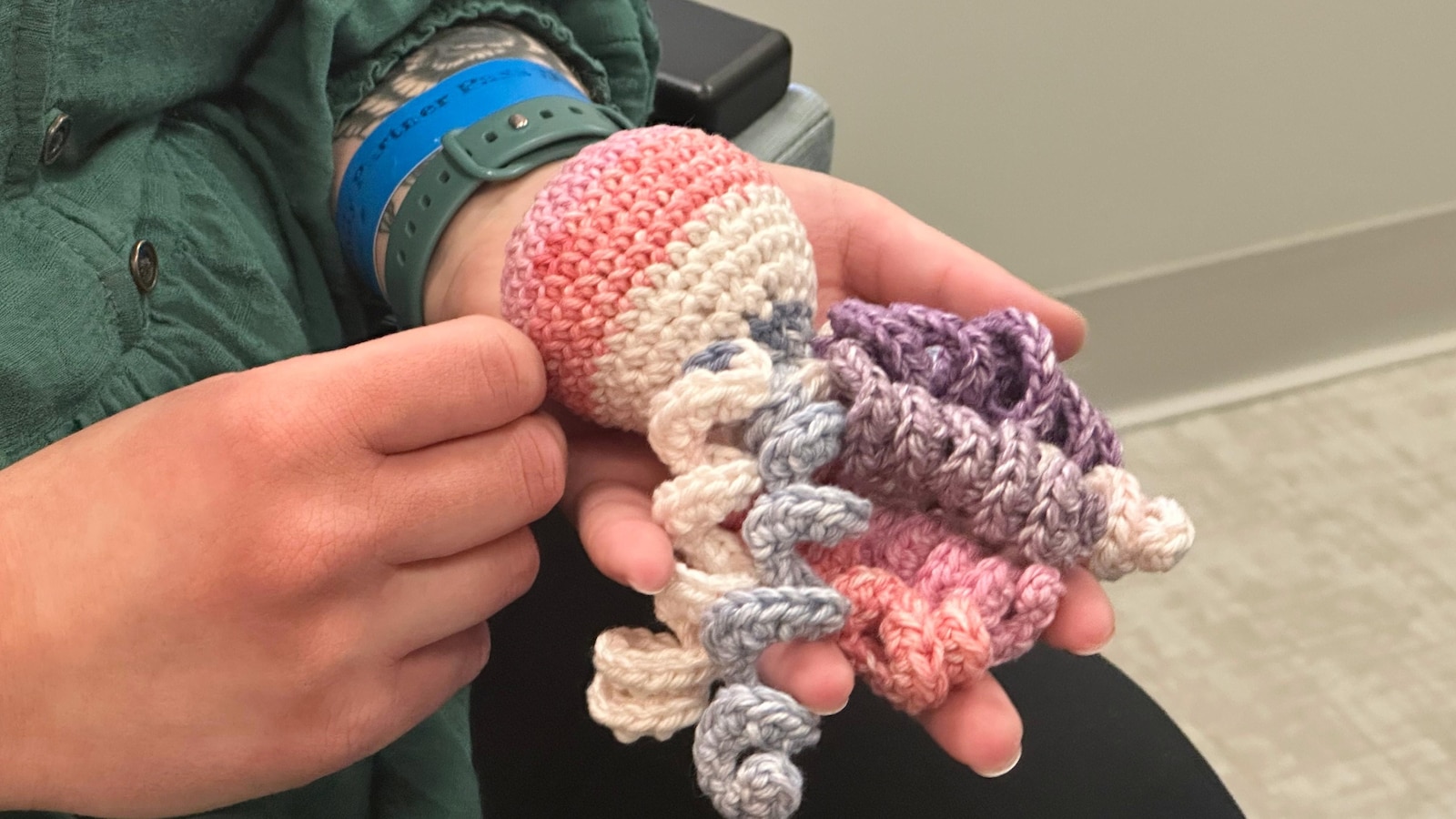
The response to Haley’s call for help exceeded her wildest expectations. What started as one mother’s personal project quickly transformed into a statewide effort of compassion and care. The last time Haley counted, an incredible 175 octopi had been donated to the hospital, with more continuing to arrive. These handmade gifts came from volunteers all across Michigan — people who had never met Kieran or Haley but were moved by the story and wanted to help in whatever way they could. As Haley delivered batches of these colorful creatures to the hospital, watching as nurses gently placed them in bassinets alongside tiny newborns, she felt a profound sense of purpose. These weren’t just cute toys; they were lifelines of comfort for babies too small to understand their surroundings but capable of feeling soothed by the soft touch of yarn against their delicate skin. The octopi, crafted in the Japanese Amigurumi style — the art of creating small plush animals from yarn — blazed with colors, bringing brightness to the clinical environment of the NICU.
More Than Just Adorable: The Medical Benefits
While the octopi are undeniably cute, their presence in the NICU serves a crucial medical purpose that goes beyond aesthetics or simple comfort. Dr. Jorge Lua, the medical director at the Children’s Hospital of Michigan Neonatal Intensive Care Unit at DMC Hutzel Women’s Hospital, explained the practical and potentially life-saving function these small creatures serve. Many babies in the NICU require breathing support through tubes, and it’s essential that these tubes remain securely in place. However, premature babies, despite their tiny size, have a natural reflex to grab at things — including the very tubes and wires that are keeping them alive. When a baby accidentally pulls out a breathing tube, the consequences can be serious and immediate. The baby will experience breathing difficulties, oxygen levels will drop, and medical staff must work quickly to restabilize the infant, potentially extending their time in intensive care. The tentacles of the crocheted octopi provide something safe for the babies’ small hands to grasp and hold onto, satisfying their need to grip something while keeping their fingers away from dangerous medical equipment.
A Mother’s Comfort From Afar
For Haley, the hardest part of having a premature baby wasn’t just the medical uncertainty — it was the emotional toll of having to leave her son in the hospital. “It was very hard to leave my son here, knowing he was in good hands even, because I was afraid ‘what if he’s upset and he has nothing or no one to comfort him in that moment?'” Haley shared, her voice reflecting the anxiety that haunts every NICU parent. The octopus she made for Kieran became more than just a safety device; it became a surrogate for her presence. Just knowing that her son had something near him that could bring him comfort helped Haley feel better and allowed her to take care of herself during this difficult time — something that many parents of hospitalized children struggle to do. She often witnessed Kieran tugging at the tubes connected to his NICU equipment, and seeing him with his octopus instead gave her peace of mind. “It helps me feel, like comforted, that I was able to help other children,” Haley said. “Seeing my son with his helps me know that he’ll be safe and comforted when I’m not here. So, I hope it brings that same feeling to other families.” In this way, the simple act of crocheting became a bridge between mother and child, spanning the physical distance that medical necessity imposed.
Healing Through the Rhythm of Creation
Beyond the practical benefits for the babies, Haley’s octopus-making served another vital purpose — helping her cope with her own anxiety and stress. “My mom taught me to help with anxiety,” Haley explained about learning to crochet. The repetitive motion of the craft gave her something to focus on, helping her feel calmer during one of the most stressful periods of her life. It takes her about 30 minutes to complete each octopus, and during that half-hour, she can channel her worry into creativity, transforming fear into something tangible and helpful. This therapeutic aspect of crafting is well-documented, with the rhythmic, repetitive movements of knitting and crocheting known to lower heart rate and blood pressure while promoting a meditative state of mind. For a mother watching her premature son fight for his life, this creative outlet became essential self-care. Haley’s story reminds us that sometimes the simple acts — the movement of a hook through yarn, the gradual formation of something beautiful from loose strands — can provide the strength we need to face overwhelming challenges. Her octopi have become symbols of hope, resilience, and the power of community, showing that even in the darkest moments, we can find ways to bring comfort, safety, and a splash of color to those who need it most.