



Artemis II Astronauts Share Breathtaking Views While Preparing for Historic Moon Flyby
A Journey Back to the Moon After Five Decades
The four astronauts aboard the Artemis II mission are making history as the first humans to venture toward the moon in over half a century. Commander Reid Wiseman, along with crew members Victor Glover, Christina Koch, and Canadian astronaut Jeremy Hansen, launched their journey aboard the Orion capsule, leaving Earth behind and heading toward humanity’s celestial neighbor. Their mission marks a momentous return to lunar exploration since the final Apollo mission touched down in December 1972. As they travel through the vastness of space, these modern-day explorers are not only pushing the boundaries of human achievement but also sharing their incredible experience with people back on Earth through stunning photographs and video feeds that capture the wonder of space travel in ways previous generations could only imagine.
Stunning Images That Put Earth in Perspective
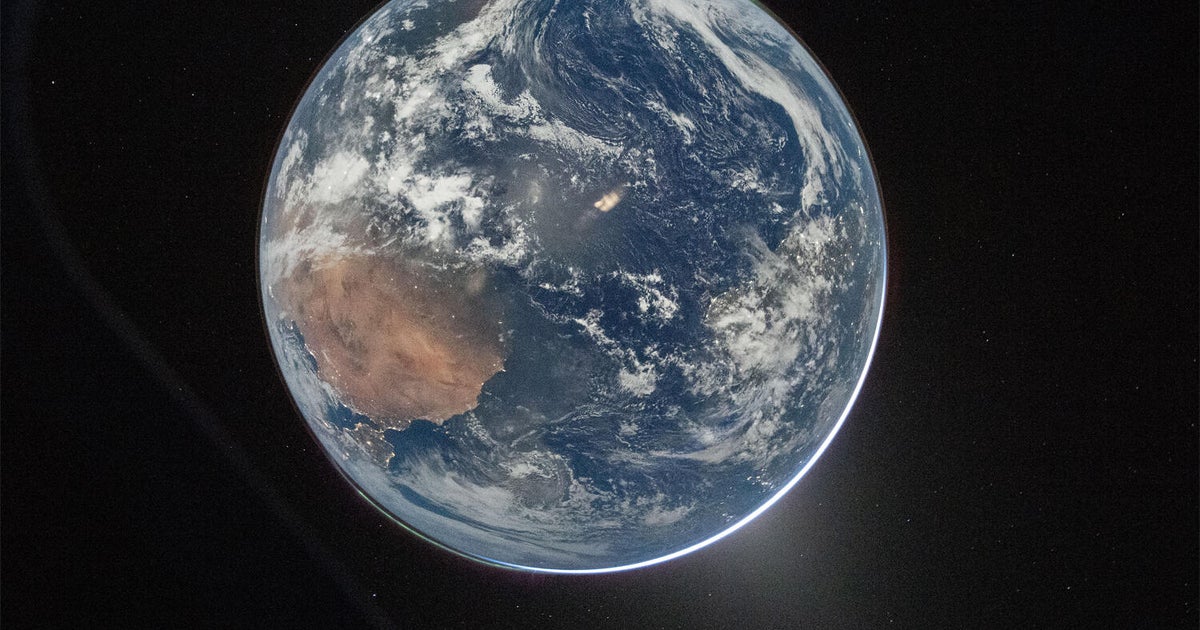
The photographs captured by Commander Wiseman during the early stages of their journey have left people around the world in awe. Shortly after the rocket firing that propelled them out of Earth’s orbit and toward the moon, Wiseman snapped images that show our home planet as a beautiful sphere suspended in the endless darkness of space. One particularly striking time-exposure photograph revealed northern Africa, the Strait of Gibraltar, and Brazil’s lush green coastline stretching across the Atlantic Ocean. The image also captured the mesmerizing dance of colorful auroral displays shimmering over the poles, with sunlight peeking around the planet’s edge. Another poignant shot framed Earth through one of Orion’s cockpit windows, a composition that powerfully illustrated the vast distance separating these four space travelers from the rest of humanity. These images serve as profound reminders of our planet’s fragility and beauty, echoing the iconic “Blue Marble” and “Earthrise” photographs that transformed how previous generations viewed our world.
Daily Life and Preparations Aboard Orion
While the spectacular views capture public imagination, the Artemis II crew has been busy with the practical work of space travel and mission preparation. On Friday, the astronauts took a well-deserved break to video chat with their families back on Earth, a touching moment that reminds us that even as these brave explorers venture into the unknown, they remain connected to loved ones waiting for their safe return. The crew also spent time rehearsing critical medical procedures, including practicing chest compressions and learning methods to clear airway obstructions. These exercises aren’t just routine—they’re essential preparations that will help future Orion crews handle potential medical emergencies in deep space, where immediate help from Earth is impossible. NASA also shared video footage of the crew enjoying a midday meal together and astronaut Victor Glover completing what appeared to be a workout session, followed by a post-exercise wipe-down. These glimpses into daily life aboard Orion humanize the mission, showing that even in the extraordinary environment of space, astronauts still need to eat, exercise, and maintain their health just like anyone else.
Right on Course: A Testament to Precision Engineering
The Artemis II mission has been proceeding with remarkable precision, so much so that mission controllers canceled a planned “outbound trajectory correction” maneuver. The spacecraft remained almost perfectly on its intended course, a testament to the incredible accuracy of modern space navigation and the meticulous planning that went into this historic mission. As the Orion capsule continued its journey, a live video feed from a camera mounted on one of the spacecraft’s solar arrays showed the moon ahead of them—appearing as a tiny gray marble against the black backdrop of space. Commander Wiseman radioed mission control with evident enthusiasm, saying, “It was really great to wake up this morning and look out the window and see the full moon off the front of the vehicle. There was no doubt where we are heading right now, and we really appreciate all the work down there.” This moment of appreciation highlights the collaboration between the crew in space and the dedicated team of engineers, scientists, and support staff on Earth who work tirelessly to ensure mission success.
Historic Far Side Flyby and Scientific Observations
The mission’s highlight will arrive on Monday when the Artemis II crew flies past the far side of the moon, setting a new distance record for human space travel. They will surpass the 248,655-mile mark established by the crew of Apollo 13 during their harrowing mission in 1970. At 6:47 p.m. EDT on Monday, the Orion spacecraft will disappear behind the leading edge of the moon, cutting off all communication with Earth for approximately 40 minutes. During this period, the astronauts will pass within about 4,000 miles of the lunar surface at 7:05 p.m., with the moon appearing roughly the size of a basketball held at arm’s length. While this distance might not seem particularly close, scientists emphasize the invaluable contribution of human observation. Christina Koch explained before launch that they plan to “maximize every minute of looking at that far side,” noting that their trajectory “will allow us to see things for the first time ever with human eyes, and that actually makes a difference to the people doing the scientific data analysis.” This human element—the ability to observe, interpret, and react in real-time—remains something that even our most sophisticated robotic missions cannot fully replicate.
The Journey Home and Legacy of Artemis II
Forty minutes after passing behind the moon, the Orion spacecraft will emerge back into line-of-sight contact with Earth, ending the crew’s brief period of complete isolation from the rest of humanity. From that point, they’ll begin their journey home, with splashdown scheduled for April 10 in the Pacific Ocean near San Diego. This mission represents more than just a flyby of the moon—it’s a crucial stepping stone in NASA’s broader Artemis program, which aims to establish a sustainable human presence on and around the moon and eventually send astronauts to Mars. The Artemis II crew is testing systems, procedures, and equipment that will be vital for future missions, including the planned Artemis III lunar landing. Their experiences, observations, and the data collected during this flight will inform the design and execution of missions to come. As they make their way back to Earth, these four astronauts carry with them not only stunning photographs and scientific data but also the renewed spirit of human exploration—a reminder that humanity’s greatest adventures often lie beyond the comfortable bounds of our home planet, in the vast and mysterious frontier of space.