

Kevin Warsh’s Fed Nomination: What It Means for America’s Economic Future
A Measured Response from Wall Street
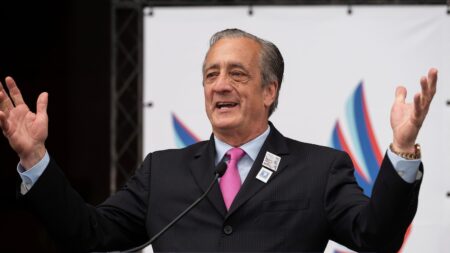
When President Trump announced his choice of Kevin Warsh to lead the Federal Reserve, the response from investors was neither euphoric nor alarmed—instead, it was cautiously optimistic. Financial markets barely moved on the day of the announcement, a telling sign that investors see Warsh as a steady hand rather than a wild card. The most notable market reaction came from safe-haven assets like gold and silver, which saw investors pulling out their money. This shift suggests relief that Trump selected someone with established credentials rather than an unpredictable outsider. Warsh isn’t a stranger to the Fed’s inner workings—he served as a Federal Reserve governor from 2006 to 2011, a period that included navigating the treacherous waters of the 2008 financial crisis. That crisis-era experience has given many analysts confidence that if another economic storm hits, Warsh has already proven he can help steer the ship through rough seas. As TD Cowen analyst Jaret Seiberg put it, Warsh is exactly the person you’d want running the Fed if financial disruption strikes again. Yet this nomination isn’t without questions. Investors, businesses, and everyday Americans are all wondering what a Warsh-led Federal Reserve might look like and how it could affect everything from mortgage rates to retirement savings.
The Great Interest Rate Question
Perhaps the biggest question on everyone’s mind is what Warsh’s leadership would mean for interest rates—the lever that affects everything from credit card bills to business loans to the stock market. The Federal Reserve’s current approach has been cautious, with officials projecting only one rate cut for the entire year of 2026 at their December meeting. In late January, they held rates steady yet again. Meanwhile, President Trump has been anything but subtle about wanting lower rates, taking to social media after the Fed’s latest meeting to declare that “The Fed should substantially lower interest rates, NOW!” This puts Warsh in an interesting position. Historically, he’s been what economists call a “hawk” on inflation—someone who favors keeping interest rates higher to prevent prices from spiraling upward. During his previous tenure at the Fed, this hawkish stance was well-established. But people change, and more recent comments from Warsh suggest his thinking may have evolved. In a conversation with Fox News host Larry Kudlow, Warsh suggested that cutting interest rates could actually set up the economy for its “next degree of acceleration.” Analysts at Oxford Economics believe Warsh might advocate for more rate cuts by arguing that productivity gains from artificial intelligence will allow the economy to grow strongly without triggering unwanted inflation. However, they’re also quick to caution that labeling him as dovish—meaning favorable to lower rates—would be premature, as his views could shift once he’s actually confirmed and sitting in the Fed chair’s seat. Mark Luschini, chief investment strategist at Janney Montgomery Scott, noted that market expectations for rate cuts did tick slightly higher after Warsh’s nomination, suggesting investors believe there’s room for the Fed to ease up this year. “There is some sense that he’s going to be pragmatic, but not necessarily ideologically opposed to the monetary setting becoming increasingly accommodative,” Luschini explained. It’s worth remembering, though, that the Fed chair doesn’t have dictatorial power—interest rates are set by majority vote of the 12-member Federal Open Market Committee, so Warsh would need to build consensus rather than simply imposing his will.
The Independence Question: Politics Versus Policy
One of the most critical concerns surrounding Warsh’s nomination involves the sacred principle of Federal Reserve independence—the idea that monetary policy should be insulated from political pressure and based purely on economic data and analysis. Current Fed Chair Jerome Powell has been a staunch defender of this independence, repeatedly emphasizing its importance even as President Trump has publicly criticized the Fed’s decisions. In his recent remarks, Powell pointed out that central bank independence “is a good practice—it’s pretty much everywhere among countries that look at all like the United States, and if you lose that, it would be hard to restore the credibility of the institution.” The tension is obvious: President Trump clearly wants lower interest rates and isn’t shy about saying so, while the data might not always support that desire. Would Warsh cave to presidential pressure when economic conditions call for a different approach? Many analysts believe Warsh will maintain the Fed’s independence based on his track record and public statements. In April 2025, Warsh directly addressed this issue during remarks at an International Monetary Fund meeting, stating firmly, “I strongly believe in the operational independence of monetary policy as a wise economy decision. And I believe that Fed independence is chiefly up to the Fed.” Those words suggest Warsh understands that the Fed’s credibility—and his own—depends on making decisions based on economic reality rather than political convenience. Mark Luschini points out that if Warsh were to bend under political pressure, he would risk eroding his credibility not just with the public but with other FOMC members whose cooperation he needs. The Fed works by building consensus among serious economists and financial experts, and that consensus evaporates if the chair is seen as a political puppet rather than an independent voice guided by data and sound economic principles.
What Changes Might Be Coming?
Beyond the questions of rates and independence, investors are trying to understand what kind of Federal Reserve Warsh envisions. He hasn’t been quiet about believing the Fed needs changes. In a November Wall Street Journal opinion piece, Warsh called for reforms to both the Fed’s regulatory framework and its monetary operations. One specific idea he’s floated is reducing the central bank’s balance sheet—essentially the portfolio of assets the Fed holds. Warsh argues this would free up liquidity in the financial system and make it easier for households and small businesses to access credit. This represents a potentially significant shift in how the Fed operates. Since the 2008 financial crisis, the Federal Reserve has maintained an enormous balance sheet, having purchased trillions of dollars in Treasury bonds and mortgage-backed securities to support the economy. Unwinding this—or doing it faster than currently planned—could have ripple effects throughout financial markets. The challenge for investors is that Warsh’s nomination creates uncertainty about the Fed’s future direction. Markets generally dislike uncertainty because it makes planning difficult. When the rules of the game might change, it’s harder to make confident investment decisions. As Mark Malek, chief investment officer at Siebert Financial, explained, “This isn’t about whether Kevin Warsh would hike or cut tomorrow, next month or even this year. It’s about the market suddenly having to re-anchor its expectations around a Fed that might look, sound and behave very differently from the one investors have grown used to over the past decade and a half.”
The Reassurance of Experience
Despite the uncertainties, there’s a strong current of reassurance running through the investment community’s response to Warsh’s nomination, and it comes down to one word: experience. Warsh isn’t an academic who’s only studied financial crises from the comfort of a university office, nor is he a political operative being rewarded with a plum appointment. He’s someone who was actually in the room when some of the most consequential financial decisions of the 21st century were being made. During the 2008 financial crisis, when the entire global financial system seemed on the verge of collapse, Warsh was part of the team working frantically to prevent a complete meltdown. He saw firsthand how quickly things can spiral out of control and what it takes to restore stability and confidence. That kind of battle-tested experience is invaluable, especially in an era when new risks—from cybersecurity threats to climate-related financial shocks to the economic implications of artificial intelligence—are constantly emerging. Investors take comfort in knowing that if another crisis hits, whether it resembles 2008 or looks completely different, the person leading the Fed has already proven they can handle extreme pressure and make difficult decisions. This crisis-era credential also suggests Warsh understands the delicate balance the Fed must maintain between controlling inflation and supporting economic growth and employment. The 2008 experience taught painful lessons about what happens when financial systems break down, and that institutional memory could prove crucial in navigating whatever challenges lie ahead.
Looking Ahead: Questions Still to Answer
As Warsh’s confirmation process moves forward, investors, economists, and everyday Americans will be looking for more specific answers about his vision for the Federal Reserve. Will he prioritize fighting inflation even if it means slower growth, or will he embrace a more accommodative stance that favors lower rates and easier credit? How will he balance the Fed’s dual mandate of price stability and maximum employment? What specific changes does he envision for the Fed’s operations, and how quickly would he try to implement them? The nomination also raises broader questions about the future of monetary policy in an era of rapid technological change. Warsh’s comments about artificial intelligence and productivity suggest he’s thinking about how new technologies might change the traditional relationships between growth, employment, and inflation. If AI really does dramatically boost productivity, the old rules about how fast the economy can grow without triggering inflation might need to be rewritten. For now, the markets seem willing to give Warsh the benefit of the doubt, seeing him as qualified and experienced rather than reckless or ideologically extreme. But that initial calm reception will only last if Warsh can articulate a clear, credible vision for the Fed’s future—one that maintains the institution’s hard-won credibility and independence while adapting to new economic realities. The stakes couldn’t be higher, as the Federal Reserve’s decisions affect not just Wall Street portfolios but the financial wellbeing of every American household.