
Ukraine’s Drone Warfare Expertise Takes Center Stage After Fox News Mix-Up
An Embarrassing Media Moment Reveals a Deeper Truth
Sometimes the most revealing moments come from simple mistakes. During a recent Fox News segment about America’s military operations in Iran, drone specialist Brett Velicovich appeared alongside anchor Jesse Watters to discuss the sophisticated American drone defense systems being deployed in the conflict. As they spoke, the screen displayed what viewers were led to believe was cutting-edge U.S. technology in action—footage of air defense systems successfully intercepting Iranian Shahed drones. It seemed like the perfect visual accompaniment to a discussion about American military superiority. However, there was just one problem: those weren’t American systems at all.
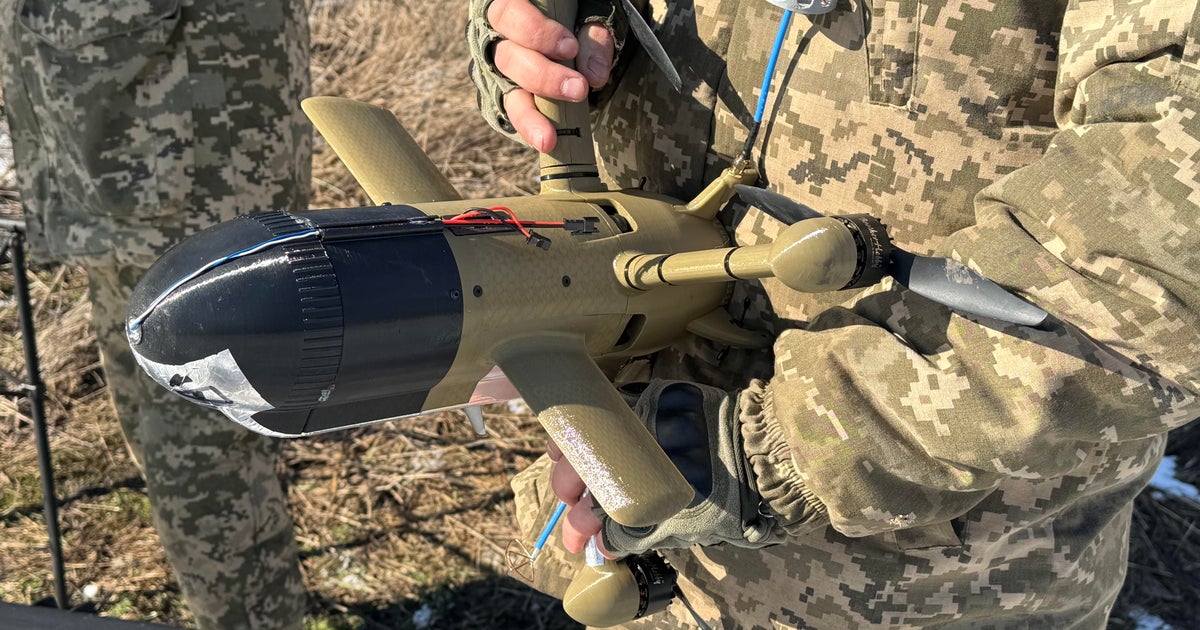
The correction came swiftly from an unexpected source. Wild Hornets, a Ukrainian drone company, politely but firmly set the record straight on social media. “Hi @FoxNews — small clarification,” they wrote on X (formerly Twitter). “The footage shown in this segment features STING — a Ukrainian interceptor drone developed by engineers at Wild Hornets and used by Ukrainian air defense units to destroy Shahed-type drones.” The mix-up was more than just an embarrassing moment for a major news network. It inadvertently highlighted two critical realities of modern warfare: Ukraine has developed world-class expertise in drone combat through years of brutal necessity, and America, despite its massive defense budget, finds itself surprisingly unprepared for the challenges of drone warfare. What started as a media blunder quickly became a conversation about gaps in American military readiness and the unexpected role Ukraine might play in filling them.
The Mathematics of Modern Air Defense Don’t Add Up
The situation facing American allies in the Persian Gulf exposes a fundamental problem with current air defense strategies—a devastating mismatch in costs that makes sustainable defense nearly impossible. Within just days of the conflict with Iran intensifying, Arab states in the region were already running dangerously low on interceptor missiles. The math is brutally simple and deeply troubling: a Pac-3 Patriot missile, the kind used by many U.S. Gulf allies to shoot down incoming threats, costs approximately $12 million to produce. Meanwhile, the Iranian Shahed drones they’re targeting cost around $50,000 each. This means defenders are spending roughly 240 times more per interception than attackers are spending per drone.
This economic imbalance isn’t just a budgetary concern—it’s a strategic vulnerability that threatens to undermine the entire defensive posture of American allies in the region. Even the wealthiest nations cannot sustain this kind of exchange rate indefinitely. If Iran can overwhelm defenses simply by launching enough cheap drones, even the most technologically advanced missile systems become ineffective. The stockpiles deplete, the treasury empties, and the defensive shield crumbles not because the technology failed, but because the economics were never sustainable in the first place. Ukrainian President Volodymyr Zelenskyy pointedly noted that the 800 Patriot missiles already expended by Gulf states in just the opening days of this conflict exceeded the total number of Patriot missiles provided to Ukraine throughout its entire four-year war with Russia. This comparison underscores both the intensity of the Iranian drone threat and the unsustainable burn rate of current defensive approaches.
Ukraine’s Hard-Won Lessons Become Invaluable Assets
While America’s Gulf allies face this crisis with increasingly depleted arsenals, Ukraine has been quietly developing solutions born from desperate necessity. Four years of relentless Russian drone attacks have forced Ukraine to become the world’s unexpected leader in cost-effective drone defense. Without access to unlimited supplies of expensive Western air defense systems, Ukrainian engineers and military planners had no choice but to innovate. The result is a multi-layered defensive network that combines various technologies and tactics—interceptor drones, heavy machine guns, mobile radar units, and aircraft—all working in coordination to create an integrated shield against aerial threats. The centerpiece of this system includes Ukrainian-made interceptor drones like the Sting, developed by Wild Hornets, which cost as little as $2,500 per unit. This represents a cost ratio of nearly 5,000 to one compared to Patriot missiles, fundamentally changing the economic equation of drone defense.
President Zelenskyy announced this week that Ukraine has received requests from both the Pentagon and America’s Gulf allies for specific assistance in dealing with Shahed drones. “I gave instructions to provide the necessary means and ensure the presence of Ukrainian specialists who can guarantee the required security,” Zelenskyy stated, adding that “Iranian attack drones are the same ‘shaheds’ that have been striking our cities, villages, and our Ukrainian infrastructure throughout this war.” The irony is unmistakable: Ukraine, the nation that has spent years pleading for more advanced Western military equipment, now finds itself in the position of sharing expertise with some of the world’s wealthiest and most heavily armed nations. “Everyone can now see that Ukraine’s experience in defense is, in many respects, irreplaceable,” Zelenskyy observed. Wild Hornets confirmed their readiness to assist, with a spokesman telling CBS News they are “ready to help Ukraine’s strategic partners if called upon to do so.” Since May 2025, Wild Hornets’ Sting drones have successfully intercepted 3,900 drones over Ukraine, a track record that speaks to both the intensity of the threat Ukraine faces and the effectiveness of the solutions they’ve developed.
No Magic Bullets, Only Complex Systems and Patient Learning
Despite Ukraine’s proven success and willingness to help, experts caution against expecting quick fixes or miracle solutions. The knowledge Ukraine has accumulated cannot simply be packaged and delivered like a software update or a shipment of equipment. “It has taken Ukraine an extremely long time to get their high interception rates,” explained Robert Tollast, a drone expert at the Royal United Services Institute. “There is no off-the-shelf solution that you can just buy. Building a layered system of air defense is more resource-intensive, and it takes time to build that technology into your security forces.” The Ukrainian approach isn’t based on a single wonder weapon, but rather on the intricate coordination of multiple systems, trained operators, and accumulated tactical knowledge about how drones behave, where they’re likely to appear, and how best to counter them.
Deborah Fairlamb, founder of Ukraine-based defense venture capital firm Green Flag Ventures, emphasized this point: “There is not a single magic bullet, one interceptor drone, that is able to take down these drones. Within Ukraine, it is a multi-layered defense that they use starting all the way from the border with Russia and are able to track in.” Even Wild Hornets, whose Sting drones represent one of the most successful individual technologies in Ukraine’s arsenal, acknowledge that their product alone isn’t the answer. Alex Roslin, a spokesman for the company, explained that while they can train an experienced pilot to operate their drones in just three days, that doesn’t mean someone can start effectively downing enemy drones in three days. “It is about building teams and creating an integrated network of air defense, and how to work with tactical radar units and other teams,” Roslin said. The knowledge transfer involves not just teaching people how to operate equipment, but how to think about drone defense, how to coordinate with other units, how to read the battlefield, and how to adapt to evolving enemy tactics.
The Unique Challenge of Drone Defense Demands New Thinking
What makes drone warfare particularly challenging is that it fundamentally changes the strategic calculus that has governed air defense for decades. Traditional air defense focuses on protecting high-value targets from relatively small numbers of expensive aircraft or missiles. Drone swarms invert this logic entirely. “The principle of drone attacks is that it is forcing you to defend everywhere all the time,” Tollast noted. “You need light mobile defenses, you need radars, you need very different types of maneuverable defenses against cheap drones.” This represents a shift from fortress-style static defenses to fluid, adaptive networks that must cover vast areas with limited resources. It requires different equipment, different training, different organizational structures, and different strategic thinking.
Ukraine has learned these lessons through painful trial and error over four years of constant bombardment. Every Russian drone attack provided data, revealed vulnerabilities, and forced adaptation. Ukrainian defenders have learned which radar signatures to watch for, which flight patterns indicate different threats, where drones are likely to concentrate, and how to prioritize targets when resources are limited. This accumulated wisdom cannot be downloaded from a manual or learned in a classroom—it comes from experience, from mistakes, from watching what works and what doesn’t in real combat conditions. For America’s Gulf allies facing similar threats, acquiring this knowledge represents a significant challenge, even with Ukrainian experts willing to share it. The institutional learning, the development of Standard Operating Procedures, the training of sufficient personnel, and the integration of new systems into existing military structures all take time, often measured in years rather than weeks or months.
A Long-Term Partnership, Not a Quick Fix
Despite the urgent need for better drone defenses in the Middle East, both Ukrainian experts and Western analysts agree that meaningful cooperation will necessarily be a marathon, not a sprint. Wild Hornets remains enthusiastic about helping, but realistic about timelines. “If a partnership was created by the Ukrainian government, we are 1000% ready to fill those needs,” Roslin affirmed. “But passing along that entire body of knowledge, you can imagine how complex that will be.” This complexity shouldn’t discourage cooperation—quite the opposite. It underscores why starting sooner rather than later is essential, and why building genuine partnerships rather than simply purchasing equipment or hiring consultants will yield the best results.
For Ukraine, sharing this expertise serves multiple strategic purposes beyond simple altruism. It strengthens relationships with crucial allies who have supported Ukraine’s own defense efforts, potentially opening doors for continued or expanded military assistance. It demonstrates Ukraine’s value as a security partner beyond simply being a recipient of aid, elevating the country’s status in international security discussions. It may also open commercial opportunities for Ukrainian defense companies, providing economic benefits that can support Ukraine’s war-torn economy. For America and its Gulf allies, Ukrainian expertise offers a potential path out of the unsustainable economics of current drone defense, though only if they’re willing to commit to the long-term institutional changes and investments required. The Fox News mix-up that started this conversation may have been embarrassing, but it inadvertently illuminated an important truth: sometimes the most valuable military expertise comes from unexpected places, and sometimes the nations that have struggled with the fewest resources develop the most innovative solutions. As drone warfare becomes increasingly central to modern conflict, Ukraine’s hard-won knowledge may prove to be one of its most valuable exports.