

Hungary-Ukraine Crisis Deepens: Cash Seizure and Hostage Allegations Spark International Incident
Banking Convoy Detained in Budapest
A serious diplomatic incident has erupted between Hungary and Ukraine after Hungarian authorities allegedly detained seven Ukrainian bank employees and seized millions of dollars in cash that was being transported through Hungarian territory. Ukraine’s Foreign Minister Andrii Sybiha took to social media late Thursday evening to sound the alarm about what he characterized as a hostage-taking situation involving employees of Oschadbank, Ukraine’s state-owned banking institution. The seven workers were traveling in two armored vehicles as part of a routine banking operation, transporting currency between Austria and Ukraine when they were apparently stopped by Hungarian authorities. According to Sybiha’s statement, the whereabouts and condition of these seven Ukrainian citizens remained unknown at the time of his announcement, raising serious concerns about their safety and well-being. The foreign minister’s post painted a troubling picture of what should have been a standard international banking operation turning into a potential international crisis, with Ukrainian citizens possibly being held against their will on Hungarian soil.
Massive Financial Seizure Reported
The financial stakes in this incident are substantial, with Oschadbank reporting that Hungarian authorities have confiscated approximately $40 million in U.S. currency, along with 35 million euros and 9 kilograms of gold—worth roughly 19.8 pounds of the precious metal. This significant haul represents a considerable sum of money that was being transported as part of regular banking services between state-owned financial institutions, according to the bank’s official statement. The bank also revealed that they had been tracking the vehicles using GPS technology, which showed that the armored cars were located in central Budapest, specifically near one of Hungary’s law enforcement agencies. However, despite knowing where the vehicles were, the bank stated that the location of their seven employees remained a mystery, creating an atmosphere of uncertainty and concern. This discrepancy between knowing where the vehicles are but not where the people are has added to the tension surrounding the situation. Hungary’s Interior Ministry has not yet provided any official response to requests for comment about the incident, leaving many questions unanswered about the legal basis for the detention and seizure, if it indeed occurred as Ukraine claims.
Oil Pipeline Dispute at the Heart of Tensions
This dramatic incident didn’t occur in a vacuum—it represents the latest and perhaps most serious escalation in an ongoing dispute between Hungary and Ukraine over access to Russian oil. The root of the conflict lies with the Druzhba pipeline, a major oil transportation route that carries Russian crude through Ukrainian territory to reach Hungary and other European nations. Since January 27, oil shipments through this crucial pipeline have been completely halted, creating an energy supply crisis for Hungary. The two countries have very different explanations for why the pipeline stopped functioning. Ukraine maintains that Russian drone strikes damaged critical infrastructure along the pipeline route, and that attempting repairs would put technicians at serious risk in an active war zone. Ukrainian officials also argue that even if repairs were successfully completed, the pipeline would remain vulnerable to additional Russian military attacks, making it an unreliable supply route. The Hungarian government, however, has rejected this explanation entirely, instead accusing Ukraine of deliberately blocking Russian crude oil supplies as a political maneuver. This fundamental disagreement about the facts of the situation has created an atmosphere of mutual distrust and accusation that has now apparently spilled over into direct confrontation.
Hungary’s Defiant Stance on Russian Energy
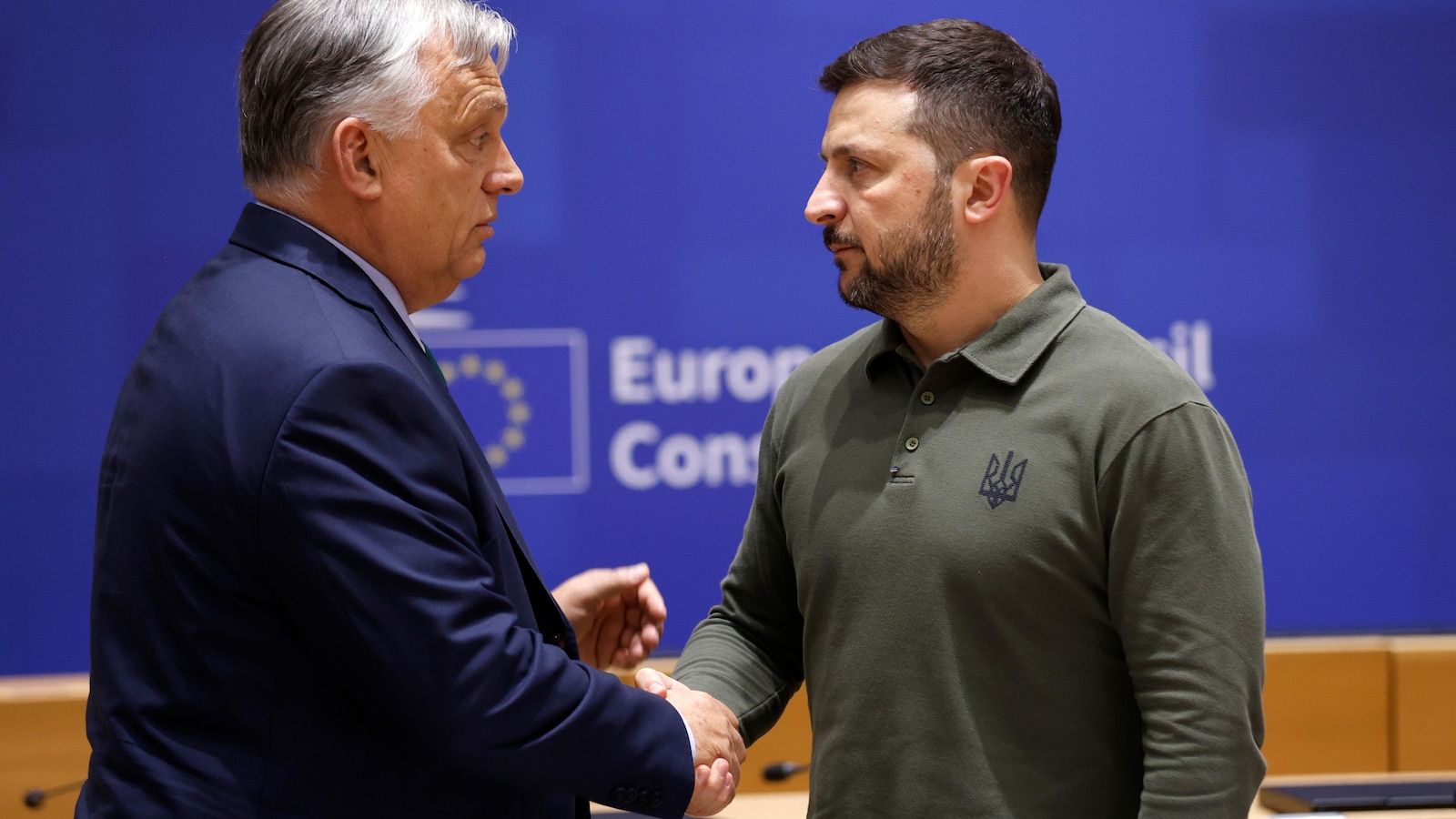
Hungary’s position on Russian energy imports has long been controversial within the European Union. While most EU member states have made concerted efforts to reduce or eliminate their dependence on Russian fossil fuels following Moscow’s invasion of Ukraine, Hungary—along with its neighbor Slovakia—has openly defied this collective European approach. Hungarian Prime Minister Viktor Orbán has maintained notably close relations with the Kremlin throughout the war, even as most Western leaders have isolated Russian President Vladimir Putin on the international stage. Orbán has also launched what observers describe as an aggressive anti-Ukraine campaign in recent months, particularly as Hungary approaches crucial elections next month. In comments to Hungarian state radio on Friday, Orbán made thinly veiled references to the detention of the Ukrainian banking vehicles, stating: “We will stop things that are important to Ukraine passing through Hungary until we get the approval of the Ukrainians for oil shipments.” This appears to be an explicit admission that Hungary is using its control over transit routes as leverage against Ukraine. The Hungarian prime minister’s tactics have already included stopping diesel shipments to Ukraine, vetoing a new round of EU sanctions against Russia, and blocking a massive 90-billion-euro (approximately $106-billion) loan package intended to support Ukraine financially. Orbán has even deployed Hungarian military forces to guard key energy infrastructure sites throughout the country, claiming that Ukraine is plotting to sabotage them—an accusation that Ukrainian officials deny.
Accusations of State Terrorism and Criminal Behavior
The rhetoric between the two nations has become extraordinarily harsh, with Ukrainian Foreign Minister Sybiha using some of the strongest language possible in diplomatic relations. In his social media post responding to Prime Minister Orbán’s comments about using “force”—including “political and financial tools”—to compel Ukraine to resume oil shipments, Sybiha drew a stark distinction between legitimate state action and criminal conduct. “We are talking about Hungary taking hostages and stealing money,” the foreign minister wrote, framing the incident not as a regulatory matter or customs issue but as outright theft and kidnapping. He went even further, stating: “If this is the ‘force’ announced earlier today by Mr. Orban, then this is a force of a criminal gang. This is state terrorism and racketeering.” These are extraordinary accusations for one government to level against another, particularly when both countries are members of NATO and the European Union. The Ukrainian foreign minister’s characterization of Hungarian government actions as equivalent to organized crime and terrorism represents a serious deterioration in bilateral relations. Sybiha also announced that Ukraine would formally raise the matter with the European Union to demand clarification of Hungary’s actions and presumably to seek some form of intervention or sanctions against Budapest for what Ukraine characterizes as illegal behavior.
International Implications and Uncertain Future
This incident raises profound questions about the future of European unity in the face of Russian aggression and about the limits of acceptable state behavior within the EU framework. The situation puts the European Union in a difficult position, as it must somehow mediate between two member states (in Ukraine’s case, a candidate country with strong EU aspirations) whose relationship has deteriorated to the point where one is accusing the other of state terrorism. The fact that Hungary has apparently seized such a large sum of money and possibly detained Ukrainian citizens creates potential legal issues under both EU law and international law governing diplomatic and commercial relations between nations. If Ukraine’s version of events is accurate, Hungary may have violated numerous international norms and treaties governing the movement of people and legitimate financial transactions across borders. The incident also highlights the complicated position of landlocked or transit-dependent nations in times of conflict—both Hungary and Ukraine depend on allowing materials, money, and resources to pass through their territories, creating multiple pressure points where political disputes can turn into physical confrontations. As this crisis unfolds, the international community will be watching closely to see whether diplomatic channels can resolve the situation or whether it will escalate further, potentially drawing in other EU nations and international organizations. The well-being of the seven Ukrainian bank employees remains the most immediate human concern, while the broader questions about European unity, energy security, and how to handle member states that maintain close ties with Russia even during its war on Ukraine will likely occupy policymakers for months to come.