
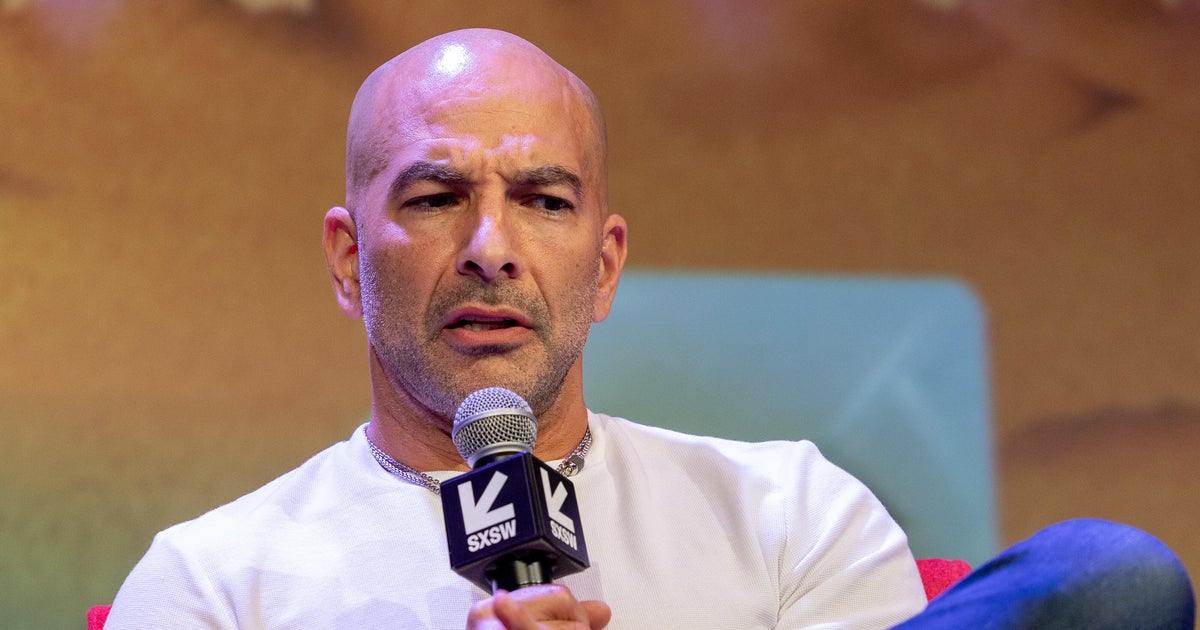

Peter Attia Apologizes for “Indefensible” Email Exchanges with Jeffrey Epstein
A Public Reckoning for the Longevity Expert
Dr. Peter Attia, the well-respected longevity researcher and bestselling author, has found himself at the center of an uncomfortable controversy. Recently released Justice Department files related to the Jeffrey Epstein case have revealed extensive email communications between Attia and the disgraced financier, prompting the doctor to issue a lengthy public apology. While Attia has not been accused of any criminal wrongdoing, the content of these messages has forced him to confront behavior he now describes as “embarrassing, tasteless, and indefensible.” The revelations come at a particularly sensitive time for Attia, who was recently named as a contributor to CBS News. His name appears hundreds of times throughout the newly released documents, revealing a relationship with Epstein that was more extensive than previously known to the public. Among the most troubling exchanges was a crude 2016 message where Attia wrote to Epstein about intimate matters in what he characterizes as inappropriate humor. The disclosure has sent shockwaves through the health and wellness community, where Attia has built a reputation as a trusted voice on living longer, healthier lives.
The Scope of the Relationship
According to Attia’s own account posted on social media platform X, he met with Jeffrey Epstein on approximately seven or eight occasions between 2014 and 2019, all at Epstein’s New York City residence. The doctor claims these meetings were arranged “regarding research studies and to meet others,” suggesting a professional rather than personal connection. The correspondence between the two men appears to have continued until spring 2019, just months before Epstein’s arrest on federal sex trafficking charges in July of that year and his subsequent death in August, which was ruled a suicide. In his public statement, Attia was careful to draw boundaries around what he claims he did and did not do in connection with Epstein. He explicitly stated that he never flew on Epstein’s private plane, never visited his notorious private island, and never attended “any sex parties.” He also maintained that he never witnessed illegal behavior and never saw anyone who appeared to be underage in Epstein’s presence. These disclaimers appear designed to distance himself from the more serious allegations that have surrounded others in Epstein’s orbit, while acknowledging the poor judgment he displayed in maintaining the relationship at all.
The “Fresh Shipment” Exchange That Raised Eyebrows
Among the released documents, one particular exchange from 2015 has drawn significant attention and required explanation from Attia. The conversation began with Attia sending a note with the subject line “Got a fresh shipment,” to which Epstein responded “me too,” accompanied by a photograph that was redacted by the Justice Department before release. Attia’s response to seeing that photo was telling: “Please tell (me) you found that picture on line … bastard.” When Epstein confirmed the photo was genuine with “‘fraid not,” Attia wrote back something that now haunts him: “the biggest problem with becoming friends with you” is that “the life you lead is so outrageous, and yet I can’t tell a soul.” In his social media apology, Attia attempted to provide context for this disturbing exchange. He claimed that his “fresh shipment” referred to metformin, a medication he had received from the pharmacy. Attia explained that he used to take this drug for anti-aging purposes, though he stopped in 2018 after discovering it had negative effects on his exercise performance. As for Epstein’s response, Attia stated it included “a photograph of an adult woman,” and that his reply constituted “crude, tasteless banter.” He acknowledged, “Reading that exchange now is very embarrassing, and I will not defend it. I’m ashamed of myself for everything about this.” Attia characterized his participation in the exchange as “juvenile” at the time, claiming he didn’t understand it as “a reference to anything dark or harmful,” though many observers might question that interpretation.
Questions About What He Knew and When
One of the most difficult aspects of Attia’s relationship with Epstein concerns the question of what he knew about Epstein’s criminal background. By the time Attia began meeting with Epstein in 2014, the financier was already a registered sex offender following a controversial 2008 plea deal in Florida that allowed him to avoid federal charges. Attia addressed this directly in his statement, saying he did ask Epstein about the conviction. According to Attia, Epstein “characterized it as prostitution-related charges,” which was a significant minimization of the actual crimes involving underage girls. Attia claims that “in 2018, I came to learn this was grossly minimized,” suggesting he continued the relationship for years without fully understanding or investigating Epstein’s background. This timeline raises uncomfortable questions about due diligence and the willingness of accomplished professionals to accept at face value the explanations of a wealthy, connected individual. Many observers have pointed out that the information about Epstein’s crimes was publicly available and that a simple internet search would have revealed the true nature of the case. The fact that Attia apparently accepted Epstein’s self-serving description without further inquiry, and continued meeting with him even after learning more in 2018, has contributed to the criticism he now faces.
The Professional Fallout and Corporate Silence
The timing of these revelations is particularly problematic for Attia’s career trajectory. He had recently been named as a contributor to CBS News, a position that would have expanded his already considerable platform in mainstream media. CBS’s parent company, Paramount Skydance, declined to comment on the situation, leaving questions about Attia’s future role with the network unanswered. This silence speaks volumes in an era when corporations typically move quickly to distance themselves from controversy, suggesting that decisions are still being made behind the scenes. Beyond his television work, Attia has built an impressive portfolio of ventures centered on longevity and preventive medicine. He is the founder of Outlive, an application that translates complex longevity science into personalized daily practices for users. He also established Early Medical, a medical practice dedicated to helping patients extend their healthy lifespan through cutting-edge interventions. His podcast, “The Peter Attia Drive,” has attracted a devoted following, and his book “Outlive: The Science and Art of Longevity” became a bestseller by distilling decades of research into practical advice for living longer, healthier lives. All of these ventures depend on trust and credibility, both of which have been damaged by these revelations. Whether his audience will separate his scientific expertise from his personal judgment remains to be seen.
Accepting Humiliation and Moving Forward
In his lengthy social media post, Attia struck a tone of contrition and acceptance, stating that he regretted “putting myself in a position where emails, some of them embarrassing, tasteless, and indefensible, are now public.” He acknowledged, “I accept that reality and the humiliation that comes with it.” This represents a somewhat different approach than the defensive postures taken by some others named in Epstein-related documents, though critics might argue that expressing embarrassment about emails becoming public is different from expressing genuine remorse for the underlying behavior. The situation raises broader questions about the social ecosystems that enabled Epstein to maintain connections with respected figures across various fields, from science and medicine to finance and entertainment. Epstein apparently cultivated relationships with accomplished individuals by positioning himself as a patron of research and intellectual pursuits, creating a veneer of legitimacy that helped normalize his presence in elite circles. People like Attia, seeking funding or connections for their work, found themselves drawn into Epstein’s orbit, often minimizing or ignoring warning signs in favor of potential benefits. As Attia works to rebuild his reputation and his audience decides whether to continue supporting his work, this episode serves as a cautionary tale about the importance of thoroughly vetting associations and the dangers of compartmentalizing our ethics. Scientific brilliance or professional success does not exempt anyone from the responsibility to exercise sound judgment about the company they keep and the behavior they tacitly condone through continued association.