

Senator Dick Durbin’s Retirement Sparks Major Democratic Leadership Shake-Up in Washington
A Veteran Senator Steps Down After Decades of Service
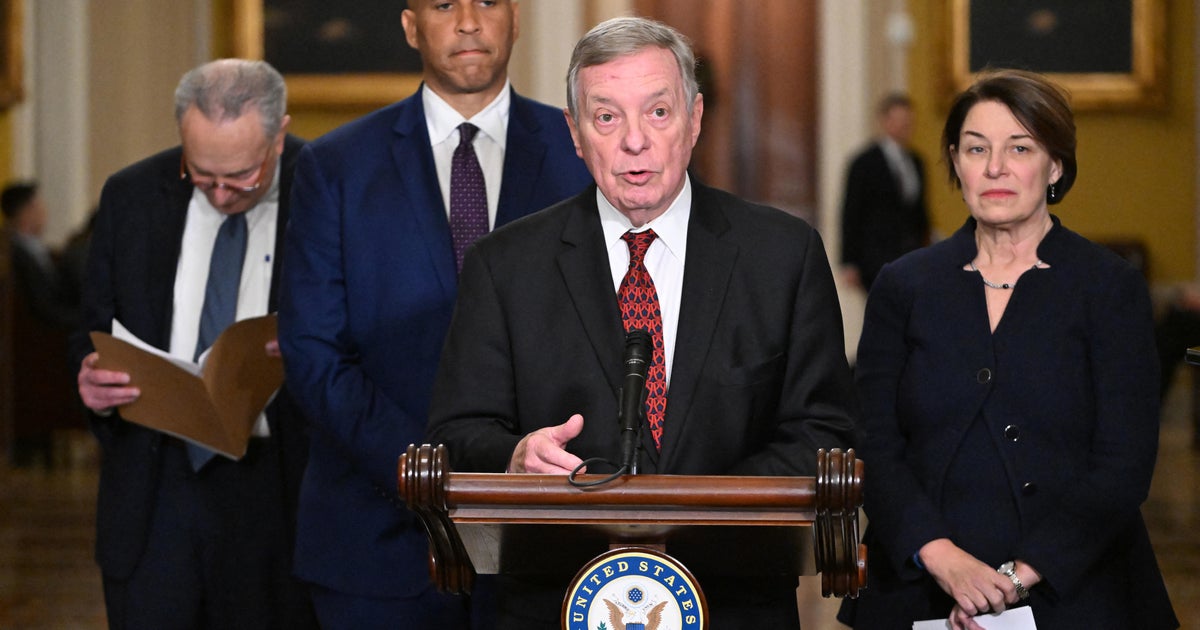
After a distinguished career spanning multiple decades in the United States Senate, Illinois Senator Dick Durbin made the significant announcement on Wednesday that he will not be seeking reelection when his term expires in 2026. This decision marks the end of an era for Illinois politics and sets the stage for what could be one of the most consequential leadership transitions the Democratic Party has seen in recent years. At 80 years old, Durbin has been a fixture in the Senate’s Democratic leadership structure since 2005, holding the influential position of Democratic whip—the second-highest ranking role within the party’s Senate hierarchy. Throughout his tenure, he has worked alongside two different Democratic leaders: first with the late Harry Reid from Nevada, and more recently with current Senate Majority Leader Chuck Schumer of New York. In this crucial role, Durbin has been responsible for counting votes, persuading colleagues, and ensuring the Democratic caucus remains unified on key legislative priorities. His retirement doesn’t just open up a Senate seat in Illinois; it creates a vacuum in the leadership structure that will likely trigger a competitive race among ambitious Democrats looking to climb the party’s power ladder in the upper chamber of Congress.
The Race to Replace Durbin in Leadership Begins
With Durbin’s announcement, political insiders and Senate watchers are already speculating about who might step into his shoes as the Democratic whip. The position carries significant responsibility and influence, as the whip serves as the primary vote-counter and persuader-in-chief for the party’s legislative agenda. Among the names being floated most prominently is Senator Brian Schatz of Hawaii, who has represented the Aloha State since 2012 and currently holds the position of chief deputy whip—essentially the number three spot in the leadership hierarchy. Schatz’s proximity to Durbin in the organizational chart makes him a natural candidate for promotion, and he demonstrated his respect for the retiring senator by releasing a statement praising Durbin as both a “mentor and friend.” However, Schatz isn’t the only Democrat with leadership aspirations. Senator Amy Klobuchar of Minnesota recently ascended to the number three position in Senate Democratic leadership during the last round of internal elections, while Senator Cory Booker of New Jersey claimed the fourth-ranking spot. Both are well-known figures within the party and could potentially make a play for the whip position. That said, both Klobuchar and Booker ran for the Democratic presidential nomination in 2020, and political observers suggest they may harbor ambitions beyond the Senate, possibly eyeing another presidential run in 2028. The selection process for these leadership positions takes place behind closed doors before each new Congress convenes, meaning the jockeying and negotiating among Democratic senators will likely intensify over the coming months as members position themselves for advancement.
Committee Positions Also Up for Grabs
Beyond the leadership implications, Durbin’s retirement creates another significant opening within the Senate’s committee structure. Since 2021, Durbin has served as the top Democrat on the Senate Judiciary Committee, one of the most powerful and high-profile committees in Congress. The Judiciary Committee handles everything from federal judicial nominations—including Supreme Court justices—to major legislation on criminal justice reform, immigration, antitrust issues, and constitutional matters. The ranking member position (or chair, when Democrats control the Senate) wields considerable influence over which issues receive attention and how they’re addressed. According to those familiar with Senate dynamics, Senator Sheldon Whitehouse of Rhode Island is widely expected to assume this coveted position when Durbin steps down. Whitehouse has been an active member of the Judiciary Committee for years and has developed a reputation as a dogged questioner during confirmation hearings and a champion of ethics reform in government. His elevation to the top Democratic spot on the committee would give him a prominent platform to shape the party’s approach to judicial confirmations and other critical issues under the committee’s jurisdiction. This transition represents yet another piece of the broader generational shift taking place within Senate Democratic leadership, as longtime veterans make way for the next generation of party leaders.
Calls for New Generation of Leadership Intensify
Durbin’s decision to retire comes at a particularly turbulent time for Senate Democrats, who are grappling with the aftermath of a challenging 2024 election cycle that saw them lose control of both the White House and the Senate. The electoral defeats have prompted soul-searching within the party, with some members and outside observers calling for a generational change in leadership to help the party reconnect with voters and develop fresh strategies for the future. While Durbin’s retirement addresses part of this concern, attention has also turned toward Senate Majority Leader Chuck Schumer, who has led the Democratic caucus since 2017. Questions about Schumer’s leadership style and decision-making have periodically surfaced, though these concerns have somewhat subsided in recent weeks. The criticism reached a peak in March when Schumer faced intense backlash from within his own party over his handling of a government shutdown threat. Initially, Schumer had pledged to oppose a Republican-led funding measure, but ultimately reversed course and became one of the Democratic votes necessary to ensure its passage. This decision sparked considerable frustration among Democratic senators and progressive activists who felt betrayed by the about-face. Many Democrats opposed the funding measure because it included spending cuts they found unacceptable and because they worried it would give the Trump administration and Elon Musk’s Department of Government Efficiency greater freedom to implement dramatic cost-cutting measures across the federal government.
The Government Shutdown Controversy and Its Aftermath
Schumer defended his controversial vote by arguing that allowing a government shutdown would have been far worse for the American people than accepting the imperfect funding bill. He pointed out that a shutdown would have transferred even more power to the executive branch and created chaos for federal workers and the millions of Americans who depend on government services. Despite his explanations, the episode highlighted tensions within the Democratic caucus about strategy and leadership. Some progressive members suggested that enduring a shutdown would have been preferable to capitulating to Republican demands, while others simply objected to Schumer’s shifting position on such a critical vote. Interestingly, Schumer wasn’t the only Democratic leader who ultimately voted for the measure—Durbin himself was among the nine Democrats and independents who supported advancing the legislation, as was Brian Schatz, the senator now being mentioned as a possible successor to Durbin’s leadership position. This fact illustrates the complexity of Senate leadership, where pragmatic political calculations sometimes clash with ideological preferences. The controversy also demonstrates the challenges facing whoever assumes the whip position in the future, as they’ll need to balance the diverse viewpoints within the Democratic caucus while navigating an increasingly polarized political environment. The next generation of Democratic leaders will need to find ways to maintain party unity while also staying true to the values and priorities that motivate their most passionate supporters.
Looking Ahead: Leadership Transitions on Both Sides of the Aisle
As Democrats prepare for their own leadership transitions, it’s worth noting that Senate Republicans recently underwent their own significant leadership change following the 2024 elections. After serving as Republican leader for an impressive 17 years, Senator Mitch McConnell of Kentucky decided to step down from the position, paving the way for Senator John Thune of South Dakota to take the helm of the Republican conference. This parallel transition on both sides of the aisle underscores the broader generational shift happening in the Senate, as longtime institutional figures make way for new leaders who will shape the chamber’s direction in the years ahead. For Illinois, Durbin’s retirement means voters will have the opportunity to elect a new senator in 2026, potentially reshaping the state’s representation in Washington. The race for this seat will likely attract significant attention and resources, as both parties understand the importance of every Senate seat in determining which party controls the chamber and, by extension, the legislative agenda. As the 2026 election approaches, political observers will be watching closely to see not only who emerges victorious in Illinois but also how the Democratic caucus reorganizes itself in the wake of Durbin’s departure. The decisions made in the coming months about leadership positions will have lasting implications for the party’s effectiveness, its ability to advance its priorities, and its prospects in future elections. The end of Durbin’s Senate career represents more than just the retirement of one accomplished senator—it symbolizes a turning point for Democratic leadership and offers an opportunity for the party to reimagine its approach to governance and political strategy in an evolving political landscape.