


Trump’s Second Term and the Federal Judiciary: A Slower Pace of Change
The Changing Landscape of Judicial Appointments
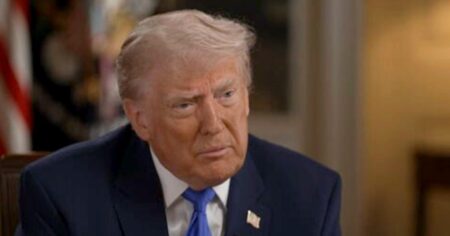
President Trump’s return to the White House has brought renewed attention to his ability to reshape the federal judiciary, but his second term appears to be unfolding quite differently from his first. During his initial four years in office, Trump fundamentally transformed the federal bench, confirming an impressive 234 judges to lifetime appointments on the federal courts. This included three Supreme Court justices who helped create a 6-3 conservative majority that would go on to overturn Roe v. Wade and achieve other long-sought goals of the conservative legal movement. However, experts and observers are now noting that the current administration faces significant headwinds that are likely to prevent a repeat of that historic judicial transformation. While the Senate has confirmed 33 of Trump’s judicial nominees so far in his second term—surpassing the 24 confirmed in the first 13 months of his initial presidency—these numbers don’t tell the whole story. The early confirmations in his first term included one Supreme Court justice and 13 powerful appellate court judges, while the current batch consists of just six appeals court judges and 27 district court judges. As Ed Whelan, a senior fellow at the Ethics and Public Policy Center who closely tracks judicial nominations, explained to CBS News, “Getting good judges on the courts was a very high priority in the first administration. I don’t think it’s as high a priority in this administration for three reasons: One, there just aren’t as many seats available. Two, they succeeded so much the first time around, especially with the Supreme Court, that there’s not that much more room for success. And three, they are trying to do so much through executive action.”
The Advantages of Trump’s First Term That No Longer Exist
The remarkable success of Trump’s first-term judicial appointments didn’t happen by accident—it was the result of unique circumstances and strategic planning that simply cannot be replicated now. When Trump entered the White House in 2017, he inherited an unusual abundance of judicial vacancies, largely thanks to then-Senate Majority Leader Mitch McConnell’s controversial decision to block President Barack Obama’s judicial nominees during his final two years in office. This blockade included the Supreme Court seat left vacant by Justice Antonin Scalia’s death in 2016, which Trump filled with Justice Neil Gorsuch. The first administration also benefited from an intense, coordinated focus on judicial confirmations led by then-White House counsel Don McGahn and Senate Judiciary Committee Chairman Chuck Grassley, working alongside enthusiastic outside conservative groups who viewed Trump’s election as a once-in-a-generation opportunity to shift the courts rightward. Today’s landscape looks dramatically different. Currently, there are only 37 vacancies on the nation’s trial courts, with another six seats expected to open soon and four future vacancies on the appeals courts. Of these 47 current and future vacancies, Trump has announced just 12 nominees—a stark contrast to the aggressive pace of his first term. The administration, now led by Steve Kenny, deputy White House counsel for nominations, insists they’re “just getting started,” with spokeswoman Abigail Jackson stating that “President Trump is selecting highly qualified nominees, with great respect for our Constitution, who are being confirmed expeditiously and will serve on the bench for decades.” However, even supporters acknowledge the president faces a steep climb to match his previous confirmation numbers.
The Blue Slip Obstacle and Political Realities
One significant procedural hurdle complicating Trump’s judicial ambitions is a Senate tradition known as the “blue slip”—a policy that signals whether home-state senators support or oppose a judicial nominee from their state. During Trump’s first term, Grassley allowed appeals court nominees to proceed without positive blue slips from both home-state senators, but he maintained the policy for district court nominees, meaning candidates for district courts don’t receive confirmation hearings unless they have backing from both senators representing that state. Trump has publicly pushed Grassley to eliminate this requirement, particularly after his nominees for U.S. attorney positions in eastern Virginia and New Jersey—his former personal lawyers Lindsey Halligan and Alina Habba—faced opposition from Democratic senators in those states. However, Grassley has stood firm, refusing to discard what he views as an important Senate tradition that respects federalism and state input. The impact of this policy on Trump’s nominations remains somewhat unclear, as 11 of the 28 existing vacancies without a nominee are in states with Democratic senators or mixed representation, but seven unfilled seats are in Texas, which has two Republican senators. Beyond procedural obstacles, Trump’s nominees are facing sharper political opposition than they did in his first term. According to research by Russell Wheeler, a scholar at the Brookings Institution, all six of Trump’s appeals court picks confirmed in his second term received 40 or more votes against their confirmations, compared to only seven of his first 12 appellate confirmations in his first term receiving that level of opposition. For district courts, the contrast is even starker: none of the first 10 district judges confirmed in his first term garnered 40 or more “no” votes, while 18 of his 21 district court confirmations in his second term were opposed by at least 40 senators. Wheeler attributes this to America’s increasingly polarized politics, noting that the old understanding—that the winning president deserved deference on judicial appointments unless nominees were truly unqualified—has completely broken down.
Judges Aren’t Retiring as Expected
Perhaps the most surprising development affecting Trump’s judicial legacy is that sitting judges simply aren’t retiring at the rates many expected. Federal judges typically time their retirements to occur during administrations led by presidents from the same party as the president who originally appointed them, allowing for ideologically similar replacements. During President Biden’s term, for instance, 26 Democratic-appointed appeals court judges and three Republican appointees stepped aside between the 2020 election and the end of his first year. During Trump’s first term, 15 Republican-appointed judges and four Democratic appointees left appeals court seats within the same timeframe. But in Trump’s second term, only three appeals court vacancies have been created—all from Republican appointees—after the 2024 election through the end of Trump’s first year back in office. Wheeler offered some speculation about why judges might be reluctant to retire: “On the one hand, you might say, ‘Geez, here I am a federal judge and this guy is saying all this stuff about me, riling up his base. I don’t want my husband and kids to be attacked by some lunatic in the grocery store.’ So the judge says, ‘I’m going to get out of here.’ But they’re not doing that, and I think it could be because they just don’t want to give him vacancies to fill.” Three appeals court judges appointed by President George W. Bush did announce they’re taking senior status—a form of semi-retirement that creates vacancies—but these announcements came strategically ahead of the November midterm elections, which will determine whether Republicans maintain their Senate majority. That election outcome will prove crucial, as Whelan noted: “The big question is, do Republicans retain control of the Senate in the elections? If they don’t, the numbers in Trump’s last two years are going to be very, very low if not zero.”
Concerns About Loyalty Over Qualifications
Some observers believe the reluctance of judges to retire may stem from concerns about the types of nominees Trump might select to replace them. While some of Trump’s recent picks have traditional conservative credentials—such as Rebecca Taibleson for the 7th Circuit and Whitney Hermandorfer for the 6th Circuit, who clerked for Justices Scalia and Alito respectively—others have raised eyebrows. Emil Bove’s nomination to the 3rd Circuit particularly sparked controversy. Bove had served as Trump’s personal defense lawyer and as a high-ranking Justice Department official before his nomination. A Justice Department whistleblower accused him of suggesting government lawyers should ignore court orders, and he directed prosecutors to drop corruption charges against former New York City Mayor Eric Adams in exchange for cooperation with immigration enforcement. Bove was narrowly confirmed in a 50-49 Senate vote. Gregg Nunziata, former chief nominations counsel for Republicans on the Senate Judiciary Committee and current leader of the Society for the Rule of Law, suggested that some conservative judges—including Trump appointees—are troubled by the president’s rhetoric about the judiciary and what it might signal about his priorities in filling vacancies. “No judge is going to be excited about the prospect of a president selecting future nominees based on any conception of loyalty to the occupant of the White House,” Nunziata explained. “That offends judges across the ideological spectrum, including judges who were appointed by the president and who generally think well of the president and really don’t like that mindset or that rhetoric, and I think broadly view it as damaging to the judiciary.”
Fractured Relationships and an Uncertain Future
The relationship between Trump and the judicial infrastructure that supported his first-term success has notably deteriorated. The president has publicly attacked Leonard Leo, the influential conservative legal figure who helped craft the list of potential Supreme Court candidates after Scalia’s death, calling him a “sleazebag” who “probably hates America.” This falling out came after judicial decisions Trump found unfavorable, including a three-judge panel ruling that many of his tariffs were illegal—a decision the Supreme Court affirmed. Trump’s response to the Supreme Court’s tariff decision was particularly revealing. He launched personal attacks on two justices he himself appointed—Neil Gorsuch and Amy Coney Barrett—for voting to invalidate his tariffs. In a social media post, he called the Court “completely inept and embarrassing” and a “weaponized and unjust Political Organization,” complaining that Republican-appointed justices “openly disrespect the Presidents who nominate them” and “go out of their way, with bad and wrongful rulings and intentions, to prove how ‘honest,’ ‘independent,’ and ‘legitimate’ they are.” Despite Trump’s achievements in his first term—flipping the ideological composition of three appeals courts, bringing the historically liberal 9th Circuit closer to balance, and creating a Supreme Court that overturned Roe v. Wade, ended affirmative action in higher education, and curtailed federal regulatory power—his second term appears unlikely to match that impact. Nunziata articulated the central concern many have about Trump’s approach to judicial nominations going forward: whether he’ll seek “a different type of judge” who prioritizes personal loyalty over judicial philosophy. “He certainly began this administration trying to staff the executive branch with nominees more distinguished by personal loyalty than anything else,” Nunziata observed, “and the pattern of those appointments to the executive branch, including people he’s tried to place into positions of U.S. attorneys, I think give considerable rise to a concern that he will apply such a loyalty test to the judiciary and particularly if a Supreme Court vacancy should open.” While it’s still too early to determine if Bove’s controversial nomination represents a new pattern, the combination of fewer vacancies, judges declining to retire, procedural obstacles, increased political opposition, and questions about nominee selection criteria all suggest Trump’s second-term judicial legacy will look markedly different from his transformative first term.