

Mississippi Communities Struggle Through Historic Ice Storm Aftermath
A Lifeline Arrives for Gravestown
In the small community of Gravestown, Mississippi, hope arrived on Thursday in the form of a large white generator mounted on a flatbed tow truck. For five days, this northern Mississippi volunteer fire department had been functioning without electricity or running water following a devastating ice storm—the worst the state has experienced in over three decades. Fire Chief Kenny Childs couldn’t hide his relief and gratitude as he watched the Federal Emergency Management Agency (FEMA) deliver this crucial piece of equipment to his department. The generator represents more than just a power source; it’s a beacon of resilience for a community that has been plunged into darkness and uncertainty. Chief Childs has received sobering news from local electric company leadership: his community shouldn’t expect power restoration for another seven to fifteen days. This extended timeline makes the generator not just helpful, but absolutely essential for survival and community support during what will be a long, difficult recovery period.
FEMA’s Emergency Response Across the Region
Since the ice storm struck last weekend, FEMA has mobilized an impressive relief effort, distributing 90 generators across Mississippi to communities most in need. The agency has partnered with subcontractors hired by the U.S. Army Corps of Engineers to ensure these generators reach the most critical facilities first—places like long-term care facilities where vulnerable elderly residents depend on climate control and medical equipment, hospitals treating emergency patients, water districts trying to maintain essential services, and fire departments like Gravestown’s that serve as first responders. Chief Childs explained that the generator at his firehouse will serve a dual purpose that extends far beyond emergency response capabilities. Not only will it enable his team to effectively respond to fires and other emergencies, but the firehouse will also transform into a community refuge—a warm shelter where Gravestown residents can escape the cold, charge their cell phones and other electronic devices, and find some comfort during this crisis. “It will help the community, and it will help us, it’s wonderful,” Childs said, his words reflecting the profound impact such assistance can have on small communities facing unprecedented challenges. Kenny Jones, a senior electrician from Atlanta, Georgia, has been traveling throughout the Southeast for several days, installing these generators in the hardest-hit areas. For Jones, the work is more than just a job—it’s deeply rewarding on a human level. “It’s amazing,” he reflected. “Actually, you see the smile on people’s faces when you actually bring power to them, and they get hot water again and able to take showers. Just a cozy feeling on the inside.” His words capture the profound difference these generators make in people’s lives, restoring not just electricity but dignity and comfort.
The Unprecedented Scale of Damage
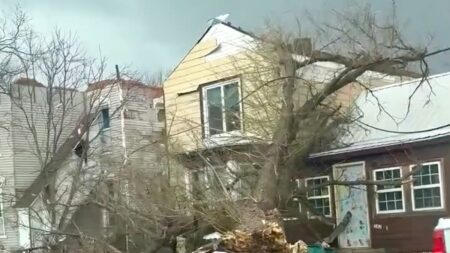
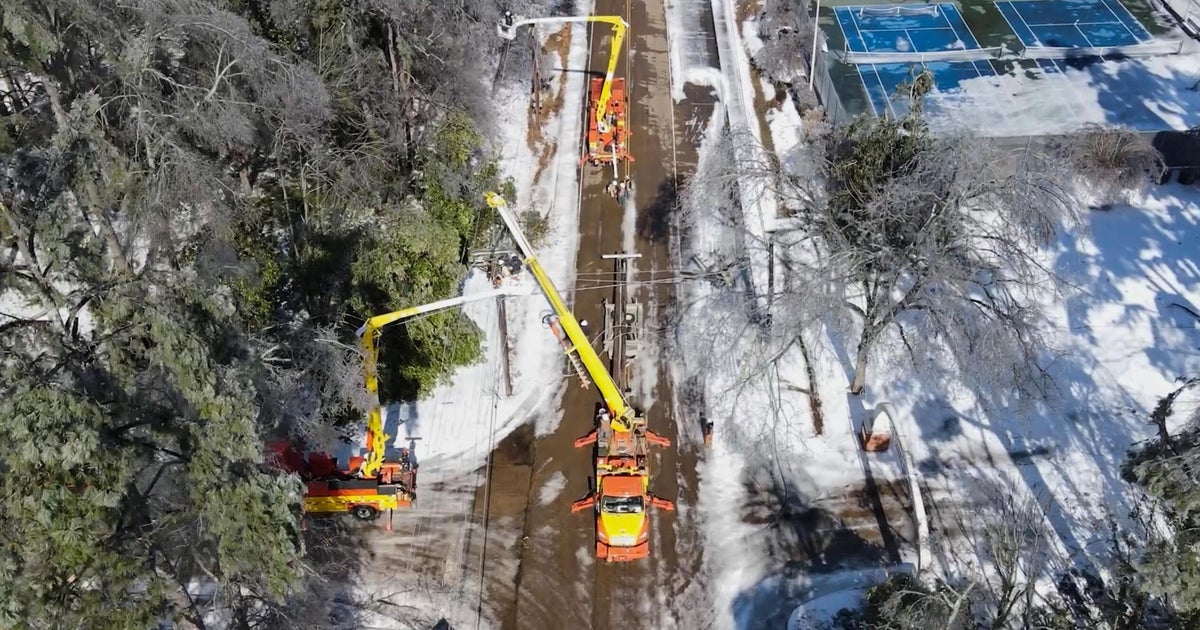
About an hour south of Gravestown, in Oxford, Mississippi, the full scale of the disaster becomes even more apparent. Hundreds of power crews from neighboring states have converged on the area, working around the clock to repair the extensive network of downed power lines left in the storm’s wake. Keith Hayward, CEO of the Northeast Mississippi Power Association, described the ice accumulation as simply overwhelming, despite recent improvements and reinforcement to the electrical infrastructure. “We believe we had an inch-and-a-quarter of ice over most of our system, which is basically a record for anything around this area,” Hayward explained. The tree damage has been extraordinary—the kind of destruction that seems almost unbelievable until you see it firsthand. When ice reaches that thickness, coating power lines on all sides, the additional weight burden becomes staggering. Poles designed to handle normal loads suddenly find themselves supporting nearly 10,000 pounds of extra weight. When trees—themselves heavily laden with ice—collapse onto these already-stressed power lines, the results are catastrophic for the electrical system. While the power company hasn’t lost a massive number of poles, the amount of wire now lying on the ground is extensive. The damage extends across the entire service area: vegetation destroyed, trees crashed through roofs, driveways blocked, and communities isolated. Hayward’s company covers 2,200 miles of primary power lines spanning a 75-mile radius, and the destruction extends from one end to the other—no area was spared.
The Human Toll and Difficult Recovery Timeline
While Hayward believes most customers will have their power restored within three days, he acknowledges that some of his more rural customers could be waiting another full week. This timeline is particularly concerning given that another round of severe cold temperatures is forecast to hit the East Coast this weekend, potentially creating dangerous conditions for those still without heat. For Hayward, this isn’t just a professional challenge—it’s deeply personal. “It is very, very disheartening for me… I grew up in this community. I’ve lived here my entire life,” he said, his voice reflecting the weight of responsibility he feels. “I feel for them, they have to go through these conditions and, you know, the loss that they’re suffering, not only from not having power, but the damage that they’ve had on their homes and things.” For Oxford residents like Jerrica Pryor, a middle school teacher, every day without power feels like an eternity. With no electricity and no running water, she’s been surviving on snack foods and periodically sitting in her car with the engine running just to warm up. At night, she uses a small space heater sparingly, rationing what little warmth she can generate, and piling on blankets to survive the frigid temperatures. But what truly weighs on Pryor’s heart isn’t her own discomfort—it’s worry for her students. With tears in her eyes, she expressed her deepest concern: how are her students managing in the dark and cold? “I do miss them, I just hope they’re well,” she said, her voice breaking with emotion. “It hurts a little bit, because they are on a different side, and I’m able to stay warm, and I just hope they are as well.” Her words reveal the compassionate heart of an educator who sees her students not just as pupils but as children she cares for deeply.
City Leadership Responds to Cascading Crises
Oxford Mayor Robyn Tannehill has been working tirelessly with city officials to restore basic services to residents, though she acknowledges the storm’s damage resembles something more typically associated with a tornado than an ice storm. The city has faced a particularly challenging water crisis on top of the power outages. Due to critically low water pressure, city officials made the difficult decision to shut off water supplies to several neighborhoods to ensure the local hospital had sufficient water to continue caring for patients. Tannehill believes the water pressure crisis may stem from multiple causes: pipes that burst after freezing during the storm’s coldest hours, or alternatively, from dramatically increased water demand as countless residents followed the common advice to keep faucets dripping to prevent pipes from freezing—a prevention measure that ironically may have contributed to the system-wide pressure problem. Lafayette County Emergency Management has responded by establishing several distribution sites throughout the area where residents in desperate situations can obtain ready-to-eat meals and bottled water. The National Guard arrived in Oxford on Wednesday, providing crucial assistance in delivering these supplies to people who need them most, including those who can’t leave their homes due to blocked roads or lack of transportation.
Long Road Ahead as Community Rallies
Lafayette County, which includes the city of Oxford, has implemented distribution limits of three days’ worth of supplies per person—a necessary restriction designed to stretch available resources and “help ensure supplies reach as many residents as possible,” according to county spokesperson Bo Moore. As of Thursday evening, nearly half of Lafayette County remained without power, and the challenges extend beyond just getting lights back on. Moore told CBS News that the county has been using the National Guard’s helicopter for medical transports to Memphis, Tennessee, because local roads remain too hazardous for ambulances to navigate safely—a striking illustration of just how severe conditions remain nearly a week after the storm hit. When Mayor Tannehill was asked when things might return to normal, her response was both honest and sobering: “It’s going to be a long road to recovery. It’s hard to even get our minds to that right now when we still have people without power and without water.” Her words acknowledge the reality that recovery isn’t measured in days but likely in weeks, and that the community’s focus must remain on immediate survival and assistance rather than looking too far ahead. Yet amid all the hardship, there are signs of hope and human resilience—neighbors helping neighbors, utility workers from distant states sacrificing time with their own families to restore power to strangers, firefighters opening their doors to provide warmth and shelter, and teachers worrying more about their students than themselves. These stories remind us that even in the darkest, coldest times, the human spirit finds ways to generate its own warmth.