

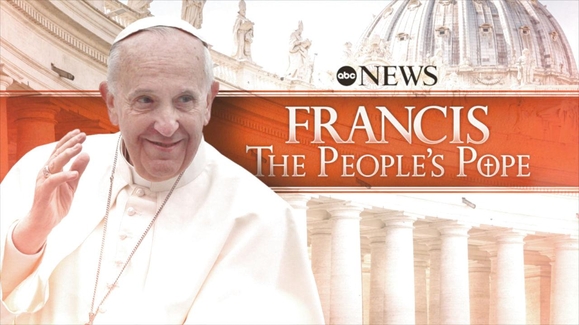

Francis: The People’s Pope – A Journey of Humility and Hope
A Revolutionary Leader Emerges from Humble Beginnings
When Jorge Mario Bergoglio stepped onto the balcony of St. Peter’s Basilica on March 13, 2013, the world witnessed something unprecedented in the Catholic Church’s modern history. Choosing the name Francis after St. Francis of Assisi, the patron saint of the poor, he immediately signaled a departure from traditional papal conventions. Born in Buenos Aires, Argentina, to Italian immigrant parents, Francis grew up in a working-class neighborhood where he witnessed firsthand the struggles of ordinary people. His father worked as a railway accountant, and his mother was a homemaker who raised five children in modest circumstances. This upbringing would profoundly shape his worldview and his approach to leading the world’s 1.3 billion Catholics. Unlike many of his predecessors who came from European aristocratic or academic backgrounds, Francis brought with him the perspective of Latin America, a continent where the majority of the world’s Catholics now reside. His election marked not only a geographical shift in papal leadership but also a philosophical one, as he embodied a commitment to simplicity, compassion, and direct engagement with the marginalized that would define his papacy from its very first moments.
Breaking Protocol: A Pope of the People
From the outset, Pope Francis shattered centuries-old protocols and expectations, choosing to live in the Vatican guesthouse rather than the ornate Apostolic Palace, riding in modest vehicles instead of the traditional papal limousine, and famously carrying his own briefcase. These weren’t mere symbolic gestures but reflections of a deeply held belief that church leaders should live simply and remain close to the people they serve. He has been photographed embracing disfigured individuals, washing the feet of prisoners including women and Muslims, and making surprise phone calls to ordinary Catholics who write to him with their problems. His spontaneous remarks, warm hugs, and willingness to engage directly with crowds—sometimes to the consternation of his security detail—have made him remarkably accessible and beloved by millions worldwide. Francis has consistently rejected the trappings of power, choosing instead to emphasize service and humility. His homilies often focus on practical Christianity, urging the faithful to go out into the streets and “make a mess” by actively serving the poor and marginalized rather than remaining comfortable within church walls. This approach has resonated particularly with young people and those who had become disillusioned with institutional religion, offering a refreshing vision of what leadership in the modern church can look like. His informal style, including his use of plain language rather than theological jargon, has made complex church teachings more accessible while maintaining their spiritual depth.
Champion of the Poor and Forgotten
Perhaps no aspect of Pope Francis’s papacy has been more consistent or passionate than his advocacy for the poor, the marginalized, and those relegated to what he calls the “peripheries” of society. Drawing inspiration from his Jesuit training and his years serving in the slums of Buenos Aires, Francis has made economic inequality and social justice central themes of his teachings. He has spoken forcefully against what he terms the “throwaway culture” of modern capitalism, where people are discarded when they are no longer economically productive. His apostolic exhortation “Evangelii Gaudium” (The Joy of the Gospel) contained sharp criticisms of unfettered capitalism and trickle-down economics, arguing that such systems inevitably produce inequality and suffering. Francis has called for economic structures that serve humanity rather than profit, emphasizing that the earth’s resources belong to everyone, not just the wealthy few. He has visited refugee camps, prisons, and impoverished communities around the world, consistently amplifying the voices of those whom society often ignores. His actions regarding refugees and migrants have been particularly notable, as he has repeatedly called on nations to open their doors to those fleeing violence and poverty, even bringing refugee families back to Rome on the papal plane. This commitment extends to his environmental advocacy, which he sees as inseparable from the fight against poverty, since climate change disproportionately affects the world’s poorest communities. Through both words and actions, Francis has worked to reorient the Catholic Church toward what he sees as its fundamental mission: serving the least among us.
Confronting Crisis: Reforming a Troubled Institution
Pope Francis inherited a Catholic Church beset by multiple crises, most notably the clergy sexual abuse scandal that had devastated communities worldwide and severely damaged the church’s credibility. Unlike some of his predecessors, Francis has acknowledged these failures more openly and has taken concrete steps toward accountability, including establishing a pontifical commission for the protection of minors and removing bishops who covered up abuse. However, critics argue that his reforms haven’t gone far enough and that the church still prioritizes institutional protection over victim justice. Francis has also confronted the Vatican’s own bureaucracy—the Roman Curia—which he has described as suffering from various “diseases” including careerism, gossip, and spiritual Alzheimer’s. His efforts to reform Vatican finances, which have long been shrouded in secrecy and scandal, have met with both progress and resistance. He has brought in outside experts, implemented transparency measures, and taken action against corruption, though entrenched interests within the Vatican have pushed back against these changes. Additionally, Francis has worked to make the church more inclusive, though his approach has sometimes frustrated both conservatives and progressives. He has softened the church’s tone toward divorced and remarried Catholics, LGBTQ+ individuals, and others who felt excluded, famously asking “Who am I to judge?” regarding gay priests. Yet he has maintained traditional church doctrine on issues like marriage, abortion, and women’s ordination, seeking pastoral compassion within existing theological frameworks. This balancing act has earned him both praise for his mercy and criticism from those who want more fundamental doctrinal changes or those who see his openness as dangerous relativism.
A Global Voice for Peace and Environmental Stewardship
On the world stage, Pope Francis has emerged as a moral authority whose influence extends far beyond Catholic circles, speaking out on issues of war, peace, environmental destruction, and human rights. His 2015 encyclical “Laudato Si'” (Praise Be to You) represented a watershed moment in religious engagement with environmental issues, presenting climate change not merely as a political or economic problem but as a profound moral and spiritual crisis. The document called for an “ecological conversion” and integral ecology that recognizes the interconnections between environmental degradation, poverty, and social injustice. Francis’s voice has been influential in international discussions on climate policy, lending moral weight to calls for urgent action. He has also worked tirelessly for peace, mediating conflicts, meeting with world leaders, and calling for the abolition of nuclear weapons. His diplomatic efforts helped facilitate the historic rapprochement between the United States and Cuba, and he has consistently advocated for dialogue over violence in conflicts from the Middle East to Ukraine. Francis has been unafraid to speak truth to power, criticizing arms manufacturers, condemning terrorism and religious violence, and calling out the hypocrisy of nations that preach Christian values while closing their borders to refugees. His emphasis on interreligious dialogue has led to historic encounters with leaders of other faiths, including a joint declaration with the Grand Imam of Al-Azhar on human fraternity. Through these efforts, Francis has positioned the papacy as a voice for universal human values rather than narrow sectarian interests, appealing to people’s common humanity regardless of their religious beliefs.
Legacy and Lasting Impact
As Pope Francis continues his papacy, his impact on both the Catholic Church and the broader world remains profound and multifaceted. He has fundamentally altered the image of the papacy, making it more accessible, pastoral, and connected to contemporary concerns. His emphasis on mercy over judgment has resonated with millions who felt alienated from institutional religion, while his challenges to political and economic systems have inspired social movements worldwide. Within the church, he has shifted emphasis from doctrinal rigidity to pastoral accompaniment, from institutional maintenance to missionary outreach, and from clerical privilege to humble service. The long-term success of his reform efforts remains uncertain, as resistance from conservative factions within the church continues, and the institutional changes he has initiated may or may not survive future papacies. His appointment of cardinals from diverse geographic regions, particularly from the developing world, may help ensure that his vision continues beyond his tenure. Yet Francis’s greatest legacy may not be structural reforms but rather the example he has set of what Christian leadership can look like in the modern world. By living simply, speaking plainly, embracing the marginalized, and challenging the powerful, he has demonstrated that ancient religious traditions can remain relevant and prophetic in addressing contemporary crises. Whether one agrees with all his positions or not, Pope Francis has undeniably reminded the world that religious leadership can be a force for compassion, justice, and human dignity. His papacy has shown that even ancient institutions can be renewed when led by someone willing to take risks, challenge conventions, and place people before protocols. As he often says, quoting the early church theologian St. Irenaeus, “The glory of God is the living human being,” and it is this conviction that has guided his revolutionary approach to the world’s oldest institution.