

Face the Nation: Immigration Enforcement, Venezuelan Opposition, and Economic Concerns Take Center Stage
Venezuelan Opposition Leader Speaks Out on Democracy and Trump’s Support
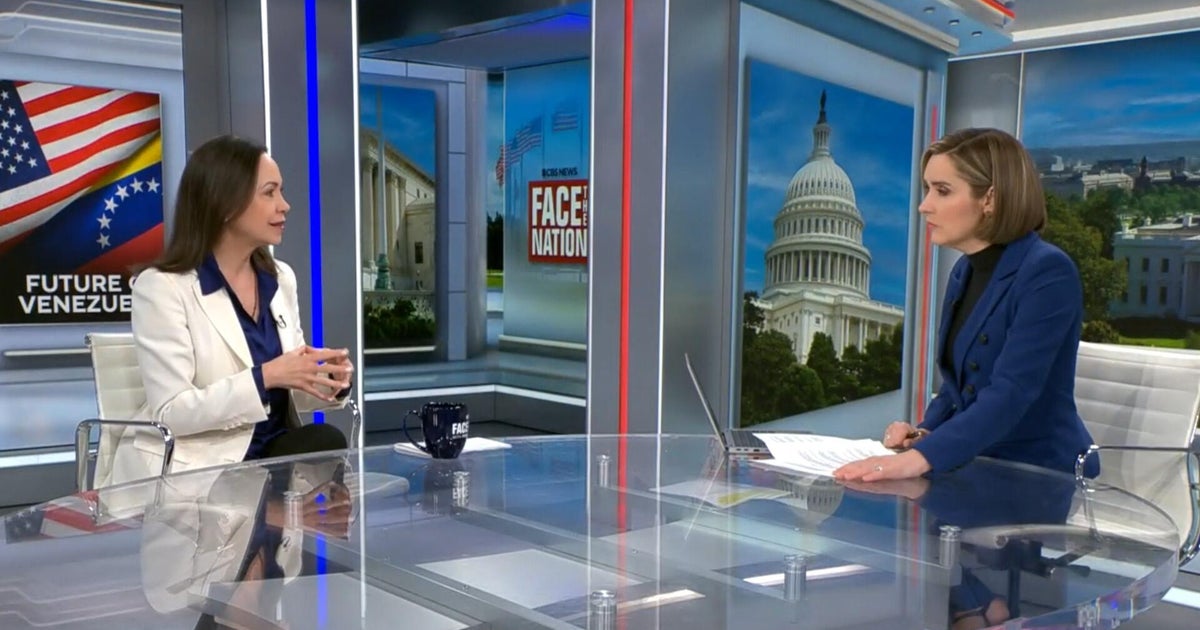
This week’s Face the Nation featured an exclusive interview with María Corina Machado, the Venezuelan opposition leader and Nobel Peace Prize winner who has become a symbol of democratic resistance in her country. Machado, whose party won Venezuela’s last election but was prevented from taking power by the Maduro regime, expressed cautious optimism about her country’s future following meetings with Trump administration officials. Despite President Trump’s mixed messaging—praising both Machado and the current regime—she maintains confidence in American support for a democratic transition.
Machado’s journey to this moment has been extraordinary and dangerous. She made headlines with a daring escape from Venezuela by land, sea, and air to receive her Nobel Peace Prize in Oslo, breaking her back in the process. In a symbolic gesture, she gave her Nobel medal to President Trump, dedicating it to him in recognition of his administration’s actions against the Maduro regime, including the military capture of Nicolas Maduro four weeks ago. While over 700 political prisoners remain detained in Venezuela and Machado herself cannot safely return home without risk of imprisonment or worse, she believes the pressure from the United States is forcing meaningful change. She emphasized that the current acting president, Delcy Rodriguez, is only complying with reforms because of American pressure, not genuine commitment to democracy. Machado sees Venezuela’s liberation as crucial not just for her country, but for the entire Western Hemisphere, predicting that freedom in Venezuela would lead to the collapse of communist regimes in Cuba and Nicaragua, and eliminate Iran’s satellite presence just hours from Florida.
Immigration Enforcement Crisis Sparks National Debate and Congressional Action
The controversial shooting death of Alex Pretti, an ICU nurse in Minneapolis, by Border Patrol agents has ignited a fierce national debate about immigration enforcement tactics and federal overreach. The incident has led to a partial government shutdown as Democrats in Congress demand reforms to the Department of Homeland Security before approving funding. In response, the Trump administration has made significant personnel changes, including replacing Greg Bovino, who had implemented controversial “roving patrols,” with border czar Tom Homan in Minneapolis. The Justice Department and FBI have opened investigations into the shooting.
Republican Congressman Michael McCaul of Texas, appearing on the program, strongly criticized Bovino’s tactics, stating that he “escalated the situation” and “put his agents in a position they should never have been put in.” McCaul emphasized that ICE agents have no training for crowd control and should focus on “targeted law enforcement operations” to remove violent criminals rather than roving the streets. He warned that the administration risks “turning a winning issue into a liability,” as Americans support deporting dangerous criminals but don’t want to see images of children being dragged from cars or U.S. citizens wrongfully detained. The congressman called for reforms to the controversial “collateral arrest” policy, which allows warrantless arrests of unauthorized immigrants encountered during operations who are not the primary targets. A particularly troubling case involved 5-year-old Liam Ramos and his father, detained by ICE despite being in the country legally under an asylum app honored by the previous administration—a federal judge ordered their release, specifically citing concerns about traumatizing children.
Mayors Navigate the Complex Intersection of Federal and Local Authority
Four mayors from across the country—Democrats Eileen Higgins of Miami and Quinton Lucas of Kansas City, along with Republicans David Holt of Oklahoma City and Mark Freeman of Mesa, Arizona—provided crucial on-the-ground perspectives about how immigration enforcement is affecting their communities. Their bipartisan conversation revealed the impossible position mayors find themselves in: charged with protecting residents while being legally subservient to federal authorities under the Constitution’s Supremacy Clause.
Mayor Holt articulated the frustration shared by his colleagues, noting that immigration laws have been enforced for over a century without the chaos currently being witnessed in American cities far from the border. He pointed out that former police chiefs who are now mayors observe law enforcement tactics in recent ICE operations that “haven’t been utilized anywhere in 30 years in a local law enforcement agency,” undermining decades of work building trust with communities. Mayor Lucas discussed Kansas City’s fight against a federal plan to convert an industrial warehouse into a detention facility for 10,000 people, arguing that local zoning laws and basic standards of humane treatment should apply even to federal operations. Mayor Higgins delivered perhaps the most urgent message, warning that Miami’s Haitian community—20 percent of whom work in healthcare—would lose Temporary Protected Status at midnight on Tuesday, meaning thousands of nurses, home health aides, and physician assistants would suddenly become deportable, threatening both the local economy and humanitarian principles. Mayor Freeman described Mesa’s cooperative approach, maintaining an agreement with ICE since 2009 while simultaneously building strong relationships with the Hispanic and Latino communities through cultural celebrations and regular meetings with pastors.
Economic Outlook: Strong Numbers Mask Consumer Struggles
Former Trump economic adviser Gary Cohn, now vice chairman of IBM, provided analysis of the current economic situation, painting a picture of contrasts. While top-line GDP growth is trending around 5 percent—well above the decade-long baseline—and inflation has declined to the high 2 percent range with unemployment around 4-4.5 percent, these strong aggregate numbers conceal significant pain for ordinary Americans. Cohn described a bifurcated economy with a “massive wealth effect at the top end” while “hard-working Americans are having a very difficult time paying their bills.”
The White House acknowledges this problem and plans to focus heavily on “affordability” heading into the midterm elections, with President Trump planning to spend time on the road addressing consumer concerns. However, recent corporate announcements suggest economic turbulence ahead, with over 60,000 layoffs announced last week from companies including Amazon (16,000 jobs), Mastercard (4 percent of workforce), UPS (30,000 jobs), Dow (4,500), and Home Depot (800). Cohn explained that companies are “right-sizing” after hoarding labor during COVID and facing increased input costs from tariffs, commodity prices, and wages while being unable to raise consumer prices. Regarding President Trump’s proposals to help consumers—including a 10 percent cap on credit card interest rates, limits on institutional investors buying homes, and potential $2,000 checks—Cohn was skeptical, particularly about credit card rate caps, which he warned would have the opposite of the intended effect by causing companies to stop lending to the riskiest consumers who most need access to credit.
Federal Reserve Nominee Expected to Return to Traditional Approach
Cohn also discussed President Trump’s nomination of Kevin Warsh to chair the Federal Reserve, expressing strong support for the choice. Warsh previously served as a Fed governor during the 2008 financial crisis, where he was instrumental in managing bank mergers and asset transfers that helped the country navigate that catastrophic period. Cohn predicted that Warsh would “take the Fed back to its traditional norms,” staying out of non-financial issues while focusing on monetary policy, likely implementing one to two interest rate cuts this year in response to current pressure.
Importantly, Warsh is expected to reduce the Fed’s balance sheet, reversing the quantitative easing policies that led to massive securities purchases. On regulation, Cohn characterized Warsh as “a traditionalist, believing that we need strong regulation in the United States, but it has to be regulation that works and allows the market to grow.” The markets responded positively to Warsh’s nomination, with the dollar strengthening by about 1 percent and precious metals declining—silver by 25 percent and gold by 10 percent—indicating investor confidence. When asked about President Trump’s joking threat to “sue Warsh if he doesn’t lower interest rates,” Cohn dismissed it as humor, emphasizing that Trump understands Fed independence and that Warsh has been a staunch advocate for maintaining that independence, though the confirmation process may face complications if Senator Thom Tillis pursues his request for a Department of Justice probe into the current Fed chair.
Congressional Standoff Over Homeland Security Funding
The broadcast took place during a partial government shutdown triggered by Democratic opposition to Homeland Security funding in the wake of the Minneapolis shooting. House Speaker Johnson expressed confidence that the shutdown would end by Tuesday, when the House is expected to debate a funding package with a two-week continuing resolution for DHS that removes the department from the larger appropriations bill to allow time for reforms. With Republicans holding only a one-seat majority, passage requires near-unanimity among GOP members and potentially some Democratic support.
Congressman McCaul indicated he would vote for the package but acknowledged that “the trick is getting it through the Rules Committee,” adding that he believes Speaker Johnson would not pursue the vote without confidence in having the necessary support. The episode also touched on the Justice Department’s release of over three million additional pages related to the Jeffrey Epstein investigation, though the authors of the law requiring this release—Democrats and one Republican on the House Judiciary Committee—claim the administration has only released half the estimated pages and has redacted or withheld 200,000 documents, prompting a formal inquiry. The convergence of immigration policy tensions, economic anxiety among consumers, questions about federal enforcement tactics, and the delicate balance between federal authority and local governance has created a politically volatile moment as the country approaches midterm elections, with affordability and immigration enforcement likely to dominate the national conversation in the months ahead.