

Harvard University Takes Legal Action Against Trump Administration Over Funding Threats
A High-Stakes Battle Over Academic Freedom and Federal Support
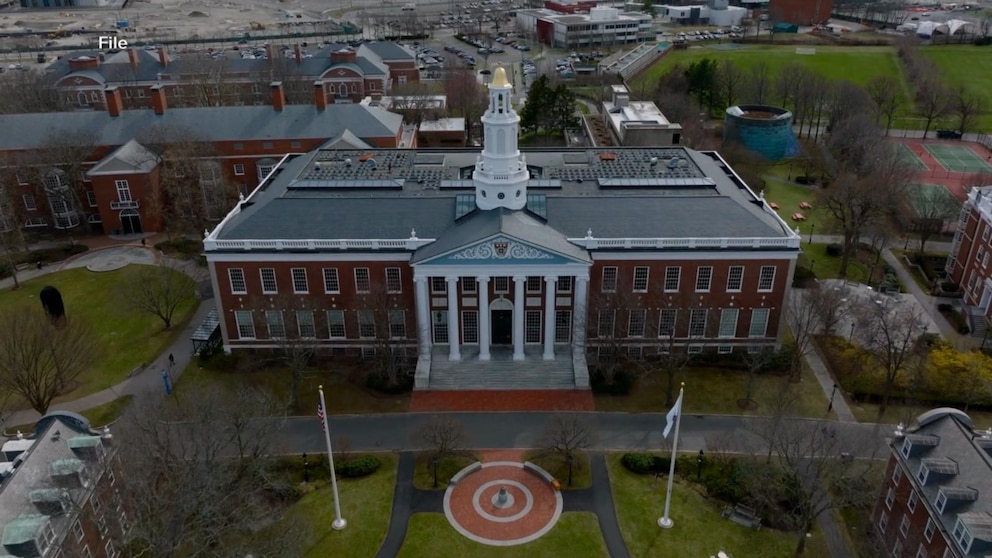
Harvard University, one of America’s oldest and most prestigious institutions of higher learning, has filed a lawsuit against the Trump administration in response to threats to slash federal funding. This legal confrontation represents a significant escalation in the ongoing tension between elite universities and the federal government, highlighting fundamental questions about academic freedom, institutional autonomy, and the relationship between higher education and government oversight. The lawsuit comes at a time when universities across the nation are grappling with political pressures from various directions, but Harvard’s decision to take legal action signals that the institution believes a critical line has been crossed. At the heart of this dispute is not just money, though the financial stakes are substantial, but rather the principle of whether the government can use funding as a weapon to influence academic policies, research priorities, and institutional values. For Harvard, which receives hundreds of millions of dollars annually in federal research grants and student aid, the potential loss of this funding could impact everything from groundbreaking medical research to financial aid packages for students from modest backgrounds. However, university officials have made clear that this fight is about more than dollars and cents—it’s about defending the independence of higher education from what they view as politically motivated overreach.
The Background and Context of the Dispute
The conflict between Harvard and the Trump administration didn’t emerge overnight but rather developed through a series of policy decisions and public statements that increasingly put pressure on universities perceived as bastions of liberal ideology. The administration has targeted several aspects of university operations, including diversity, equity, and inclusion programs, international student enrollment, research partnerships with certain countries, and campus policies regarding free speech and protests. Harvard, like many elite universities, has become a lightning rod for criticism from conservative politicians who argue that these institutions promote left-wing ideologies, discriminate against conservative viewpoints, and fail to adequately protect Jewish students amid rising campus tensions over Middle East politics. The funding threats appear to be part of a broader strategy to compel universities to change their policies and practices in ways that align with the administration’s political priorities. What makes this situation particularly complex is that federal funding for universities serves multiple purposes and comes through various channels—some money supports scientific research that advances national interests, some helps low-income students afford college, and some funds specific programs or facilities. The Trump administration’s willingness to use this funding as leverage has alarmed not just Harvard but universities nationwide, as it sets a precedent that could fundamentally alter the relationship between government and academia.
Harvard’s Legal Arguments and Constitutional Concerns
In its lawsuit, Harvard presents several compelling legal arguments that challenge the administration’s authority to withhold funding based on disagreements over university policies. Central to Harvard’s case is the argument that the threatened funding cuts violate constitutional protections, including First Amendment rights to academic freedom and free expression, as well as due process guarantees under the Fifth Amendment. The university contends that the government cannot lawfully condition federal funding on requirements that weren’t part of the original grant agreements or that compel the university to abandon its institutional values and educational mission. Harvard’s lawyers argue that many of the administration’s demands would require the university to discriminate in ways that violate its own non-discrimination policies and potentially other federal and state laws. Furthermore, the lawsuit challenges the procedural manner in which the funding threats have been made, arguing that proper administrative processes haven’t been followed and that the threatened actions are arbitrary and capricious. The university also raises concerns about vagueness—that some of the administration’s demands are so unclear that Harvard couldn’t comply even if it wanted to, creating an impossible situation where funding could be withdrawn regardless of the university’s actions. These legal arguments draw on decades of precedent regarding the limits of government power when it comes to conditional spending and the special protections afforded to educational institutions and academic inquiry in American constitutional law.
The Broader Implications for Higher Education
While Harvard is the plaintiff in this particular lawsuit, the outcome will have profound implications for colleges and universities across the United States. Higher education institutions are watching this case closely because they recognize that if the administration can successfully pressure Harvard through funding threats, no university will be immune from similar tactics. The case raises fundamental questions about the balance of power between government and educational institutions in a democratic society. Historically, American universities have enjoyed considerable autonomy, operating under the principle that academic freedom—the ability of scholars to pursue knowledge and teach without political interference—is essential to both educational excellence and democratic values. This independence has enabled universities to serve as spaces for challenging conventional wisdom, exploring controversial ideas, and preparing students to think critically rather than simply absorb approved narratives. If the government can dictate university policies by threatening to withdraw funding, this traditional autonomy would be severely compromised. The ripple effects could extend beyond policy changes to affect the quality of research, the diversity of perspectives on campus, and the willingness of institutions to tackle controversial but important subjects. Smaller colleges and universities with fewer resources than Harvard might be particularly vulnerable to such pressure, potentially creating a chilling effect across the entire higher education landscape. International implications also loom large, as the United States has long been a global leader in higher education partly because of the independence and vitality of its universities—qualities that could be undermined if political control increases.
The Financial and Practical Stakes
The financial dimensions of this dispute are staggering and multifaceted. Harvard receives approximately $600-700 million annually in federal funding, though the exact amount fluctuates based on research grants, contracts, and student financial aid. However, this federal money doesn’t simply pad the university’s endowment—it serves specific, often critical purposes. A substantial portion funds scientific and medical research that advances knowledge in areas like cancer treatment, infectious disease, climate science, and artificial intelligence. This research doesn’t just benefit Harvard; it generates discoveries and innovations that serve the broader public interest and maintain America’s competitive edge in science and technology. Federal funding also supports financial aid that makes Harvard accessible to talented students from all economic backgrounds. Despite its massive endowment, Harvard has committed to meeting the full demonstrated financial need of all admitted students, and federal Pell Grants, work-study funds, and research assistantships help make this possible. If this funding were cut, Harvard would face difficult choices: it could replace the lost federal dollars with its own resources, but even Harvard’s endowment isn’t unlimited, and redirecting funds to cover basic operations would mean less money for other priorities. Alternatively, the university could reduce its activities—conducting less research, admitting fewer low-income students, or cutting programs—but any of these options would represent a significant retreat from its educational mission. For students currently enrolled or planning to attend, the uncertainty itself creates anxiety about whether their financial aid will remain secure and whether the research and educational opportunities they expected will still be available.
Looking Ahead: Potential Outcomes and Lasting Impact
As this lawsuit moves forward through the federal courts, several potential outcomes could reshape the landscape of American higher education for years to come. If Harvard prevails, it would establish important legal precedents limiting the government’s ability to use funding as a tool to control university policies and would reaffirm constitutional protections for academic freedom. Such a victory would be celebrated by higher education institutions nationwide and could embolden universities to resist other forms of political pressure. However, if the administration wins, either on the merits or on procedural grounds, it would signal that universities are more vulnerable to government influence than previously understood, potentially opening the door to more aggressive federal intervention in university affairs across various policy areas. A third possibility is that the case could be settled, with both sides reaching a compromise that addresses some concerns while avoiding a definitive legal ruling—though given the high stakes and seemingly incompatible positions, settlement seems less likely than in typical litigation. Beyond the immediate legal outcome, this confrontation has already changed the relationship between government and universities, creating an atmosphere of tension and distrust that won’t quickly dissipate. University leaders are being forced to think more carefully about their dependence on federal funding and whether diversification of revenue sources might be necessary to protect institutional independence. The controversy has also intensified the political polarization around higher education, with universities increasingly viewed through partisan lenses rather than as institutions that serve broad public purposes. Regardless of how the lawsuit itself is resolved, the episode has exposed deep disagreements about the role of universities in American society, the appropriate limits of government power, and the value of academic independence—questions that will continue to generate debate and conflict long after the legal briefs have been filed and the court decisions rendered. What remains clear is that this lawsuit represents more than a dispute between one university and one administration; it’s a critical moment in the ongoing negotiation of the boundaries between political authority and educational autonomy in American democracy.