


Deadly Israeli Strikes in Gaza Mark One of Bloodiest Days Since Ceasefire
Violence Escalates as Truce Agreement Faces Uncertainty
The fragile ceasefire between Israel and Hamas faced severe strain this weekend as Israeli airstrikes across the Gaza Strip killed at least 30 Palestinians on Saturday, marking one of the deadliest single days since the October truce agreement took effect. The casualties, which included six children and two women from different families, were scattered across multiple locations throughout the territory. Among the targets hit were an apartment building in Gaza City, a tent encampment sheltering displaced families in Khan Younis, and a police station that was also struck in Gaza City, killing at least 14 people including four policewomen, civilians, and inmates. Hospital officials who received the bodies reported the grim toll, while relatives of the deceased struggled to comprehend the violence during what was supposed to be a period of peace. The strikes occurred just one day before the planned opening of the Rafah crossing along Gaza’s border with Egypt, a development that Palestinians had viewed with hope as a potential lifeline for medical evacuations and humanitarian relief after months of complete isolation.
Families Caught in the Crossfire Question the Reality of Peace
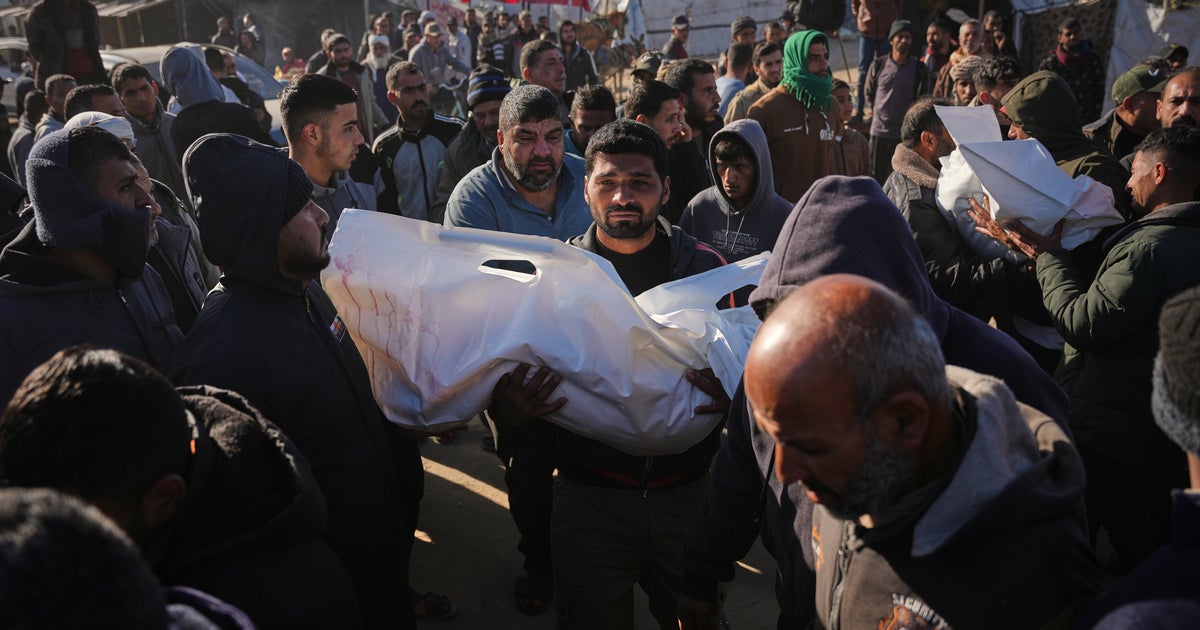
The human cost of Saturday’s violence became painfully clear through the stories of families torn apart in moments. At Nasser Hospital, medical staff received seven bodies from the tent camp strike in Khan Younis, including a father, his three children, and three grandchildren who died when flames engulfed their temporary shelter. Atallah Abu Hadaiyed, a relative of the victims, had just finished his prayers when the explosion tore through the camp. “We came running and found my cousins lying here and there, with fire raging,” he said, his voice filled with anguish and confusion. His questions echoed the uncertainty felt by countless Gaza residents: “We don’t know if we’re at war or at peace, or what. Where is the truce? Where is the ceasefire they talked about?” The scene he described was one of absolute devastation, with survivors combing through ruins that included blood-soaked mattresses and scattered belongings. In Gaza City, another family experienced similar tragedy when an airstrike hit their apartment building, killing three young girls, their aunt, and their grandmother. Samir Al-Atbash, a relative of the victims, spoke with heartbreaking simplicity about the loss: “The three girls are gone, may God have mercy on them. They were asleep, we found them in the street.” He emphasized that his family members were civilians with no connections to Hamas, victims caught in a conflict they had no part in creating. At Shifa Hospital, their names were written on body bags lined up solemnly at the foot of a wall, a haunting testament to lives cut short.
Regional Mediators Sound Alarm Over Ceasefire Violations
The international community’s response to the escalating violence came swiftly, with Egypt and Qatar—both key mediators in negotiating the ceasefire—issuing strong condemnations of Israel’s actions. Egypt released a statement denouncing the Israeli strikes in “the strongest terms” and warned that they represent “a direct threat to the political course” of the truce agreement that both nations had worked hard to broker. Qatar echoed these concerns, calling the strikes a “dangerous escalation” and emphasizing that their continuation poses a “direct threat” to the entire political process designed to bring lasting peace to the region. These warnings from the mediating nations highlighted the precarious nature of the ceasefire and the complex diplomatic efforts required to maintain it. Meanwhile, Hamas issued its own statement calling Saturday’s strikes “a renewed flagrant violation” of the agreement and urged the United States and other countries involved in mediation to pressure Israel to halt its military operations. Senior Hamas official Bassem Naim took to social media to express deep skepticism about the prospects for peace, questioning whether the situation reflected genuine efforts toward stability or merely a continuation of conflict by other means. His comment that “all available indicators suggest that we are dealing with a ‘Board of War,’ not a ‘Board of Peace'” reflected the cynicism that has grown among Palestinian leaders regarding the Trump administration’s proposed international governing body for Gaza.
Israel Justifies Strikes as Response to Hamas Violations
From Israel’s perspective, the military operations were not unprovoked acts of aggression but necessary responses to what they characterized as Hamas violations of the ceasefire agreement. The Israeli military stated that its attacks since October have consistently followed breaches of the truce terms, and Saturday’s strikes were no exception. According to Israeli officials, the military action came in response to two separate incidents on Friday that they described as ceasefire violations. In one incident, Israeli forces killed three militants who emerged from a tunnel in an Israeli-controlled area of Rafah, the southernmost city in Gaza. In another, four militants were killed after they approached Israeli troops stationed near the dividing line between Israeli and Hamas-controlled territories. Israel has maintained that it retains the right to respond to security threats even during the ceasefire period, and that its strikes have targeted locations on both sides of the agreed-upon dividing line when necessary to protect its forces and citizens. This justification, however, has done little to satisfy Palestinian civilians who find themselves caught between competing claims of who violated the agreement first, or whether the military responses are proportionate to the alleged provocations. The Israeli military’s position reflects the fundamental challenges in maintaining ceasefires in environments where trust is minimal and where different parties interpret the terms of agreements through vastly different lenses shaped by their security concerns and political objectives.
Casualty Numbers Reveal Ongoing Suffering Despite Ceasefire
The death toll from Saturday’s strikes represented a dramatic spike compared to the daily average of Palestinian casualties since the ceasefire officially began. According to Gaza’s Health Ministry, at least 520 Palestinians had been killed by Israeli fire between the start of the ceasefire and Friday, before Saturday’s deadly escalation added significantly to that number. The Saturday casualties alone were several times higher than what had become the grim daily average during the supposed period of peace. These figures are maintained by the Health Ministry, which operates under the Hamas-led government in Gaza, but the casualty records are generally regarded as reliable by United Nations agencies and independent experts who have reviewed their methodology and accuracy over time. The continuing deaths during the ceasefire period underscore the complexity of the situation in Gaza, where the line between war and peace has become increasingly blurred. The broader context of this violence stems from the war that began with a Hamas-led attack on southern Israel, which killed approximately 1,200 people, predominantly civilians, and resulted in 251 people being taken hostage into Gaza. The recovery of the remains of the final hostage held in Gaza earlier in the week had briefly suggested that one chapter of this tragic conflict might be closing, but Saturday’s violence indicated that the path to genuine peace remains fraught with obstacles, miscommunications, and fundamental disagreements about security, sovereignty, and justice.
Hope and Despair as Rafah Crossing Prepares to Open
Despite the violence, preparations continued for the opening of the Rafah crossing the day after the strikes, representing a potentially significant development for Gaza’s isolated population. All of Gaza’s border crossings—with the rest controlled by Israel—have remained closed throughout almost the entire duration of the war, leaving the territory’s 2.3 million residents trapped without access to the outside world for medical care, family connections, or economic opportunities. Palestinians view the Rafah crossing as an essential lifeline, particularly for the tens of thousands of people requiring medical treatment outside the territory, where the healthcare infrastructure has been decimated by months of conflict. The majority of Gaza’s hospitals and medical facilities have been damaged or destroyed, leaving the population dependent on the possibility of medical evacuations for treatment of serious injuries and chronic conditions. The crossing’s opening, though limited initially, is scheduled to coincide with the U.S.-brokered Israel-Hamas ceasefire plan moving into its crucial second phase, which faces numerous challenging issues beyond just the opening of borders. These challenges include the complex task of demilitarizing the Gaza Strip after nearly two decades of Hamas rule, establishing security arrangements that satisfy both Israeli concerns and Palestinian aspirations for self-governance, and installing a new governmental structure capable of overseeing the massive reconstruction effort that will be required to rebuild the territory’s shattered infrastructure, homes, schools, and hospitals. The juxtaposition of Saturday’s deadly violence with the planned opening of this crucial crossing the following day perfectly captures the contradictory reality facing Gaza’s residents—caught between hope for a better future and the ever-present reality of sudden death from above.