


Two High-Profile Murder Trials Captivate America: Lori Daybell Awaits Verdict While Karen Read Faces Retrial
The Nation Watches as Two Complex Cases Unfold Simultaneously
This week has brought intense scrutiny to America’s justice system as two sensational murder trials capture headlines and public attention across the country. In Idaho, jurors have begun deliberating the fate of Lori Daybell, a woman accused of participating in a chilling conspiracy that allegedly left multiple family members dead. Meanwhile, on the opposite side of the nation in Massachusetts, Karen Read is facing her second trial for the death of her police officer boyfriend in a case that has divided communities and sparked widespread controversy about police conduct and potential cover-ups. Both cases have gripped the public imagination, not only because of the serious nature of the charges but also due to the complex web of relationships, suspicious circumstances, and questions about what really happened on the fateful days when lives were lost. These aren’t just legal proceedings—they’re human dramas that have left families shattered, communities divided, and countless Americans glued to their screens, trying to make sense of tragedies that seem almost too bizarre to be real.
Lori Daybell: A Conspiracy of Death Rooted in Doomsday Beliefs
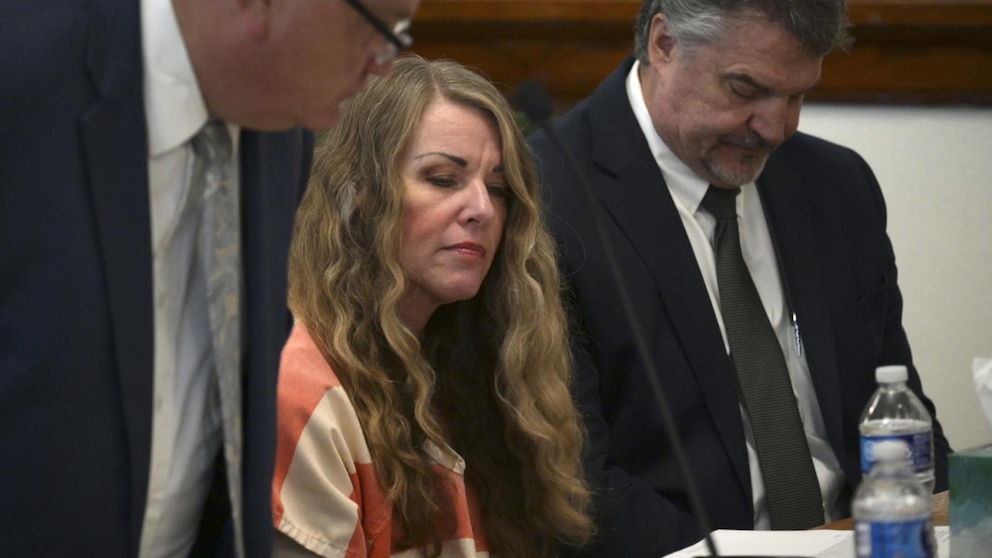
Lori Vallow Daybell sits in an Idaho courtroom facing charges that read like something from a crime thriller, yet the pain behind them is all too real. Prosecutors have built their case around allegations that Lori conspired with her brother, Alex Cox, to murder her fourth husband in what authorities describe as a calculated plot tied to extreme religious beliefs and financial gain. But this case goes far beyond just one death. Lori Daybell’s story has horrified the nation since authorities first began investigating the disappearance of her two youngest children, Joshua “JJ” Vallow and Tylee Ryan, whose remains were eventually discovered buried on the property of Lori’s fifth husband, Chad Daybell. In a separate trial that concluded in 2023, Lori was already convicted of murdering these two children and conspiring to murder Chad’s previous wife, Tammy Daybell, earning her multiple life sentences without parole. Now, prosecutors are seeking justice for her fourth husband, Charles Vallow, who was shot and killed by Lori’s brother Alex in July 2019—a death initially ruled self-defense but now viewed through a much darker lens as part of an alleged pattern of eliminating anyone who stood in the way of Lori and Chad’s apocalyptic vision and financial interests. The prosecution has presented evidence suggesting that Charles had become concerned about his wife’s increasingly extreme religious beliefs and was planning to divorce her and limit her access to his life insurance policy, potentially providing a motive for murder. As jurors now weigh the evidence, they must determine whether Lori Vallow Daybell conspired with her brother to end her husband’s life, adding yet another murder conviction to a case that has already been described as one of the most disturbing in recent American history.
The Karen Read Case: A Death That Sparked Allegations of a Police Cover-Up
On the other side of the country, Karen Read walked back into a Massachusetts courtroom to face charges for the second time in the death of her boyfriend, Boston Police Officer John O’Keefe, in what has become one of the most controversial and divisive cases in recent memory. The basic facts are not in dispute: on January 29, 2022, Officer O’Keefe was found dead in the snow outside a home in Canton, Massachusetts, during a winter storm. What remains intensely contested is how he got there and who is responsible. Prosecutors allege that Karen Read, after a night of heavy drinking, struck O’Keefe with her SUV while dropping him off at a party, then left him to die in the freezing cold. They paint a picture of a relationship troubled by alcohol and arguments, ending in a tragic and reckless act. But Karen Read’s defense team tells a dramatically different story—one that has captured the imagination of supporters nationwide and turned this case into something far bigger than a typical murder trial. Her attorneys argue that John O’Keefe never made it back into Karen’s vehicle after she dropped him at the party, but instead was beaten inside the home by other police officers and then placed outside to make it look like a hit-and-run. They allege a widespread conspiracy among law enforcement officials to frame Karen Read for a murder she didn’t commit in order to protect one of their own. The defense has pointed to what they claim are inconsistencies in the investigation, potential evidence tampering, and suspicious behavior by key witnesses—many of whom are connected to law enforcement. The first trial ended in a dramatic mistrial in July 2024 when jurors could not reach a unanimous verdict, though some jurors later claimed they had actually agreed Read was not guilty of the most serious charges but were not given proper opportunity to communicate this to the judge. The controversy surrounding the case has only intensified since then, with Read’s supporters staging frequent protests, questioning the integrity of the Canton Police Department and the Massachusetts State Police, and demanding justice for both John O’Keefe and Karen Read.
Two Women, Two Very Different Public Perceptions
While both women face murder charges, the public perception of Lori Daybell and Karen Read could hardly be more different, reflecting how context, evidence, and narrative shape the way we view defendants. Lori Daybell has been portrayed in media coverage as a figure of almost incomprehensible evil—a mother who allegedly murdered her own children in pursuit of a twisted doomsday ideology and a new relationship with Chad Daybell, an author of apocalyptic fiction who claimed to have visions of the end times. The discovery of JJ and Tylee’s remains, the suspicious deaths surrounding Lori and Chad, and testimony about their bizarre religious beliefs have made it difficult for the public to see her as anything other than guilty. There’s been little organized support for Lori, no rallies proclaiming her innocence, no social media campaigns with hashtags demanding justice. The evidence against her has seemed, to most observers, overwhelming and damning. Karen Read’s case, however, has inspired a completely different response. She has become something of a cause célèbre, with thousands of supporters who genuinely believe she is an innocent woman being railroaded by a corrupt system protecting its own. “Free Karen Read” signs dot lawns across Massachusetts, supporters pack the courtroom at every appearance, and social media influencers have dissected every aspect of the case, often concluding that the evidence doesn’t support the prosecution’s theory. This support stems partly from the defense’s compelling alternative narrative, but also from broader public distrust of police and institutions, particularly when it appears that law enforcement is investigating itself. Whether this support reflects a genuine miscarriage of justice or a successful defense strategy that has clouded public judgment remains one of the central questions as the retrial proceeds.
The Legal Challenges and What’s at Stake
Both trials present significant legal challenges that extend beyond determining guilt or innocence. In Lori Daybell’s case, jurors must navigate complex questions about conspiracy—did Lori actually plan with her brother to kill Charles Vallow, or was Alex Cox acting independently? The prosecution’s case relies heavily on circumstantial evidence and establishing a pattern of behavior, as Alex Cox died in December 2019 and cannot testify about any alleged conspiracy. Prosecutors point to cell phone records, financial records, and testimony about Lori’s beliefs and statements to build their case that Charles’s death was not the act of self-defense Alex claimed, but rather a coordinated murder. The defense, meanwhile, argues that prosecutors are asking jurors to connect dots that shouldn’t be connected, relying on Lori’s unconventional beliefs rather than solid evidence of conspiracy. For Karen Read, the legal stakes of this retrial are complicated by questions about what charges she actually faces. Her defense team has argued that because some jurors stated after the mistrial that they had unanimously agreed she was not guilty of second-degree murder and leaving the scene of a fatal accident, double jeopardy should prevent her from being tried on those charges again. The court has ruled against this argument, allowing prosecutors to proceed with all original charges, including second-degree murder, but this issue will likely be appealed regardless of the trial’s outcome. The prosecution must prove that Karen Read struck John O’Keefe with her vehicle and left him to die—a case built on expert testimony about vehicle damage, medical evidence, and witness statements. The defense must create reasonable doubt by presenting their alternative theory and attacking the credibility of the investigation. For both women, the stakes couldn’t be higher—Lori Daybell is already serving life without parole but faces additional punishment and accountability for Charles’s death, while Karen Read faces the possibility of spending decades in prison for a crime she vehemently insists she didn’t commit.
Beyond the Courtroom: What These Cases Tell Us About Justice in America
As these two trials unfold simultaneously, they offer a window into broader conversations about justice, truth, and the American legal system. The Lori Daybell case reminds us of the darkest potentials of human behavior—how ideology, whether religious extremism or personal delusion, can lead to unspeakable acts against the most vulnerable, including children. It raises uncomfortable questions about how such horrific crimes could unfold over months and years with warning signs that, in retrospect, seemed clear but were missed or not acted upon by various systems meant to protect children and vulnerable adults. The Karen Read case, meanwhile, has become a lightning rod for discussions about police accountability, institutional corruption, and the difficulty of getting justice when the system itself is accused of wrongdoing. Whether or not the allegations of a cover-up are true, the fact that so many people find them plausible speaks to a deep crisis of trust in law enforcement and institutions. Both cases also highlight the role of media and public opinion in modern trials, with court proceedings live-streamed, analyzed in real-time on social media, and dissected by amateur sleuths and professional commentators alike. This creates an environment where defendants are tried not just in court but in the court of public opinion—sometimes before all evidence has been presented. As deliberations continue in Idaho and testimony begins anew in Massachusetts, families on all sides of these tragedies continue to grieve, seeking answers, accountability, and some measure of peace that may never fully come, regardless of the verdicts. These cases remind us that behind every headline and legal argument are real people whose lives have been forever changed by loss, and that the pursuit of justice, however imperfect, remains essential to healing and moving forward.