
A Family Torn Apart: Pro-Palestinian Activist Denied Chance to Meet His Newborn Son
The Heartbreaking Birth
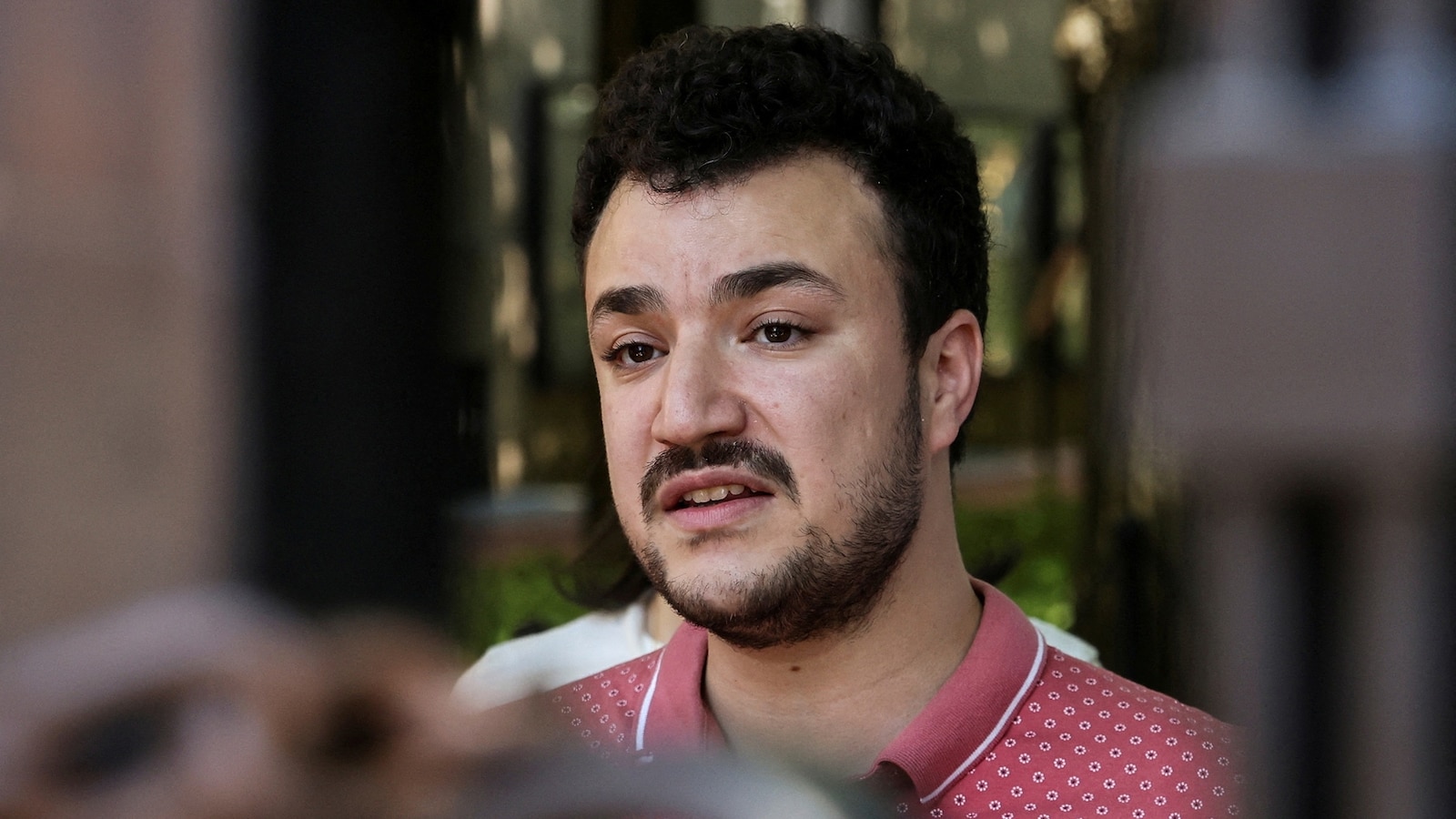
In a story that highlights the human cost of immigration enforcement during politically charged times, Mahmoud Khalil, a pro-Palestinian activist currently detained by Immigration and Customs Enforcement (ICE), has become a father without being able to hold his child. His wife, Dr. Noor Abdalla, gave birth to their first son while Khalil remains locked up in a detention center in Jena, Louisiana, unable to witness one of life’s most precious moments. The couple’s joy at welcoming their baby has been overshadowed by the painful reality of separation, as Khalil sits behind bars nearly 1,000 miles away from his newborn son and recovering wife. For any new parent, the first days of a child’s life are irreplaceable—filled with wonder, bonding, and the beginning of a lifelong relationship. For this family, those moments are being experienced through phone calls and perhaps photographs, rather than the warmth of being together as a family should be.
A Denied Request for Compassion
Khalil’s legal team made what they hoped would be a reasonable request to ICE officials: a temporary two-week furlough that would allow the new father to meet his son and support his wife during the critical early days of their baby’s life. According to emails reviewed by ABC News, his lawyers reached out to Mellissa B. Harper, the Field Office Director for New Orleans ICE Enforcement and Removal Operations, explaining that Dr. Abdalla had unexpectedly gone into labor eight days earlier than her due date. In their appeal, Khalil’s attorneys proposed safeguards to address any security concerns, suggesting that he could wear an ankle monitor and maintain regular check-ins with ICE during the temporary release. This would have allowed authorities to track his whereabouts while giving him the chance to be present for his family during an extraordinarily important time. Despite these reasonable accommodations and the extraordinary circumstances of becoming a first-time father, Harper denied the request after reviewing the case. The brief denial email offered no detailed explanation, simply stating that after consideration of the information submitted, the furlough would not be granted.
A Mother’s Anguish and a Family’s Loss
In the aftermath of her son’s birth and the denial of her husband’s request to be present, Dr. Noor Abdalla released a powerful statement expressing her pain and frustration. “My son and I should not be navigating his first days on earth without Mahmoud,” she said, capturing the heartbreak that countless families separated by immigration enforcement experience. She went further, characterizing the separation as a deliberate punishment, stating that “ICE and the Trump administration have stolen these precious moments from our family in an attempt to silence Mahmoud’s support for Palestinian freedom.” Her words reflect not only personal grief but also a belief that her husband’s detention is politically motivated—a consequence of his activism rather than any legitimate threat he poses to public safety. The statement underscores a reality that immigration advocates have long highlighted: enforcement actions have profound ripple effects that extend far beyond the individual being detained, affecting spouses, children, and entire families who find themselves caught in circumstances beyond their control, missing milestone moments that can never be recaptured.
The Legal Case Against Khalil
The legal justification for Khalil’s detention and potential deportation centers on an unusual application of immigration law. On April 11, an immigration judge ruled that Khalil is removable from the United States after Secretary of State Marco Rubio invoked a specific section of immigration law that allows for deportation when an individual’s continued presence in the country is deemed to have adverse consequences for U.S. foreign policy. This is a rarely used provision that grants significant discretionary power to the executive branch, allowing political considerations to directly influence immigration cases. The judge in Louisiana has set a firm deadline of April 23 for Khalil’s legal team to file applications for relief that could halt his deportation. If his lawyers fail to meet this deadline, the judge indicated she would proceed with issuing an order of removal, sending Khalil to either Syria or Algeria. The tight timeline adds pressure to an already stressful situation for Khalil’s family and legal team, who are fighting not only to keep him in the country but to reunite him with his newborn son and wife. The invocation of foreign policy concerns in his case has raised questions among immigrant rights advocates about whether political speech and activism are being used as grounds for immigration enforcement.
From Student Activist to Detained Father
Mahmoud Khalil’s journey from graduate student to detained immigrant facing deportation is rooted in his activism during his time at Columbia University. While pursuing his studies, Khalil became part of a leadership group organizing protests against the war in Gaza, joining a wave of campus activism that swept across American universities. He was involved in direct negotiations with Columbia’s administration, where student activists demanded that the institution sever its ties with Israel and divest from Israeli companies—positions that sparked intense debate both on campus and in the broader public discourse. Khalil successfully completed his graduate studies at Columbia in December and was preparing to participate in the spring graduation ceremony, a milestone that would have marked the completion of years of academic work. Instead, in March, his academic achievement was overshadowed when Immigration and Customs Enforcement agents arrested him at his Columbia University housing. The arrest transformed him from a soon-to-be graduate and expectant father into a detainee facing possible deportation, held hundreds of miles from his wife as she approached the end of her pregnancy.
The Broader Implications and Human Cost
Khalil’s case sits at the intersection of several contentious issues in American society: immigration enforcement, free speech, political activism, and the Israeli-Palestinian conflict. His detention raises important questions about the extent to which political speech and activism should factor into immigration decisions, and whether the foreign policy provision being used in his case represents a legitimate exercise of executive authority or an overreach that chills protected speech. For immigrant communities and civil liberties advocates, cases like Khalil’s create concern about a potential precedent where expressing political views that challenge U.S. foreign policy could result in deportation for non-citizens. Beyond the legal and political dimensions, however, is the deeply human story of a family being torn apart at one of life’s most vulnerable and precious moments. Dr. Abdalla is navigating new motherhood without her partner, while Khalil is experiencing fatherhood from behind bars, unable to support his wife, hold his son, or participate in the early bonding that shapes family relationships. Their son’s first days, first weeks, and potentially longer are being experienced in separation—a loss that cannot be quantified in legal terms but that carries profound emotional weight. Whether one agrees or disagrees with Khalil’s political activism, the image of a new mother and baby separated from their husband and father during these irreplaceable early days captures the very real human consequences of immigration enforcement policies and reminds us that behind every case number and legal proceeding are real people experiencing real pain and loss.