


The Mysterious Case of the Rising Pipe: When Construction Takes an Unexpected Turn in Osaka
An Overnight Phenomenon That Baffled a City
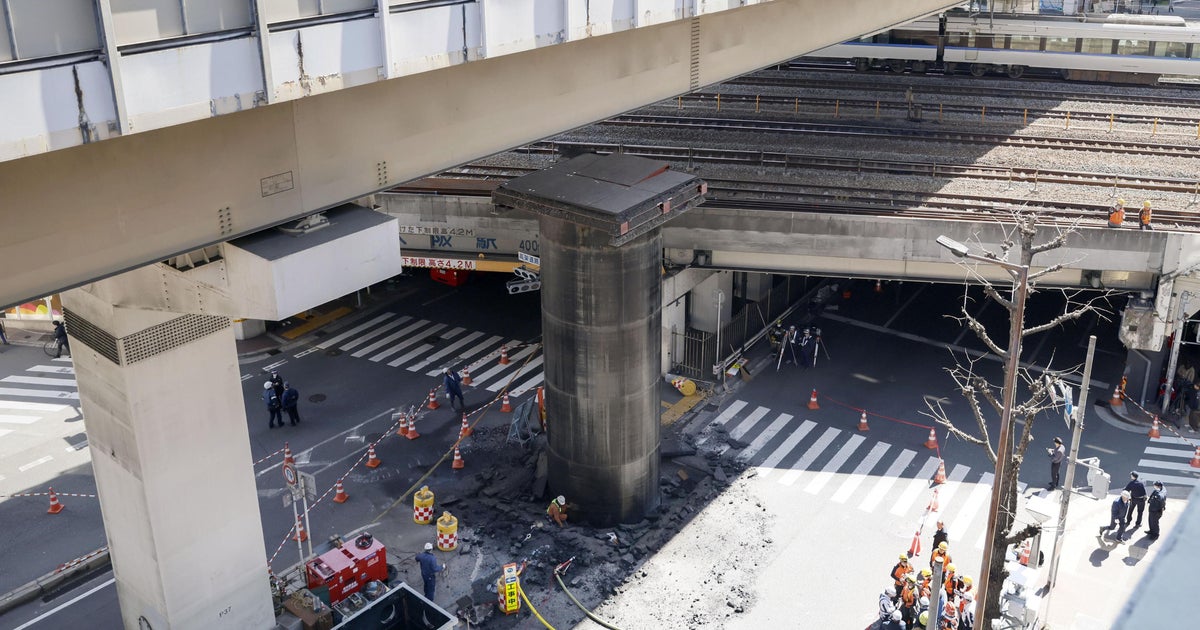
In what can only be described as one of the strangest construction incidents in recent memory, residents and commuters in Osaka, Japan woke up Wednesday morning to find a massive steel pipe towering over 32 feet into the air at a construction site in one of the city’s busiest districts. The surreal scene looked like something out of a science fiction movie – a giant cylinder reaching skyward, nearly touching an elevated roadway above, with chunks of asphalt and concrete scattered around its base. What made the incident even more peculiar was that it happened completely overnight, without a single witness to observe the pipe’s mysterious ascent. The first person to notice the unusual sight was a pedestrian early Wednesday morning who reported seeing pieces of broken asphalt falling from the towering structure and immediately contacted police. As word spread and more people arrived for their morning commute, crowds gathered to witness the bizarre spectacle, causing significant traffic delays and leaving everyone with the same bewildered question: how did this happen?
The massive pipe, measuring an impressive 11.5 feet in diameter and reaching heights of up to 42 feet at its peak, dominated the landscape and transformed an ordinary construction site into a scene of wonder and confusion. Office workers passing by stopped in their tracks, struggling to comprehend what they were seeing. Local news crews descended on the area as residents shared their reactions with reporters from NHK public television and other media outlets. One office worker candidly admitted he simply could not understand how such a thing could occur, echoing the sentiment felt by virtually everyone who laid eyes on the towering structure. Another man who worked in the vicinity initially thought perhaps a new support structure for the road had been installed overnight, trying to rationalize the inexplicable sight before him. The incident forced authorities to close several roads in the area, significantly disrupting the daily routines of thousands of people who regularly traveled through this busy section of Osaka.
Understanding the Underground Mystery
According to city officials and the Osaka construction department, the pipe’s dramatic rise from beneath the earth wasn’t the result of any supernatural phenomenon or elaborate prank, but rather an unintended consequence of standard construction procedures gone awry. The site where the incident occurred was part of an ongoing sewer construction project, where workers had been diligently working to connect an existing sewer line with a new channel specifically designed to manage excess rainwater and prevent flooding during heavy rains – a crucial infrastructure improvement for a city that regularly experiences significant precipitation. The massive steel pipe at the center of the incident was actually serving as what engineers call a retaining structure, essentially a temporary support system designed to prevent the surrounding soil from collapsing inward during the delicate operation of connecting the underground systems.
The mystery of how the pipe managed to rise so dramatically overnight was solved when investigators determined the sequence of events that led to this unusual situation. Shortly before the incident, construction workers had drained water from inside the pipe as part of their regular procedures. However, what they apparently didn’t anticipate was that removing the water from the pipe while it was surrounded by water-saturated soil would create a perfect scenario for the pipe to act like a giant, hollow buoy. Just as an empty bottle will float to the surface when submerged in water, the now-empty steel cylinder became buoyant in the waterlogged ground surrounding it. With nothing to weigh it down and the natural upward pressure from the saturated soil beneath and around it, the pipe essentially floated upward through the earth like a massive submarine rising to the surface, pushing aside soil, concrete, and asphalt in its steady ascent toward the sky.
Community Impact and Response
The unexpected emergence of the towering pipe created significant disruption for the surrounding community, affecting both residents and businesses in the area. Ryozo Kawakita, a local resident who lived near the construction site, found himself unable to take his vehicle out of his garage due to the road closures necessitated by the incident and the ongoing work to address it. Speaking to reporters from the Japan Times, he expressed his disbelief at the situation, stating simply, “I can’t believe this.” His sentiment was shared by many in the community who found their daily routines upended by the bizarre construction mishap. One nearby worker who spoke with the Kyodo news agency expressed concern about the duration of the disruption, noting that “Cars will probably be blocked for a while,” recognizing that resolving such an unusual situation wouldn’t be quick or simple.
The incident highlights the delicate balance between necessary infrastructure improvements and the inconvenience and disruption they can cause to communities, especially when unexpected complications arise. For businesses in the area, the road closures meant potential loss of foot traffic and accessibility issues for customers and employees. For residents, it meant detours, delays, and the frustration of having their neighborhood become the center of a media circus. Despite these significant inconveniences, there was a silver lining to this strange incident – remarkably, despite the scattered concrete debris beneath the elevated road and the dramatic nature of the pipe’s emergence, no injuries were reported, a fortunate outcome that could have been very different had the incident occurred during daytime hours when the area was crowded with workers and pedestrians.
The Solution and Recovery Efforts
Addressing the problem of a 42-foot-tall pipe unexpectedly protruding from a construction site required creative thinking and careful execution from local authorities and emergency services. By Thursday, firefighters and construction crews had developed and implemented a solution that essentially reversed the process that caused the pipe to rise in the first place. Their approach involved cutting a hole in the side of the massive steel cylinder and then injecting water back into it, adding weight and eliminating the buoyancy that had caused it to float upward through the waterlogged soil. This procedure proved effective, and the pipe was successfully lowered back down, though not completely – it still protruded several feet above the ground level, a remnant reminder of its unexpected journey skyward.
City officials announced that their plan moving forward involved cutting off the remaining 5.2 feet of pipe that still remained visible above ground level, a necessary operation to restore the site to proper working order and eventually allow for the completion of the sewer connection project. However, this additional work meant that the road closures affecting the area would need to remain in place for several more days, extending the disruption to the community and requiring continued patience from residents and commuters. The incident served as a valuable, albeit expensive and inconvenient, lesson about the importance of considering all potential consequences when working with underground construction projects, particularly in areas with high water tables or saturated soil conditions.
A Pattern of Ground-Related Incidents in Japan
While the rising pipe incident was certainly unusual in its specific manifestation, it’s worth noting that ground-related incidents at construction sites and on city streets are not entirely uncommon in Japan, though they typically take a different form. Sinkholes, in particular, have become a recurring concern in various Japanese cities, creating dangerous situations and causing significant disruption. Just last year, a massive sinkhole suddenly opened up in a city outside Tokyo, swallowing an unfortunate truck and trapping its driver inside for more than 24 harrowing hours before rescue teams could safely extract him from the underground cavity. The incident highlighted the ever-present geological challenges facing Japanese cities built on complex underground systems and varying soil compositions.
Perhaps one of the most dramatic examples of this phenomenon occurred in 2016, when an enormous sinkhole appeared virtually overnight on a five-lane street in Hakata, Japan. The gaping hole in the earth caused widespread blackouts, significant traffic delays, and considerable concern about public safety. However, the incident also showcased Japanese engineering and construction capabilities at their finest, as crews worked around the clock in a remarkable display of efficiency and skill to fill and repair the massive hole in the busy street, restoring normal traffic flow in a timeframe that amazed international observers. These recurring incidents reflect the complex challenges of maintaining and expanding urban infrastructure in a country where dense population centers, extensive underground utility networks, and varied geological conditions create a perfect storm of potential complications. The Osaka pipe incident, while different in nature from a sinkhole, adds another chapter to this ongoing story of the unexpected ways that underground construction and natural geological forces can interact to create surprising and disruptive surface-level events.
Lessons Learned and Looking Forward
The incident of the mysteriously rising pipe in Osaka serves as a fascinating case study in the unpredictable nature of construction work and the importance of thorough planning and risk assessment in infrastructure projects. While the immediate problem was resolved relatively quickly and without injury, the incident raises important questions about construction protocols, safety measures, and the need for comprehensive consideration of all potential scenarios when working on underground projects. For construction companies and city planners, the incident provides a clear reminder that even routine procedures like draining water from a retaining structure can have unexpected consequences when all environmental factors aren’t properly accounted for. Moving forward, it’s likely that this incident will be studied and used as a teaching example in engineering and construction management programs, helping future professionals understand the complex interplay between construction activities and natural physical forces like buoyancy and water pressure in saturated soils.