


The Escalating Crisis in the Strait of Hormuz: A Critical Turning Point in the Iran Conflict
A New Phase of Warfare Emerges in Strategic Waters
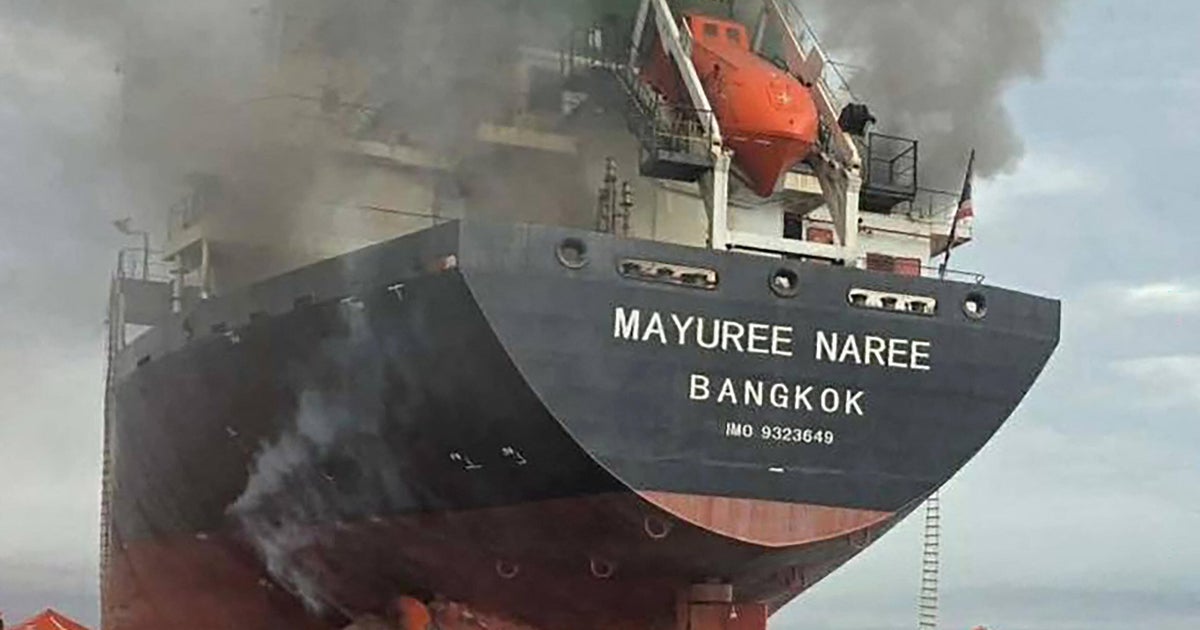
The conflict with Iran has entered a dangerous new chapter following a missile strike on a commercial vessel in the Strait of Hormuz this week. While the Iranian regime may have suffered significant damage to its command structure in the opening days of hostilities, military analysts point to Wednesday’s attack on a Thai-flagged tanker as a pivotal moment that fundamentally changed the nature of this confrontation. The vessel was reportedly struck by what experts believe was a C-802 Noor missile, hitting just above the waterline near the engine room—a strike that demonstrates Iran’s continued capability to threaten international shipping despite suffering early losses in the conflict. This attack wasn’t just another incident in an ongoing war; it represents a strategic shift that has sent shockwaves through global maritime security circles and raised serious questions about the safety of one of the world’s most critical shipping lanes.
According to former U.S. Navy officers with expertise in missile design, the weapon used in the attack is a sophisticated piece of military hardware with formidable capabilities. The newer variants of the C-802 Noor missile can strike targets up to 200 miles away and can be launched from multiple platforms including ships, coastal defense installations, aircraft, and even mobile truck-mounted launchers. This versatility makes them particularly difficult to defend against, as they can be deployed from virtually anywhere along Iran’s extensive coastline. The strike appeared to come without any prior warning, catching the crew of the tanker completely off guard and highlighting the vulnerability of commercial vessels traveling through these contested waters. This incident has fundamentally altered the calculus for maritime security in the region, proving that Iran and its allied forces can effectively target ships without resorting to the more traditional method of mining the waterway—a capability that significantly expands their tactical options.
The Hidden Arsenal That Keeps U.S. Warships at Bay
The attack on the Thai tanker helps explain a puzzling aspect of the U.S. military response that has raised eyebrows among defense observers: despite President Trump’s assertions that the Iranian navy has been decimated, American warships have notably avoided entering the Strait of Hormuz or providing escort services to commercial vessels passing through the narrow waterway. Danny Citrinowitz, an analyst with the prestigious Atlantic Council, provided insight into this apparent contradiction in an interview with CBS News. According to Citrinowitz, Iran likely possesses “thousands of those missiles of various variants and drones” capable of striking ships as they navigate through the strait. This vast arsenal represents a significant deterrent even to the world’s most powerful navy, as the sheer number of potential threats makes it extremely difficult to guarantee the safety of vessels—including heavily armed warships—traveling through the confined waters. The situation is further complicated by Iran’s strategy of distributing these weapons to its proxy forces throughout the region. Intelligence reports suggest that Iran has supplied Hezbollah, the Lebanese militant group, with hundreds or possibly even more of these advanced anti-ship missiles, creating a distributed threat network that extends far beyond Iran’s own borders.
The Iranian threat in the Strait of Hormuz extends well beyond missiles alone, encompassing a multi-layered defense strategy designed to control this vital chokepoint. Iran maintains a fleet of fast-attack speedboats manned by highly trained commandos from the Islamic Revolutionary Guard Corps, vessels that can quickly swarm larger ships in coordinated attacks. Additionally, CBS News reported Wednesday that intelligence indicates Iran may be preparing to deploy naval mines throughout the waterway, adding yet another layer of danger for ships attempting passage. President Trump addressed this particular threat on Tuesday afternoon, announcing that U.S. forces had “hit, and completely destroyed, 10 inactive mine laying boats and/or ships, with more to follow!” This preemptive action suggests American intelligence had detected preparations for a mining operation that could have made the strait virtually impassable. The combination of anti-ship missiles, fast-attack boats, and the potential for mine warfare creates a defensive environment so challenging that even the U.S. military is proceeding with extreme caution, despite public statements suggesting Iranian naval capabilities have been severely degraded.
Global Economic Shockwaves and the Oil Market Crisis
The strategic importance of the Strait of Hormuz cannot be overstated—approximately 20% of the world’s oil supply flows through this narrow passage between Iran and the Arabian Peninsula, making it one of the most economically critical waterways on the planet. The current conflict has brought shipping through the strait to what observers describe as a “virtual standstill,” with most commercial operators choosing to avoid the route entirely rather than risk their vessels and crews. Major maritime insurance companies have responded to the escalating danger by announcing they will suspend coverage for ships operating in Iranian waters and large portions of the Persian Gulf, effectively making it financially impossible for most shipping companies to operate in the region even if they were willing to accept the physical risks. The economic consequences have been swift and severe: oil prices surged past $100 per barrel on Thursday morning, a price level not seen in years, while stock markets around the world registered significant losses as investors grappled with the implications of a prolonged disruption to global energy supplies.
Energy analysts emphasize that the volatility in oil markets will continue until there is meaningful, demonstrable progress showing that ships can safely transit the strait without fear of attack. The uncertainty itself is almost as damaging as an actual closure of the waterway, as shipping companies, oil traders, and consumers all struggle to plan amid rapidly changing circumstances. President Trump’s comments on the situation have added another layer of unpredictability to an already chaotic scenario. In an interview with CBS News on Monday, the President stated he is still “thinking about taking” control of the Strait of Hormuz, even as he simultaneously claimed the war is “very complete.” He did not provide any details about what such an action would actually entail or how it could be accomplished, leaving military analysts and international observers to speculate about American intentions. The idea of “taking over” an international waterway raises complex questions about international law, the practical challenges of securing such a strategically complex area, and the potential reactions from other regional and global powers.
The Attacks: Details and Casualties from the Frontlines
The missile strike on the Thai-flagged tanker occurred in a context of escalating threats and counter-threats between Iran and the United States. Iranian authorities had recently issued warnings that any ship passing through the Strait of Hormuz without explicit Iranian approval would be considered a legitimate target, while President Trump had responded with his own threat to unleash “fire and fury” if Iran attempted to close this vital waterway. The Islamic Revolutionary Guard Corps claimed responsibility for the attack, stating they had struck the tanker because it had “ignored warnings”—though the nature and timing of these alleged warnings remain unclear. The Thai vessel wasn’t the only ship targeted that day; a Liberian-flagged vessel was also struck in a separate incident, indicating a coordinated campaign rather than an isolated attack. The human cost of these strikes has been significant: the Thai tanker suffered a fire and extensive damage to its engine room, with three crew members believed to be trapped in that compartment as flames spread through the vessel. The other twenty crew members aboard were successfully rescued by the Omani navy in a operation that highlighted the regional cooperation emerging in response to the crisis.
Iran’s semi-official Tasnim news agency released dramatic video footage apparently showing another missile strike, this time on a U.S.-owned tanker in the Persian Gulf. The footage shows a massive explosion engulfing a vessel, which is then consumed by flames while people aboard what appears to be an IRGC attack boat can be heard celebrating their successful strike. CBS News Confirmed, the network’s verification unit, identified the targeted vessel as the Safesea Vishnu, a crude oil tanker sailing under a Marshall Islands flag but owned by Safesea Group LLC, a company based in New Jersey. Fortunately, in this instance the crew was safely evacuated according to the British military’s U.K. Maritime Trade Operations agency, which coordinates maritime security information in the region. The release of this video footage appears to be part of Iran’s information warfare strategy, demonstrating their capabilities to both domestic and international audiences while sending a clear message about their willingness to target Western-owned assets. These attacks represent a significant escalation in the conflict, moving beyond military targets to deliberately threatening the commercial shipping that forms the backbone of global trade and energy markets, with consequences that will be felt far beyond the Middle East in the weeks and months ahead.