


Battle for the Democratic Primary: Nevada Challenges New Hampshire’s Historic First-Place Position
A Push for Diversity in Early Voting States
The Democratic Party finds itself at a crossroads as it reimagines its 2028 presidential primary calendar, with an influential Latino political organization throwing its weight behind Nevada’s campaign to become the first state to vote. Latino Victory, a prominent advocacy group, has publicly endorsed Nevada’s bid to unseat New Hampshire from its traditional first-in-the-nation primary position. In a pointed letter to Democratic National Committee members, Katharine Pichardo, president and CEO of Latino Victory, made the case that sticking with less diverse states like New Hampshire would ultimately hurt the party’s chances of reclaiming the White House. Her argument is straightforward: Nevada represents the diverse, competitive battleground environment that can produce a thoroughly tested candidate capable of winning a general election. This debate isn’t just about scheduling—it’s about which voters get to shape the Democratic Party’s future and what values the party prioritizes as it rebuilds after significant losses in 2024.
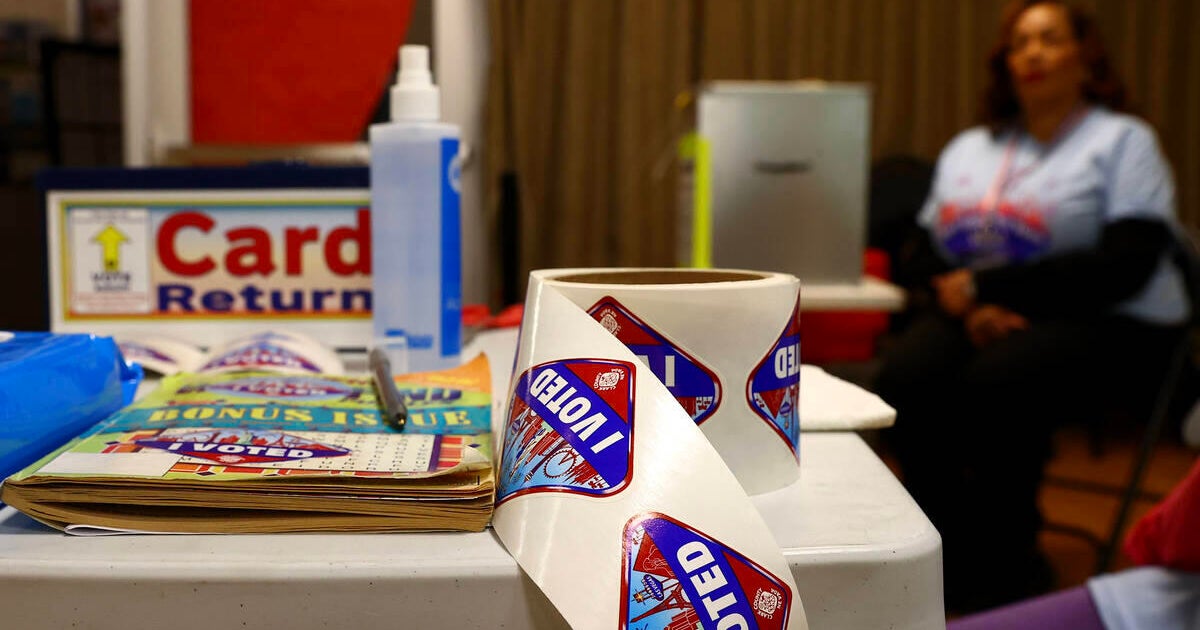
The stakes couldn’t be higher for the states vying for these coveted early positions. Being among the first to vote carries enormous political influence that extends far beyond the primary season itself. Candidates descend on early-voting states with remarkable frequency, holding rallies, attending town halls, and meeting with voters in diners and community centers. This attention translates into substantial financial investment in local economies and, perhaps more importantly, helps build robust party infrastructure that benefits Democrats up and down the ballot for years to come. The early states essentially set the tone for the entire primary race, giving their voters outsized influence in determining who becomes the party’s standard-bearer. For Nevada, securing this position would mean Latino voters—who make up more than 30% of the state’s population—would have a powerful early voice in selecting the Democratic nominee, potentially reshaping how candidates approach issues affecting Hispanic communities nationwide.
The Evolution of Democratic Primary Tradition
The Democratic primary calendar has undergone dramatic changes in recent years, breaking with traditions that had stood for decades. Historically, Iowa’s caucuses kicked off the presidential selection process, followed closely by New Hampshire’s primary. This arrangement gave these predominantly white, rural states enormous influence over presidential politics, a reality that increasingly troubled party leaders concerned about representation and diversity. South Carolina joined the early-state lineup starting in 2008, bringing its significant African American voting population into the early conversation, while Nevada added Western state representation and Latino voter perspectives. However, the 2020 Iowa caucuses turned chaotic, with reporting failures and confusion that undermined confidence in the process. Combined with ongoing concerns about Iowa and New Hampshire’s lack of racial diversity compared to the Democratic electorate as a whole, party leaders decided to overhaul the entire system for 2024.
That overhaul proved controversial and messy. The Democratic National Committee dropped Iowa from its privileged position entirely and elevated South Carolina to first place, a move that reflected President Joe Biden’s gratitude to South Carolina voters who revived his struggling 2020 campaign and set him on the path to the nomination. New Hampshire, however, refused to accept its demotion. The state’s Democratic Party held a primary anyway, defying national party rules—a rebellion made possible by New Hampshire state law that requires it to hold the first primary in the nation. This standoff created confusion and diminished New Hampshire’s influence, as the unsanctioned primary offered no delegates. Now, as Democrats prepare for 2028, party leaders are once again reconsidering which states deserve the early positions that can make or break presidential campaigns. The decision will involve selecting four or five states—one each from the East, Midwest, South, and West—to hold contests before Super Tuesday, when dozens of states vote simultaneously.
Competing Visions for the Party’s Future
Each state making a pitch to become an early-voting state is essentially offering a different vision of what the Democratic Party should prioritize. New Hampshire’s argument centers on its ability to test whether candidates can appeal to independent voters—those not registered with either major party who increasingly decide general elections. In documents shared with DNC members, New Hampshire Democrats pointed out that their state was the closest one Vice President Kamala Harris won in 2024, suggesting it represents crucial swing-voter territory. They also invoked historical what-ifs, noting that if Al Gore had won New Hampshire’s narrow contest in 2000 by just over 7,000 votes, he would have become president regardless of the Florida recount controversy. The implicit message is clear: New Hampshire Democrats believe their state identifies candidates with the broad appeal necessary to win general elections, not just primary contests among the party faithful.
South Carolina, meanwhile, makes a different case rooted in representation and coalition-building. The state’s Democratic Party argues that South Carolina offers a “proven, disciplined, and consequential first test” that reflects the voters who form the backbone of the Democratic coalition—particularly African American voters, who constitute a majority of the state’s Democratic primary electorate. South Carolina’s pitch emphasizes that winning there requires building the kind of diverse coalition Democrats need to succeed nationally. President Biden’s 2020 South Carolina victory, which came after disappointing finishes in Iowa and New Hampshire, demonstrated this dynamic perfectly. His strong support among Black voters in South Carolina relaunched his campaign and foreshadowed the coalition that would carry him to the nomination and the presidency. For South Carolina Democrats, their state’s first-place position in 2024 wasn’t just a reward for past loyalty—it was a statement about whose voices should matter most in selecting Democratic nominees.
Nevada’s Case and the Latino Vote Question
Nevada’s bid represents yet another perspective, one focused squarely on the changing demographics of American politics and the Democratic Party’s recent struggles with Latino voters. The state’s supporters argue that Nevada is essentially a microcosm of modern America—racially diverse, economically varied, and politically competitive. With more than 30% of its population identifying as Hispanic or Latino, Nevada would force candidates to engage seriously with Latino voters from the very beginning of their campaigns. This early engagement matters tremendously, according to Melissa Morales of Somos Votantes, a major Latino organizing group that has endorsed Nevada’s bid. “The primary calendar shapes whose voices get to be heard first,” Morales explained, “so the order of the states in the presidential primary directly affects which voters candidates are forced to listen to early and then consistently.” Her warning is pointed: “Any process that fails to center Latinos early risks repeating mistakes of past cycles.”
Those mistakes became painfully apparent in 2024, when former President Donald Trump made significant inroads with Hispanic voters nationwide. According to Pew Research Center analysis, Trump narrowly trailed Harris among Hispanic voters overall—a dramatic improvement from his previous campaigns and a warning sign for Democrats who had long counted on strong Latino support. Trump won all seven battleground states in 2024, including Nevada, demonstrating that the Obama-era coalition that delivered Democrats victories in 2008 and 2012 could no longer be taken for granted. Latino Victory’s Katharine Pichardo argues that elevating Nevada would force the party to confront these challenges directly. “We know that the Democratic electorate is becoming more and more diverse with Latinos being the fastest growing demographic,” she told CBS News. “If Democrats are serious about winning back the working class, Latino, African-American, and AAPI voters, Nevada should be the first as it is a microcosm of America.” Her argument suggests that the primary calendar is about more than logistics—it’s about what kind of party Democrats want to be.
Broader Implications and the Path Forward
The competition for early-state status extends well beyond these three main contenders. Internal party documents reveal that Michigan, Iowa, Illinois, New Mexico, Delaware, North Carolina, Georgia, Tennessee, and Virginia have all begun making their cases to be among the first four or five states to hold 2028 nominating contests. Each brings different strengths: Michigan offers Midwestern industrial voters and significant Arab American and Muslim populations; Georgia represents the diverse New South; Illinois provides a major metropolitan testing ground. This crowded field reflects how valuable early-state status has become and how many different constituencies within the Democratic coalition are seeking influence over the nomination process. The party’s rules and bylaws committee faces the unenviable task of balancing geographic representation, demographic diversity, general election competitiveness, and political tradition—all while party leaders debate the fundamental reasons for their 2024 defeats.
That debate has itself become contentious, with DNC Chairman Ken Martin facing criticism for deciding not to publicly release a comprehensive report on the 2024 election cycle. Some Democrats worry the party isn’t adequately confronting the factors that led to losing the White House, Senate, and failing to reclaim the House. The primary calendar decision represents one of the first major opportunities for party leaders to signal how seriously they’re taking these setbacks and what direction they believe Democrats should head. While the party controlling the White House typically loses congressional seats in midterm elections—and Republicans under President Trump are already facing that possibility in 2026—even a successful midterm wouldn’t necessarily prepare Democrats for 2028’s presidential contest. The fear of another comprehensive defeat like 2024 looms over these discussions, giving the seemingly technical question of primary scheduling profound political significance. Ultimately, whichever states Democrats choose to go first will send a clear message about which voters the party believes it must prioritize, which issues it needs to address, and what kind of candidate it thinks can win back the American people’s trust.