
Controversial Border Patrol Leader Accused of Antisemitic Remarks During Federal Meeting
Background on the Incident
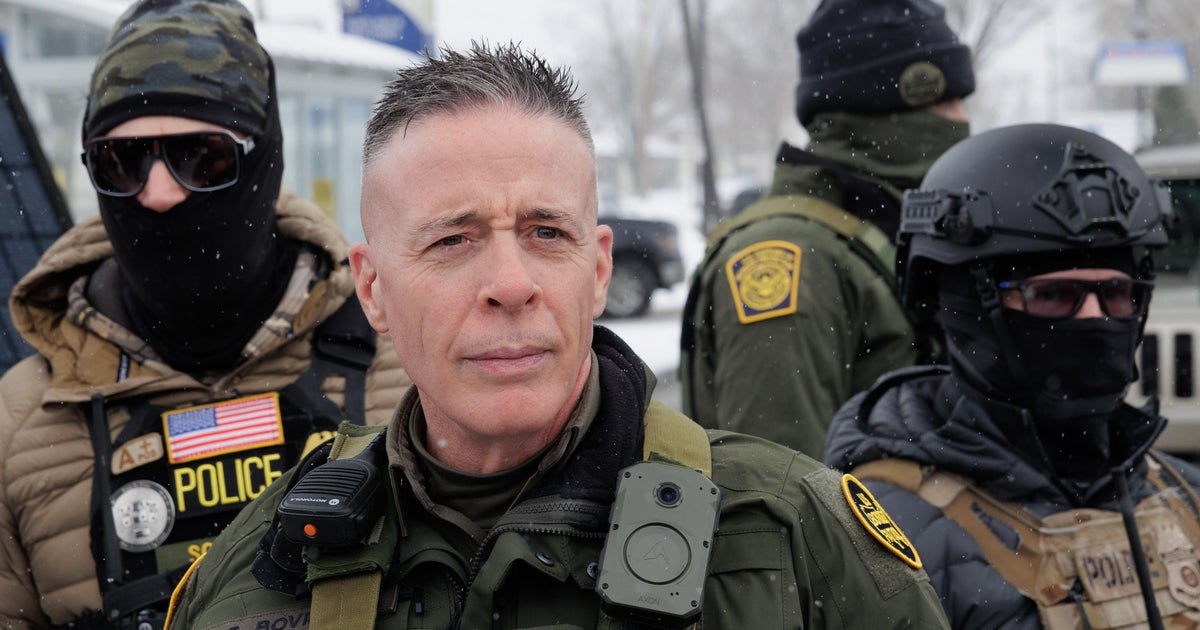
Gregory Bovino, a Border Patrol official who played a key role in coordinating immigration enforcement operations in Minnesota, is facing serious allegations of making antisemitic comments during a federal planning call in January. According to multiple sources who spoke with CBS News, the incident occurred on January 12 during a coordination meeting among federal officials. These officials were attempting to organize a Saturday gathering to address concerns related to the large-scale deployment of federal immigration agents in the Minneapolis area. The timing of this call was particularly sensitive, coming just five days after a tragic incident where an Immigration and Customs Enforcement officer fatally shot Renee Good in Minneapolis, an event that had already heightened tensions in the community.
During the planning call, Bovino was informed that Minnesota U.S. Attorney Daniel Rosen, who is an Orthodox Jew, would be unable to attend the proposed Saturday meeting because he observes the Sabbath, a fundamental religious practice in Orthodox Judaism. What happened next shocked those on the call and has since become a matter of serious concern reaching the highest levels of government, including the Department of Justice and the White House.
The Alleged Offensive Comments
Sources familiar with the January 12 call reported that Bovino responded with clear frustration upon learning that U.S. Attorney Rosen couldn’t attend due to his religious observance. According to one source who recounted the conversation, Bovino allegedly asked, “Do Orthodox criminals also take off on Saturday?” This question appeared to mock the religious practices of Orthodox Jews and suggested a disturbing lack of respect for religious accommodation. But the alleged remarks didn’t stop there. The same source indicated that Bovino also used the phrase “chosen people” in what was described as a disparaging and derogatory manner, invoking a term that holds sacred meaning in Jewish tradition but weaponizing it as an insult.
The severity of these comments cannot be understated. Another source who was briefed on the conversation went so far as to characterize Bovino’s alleged remarks as constituting an “antisemitic rant,” suggesting that the comments went beyond a single offensive question and represented a broader display of prejudice. The New York Times was the first news organization to report on Bovino’s alleged comments, bringing national attention to an incident that had previously been known only within federal law enforcement circles. The fact that multiple sources independently confirmed similar accounts of what transpired on the call lends credibility to the allegations and underscores the seriousness with which witnesses viewed Bovino’s behavior.
Official Response and Growing Tensions
The reports of Bovino’s conduct during the call quickly made their way up the chain of command, reaching some of the most powerful offices in the federal government. According to sources familiar with the matter, accounts of what happened were relayed to Attorney General Pam Bondi, other officials within the Department of Justice, and even to the White House itself. As of the time of reporting, neither the Department of Homeland Security, the White House, nor the Department of Justice had responded to requests for comment about the incident or what disciplinary measures, if any, might be taken against Bovino.
The alleged antisemitic remarks have contributed to a climate of growing unease and tension between federal immigration officials and Minnesota-based federal prosecutors. This friction comes at a time when ICE and Border Patrol officers have been conducting an increasingly aggressive campaign of raids and arrests throughout the state. These enforcement actions have sparked significant public backlash, with thousands of Minnesota residents taking to the streets in protest against what they view as heavy-handed and indiscriminate immigration enforcement tactics. The relationship between different branches of federal law enforcement in Minnesota was already strained due to these operational disagreements, and Bovino’s alleged comments appear to have exacerbated an already difficult situation, creating divisions that could potentially hamper effective coordination on critical law enforcement matters.
A Pattern of Controversial Behavior
For those who have followed Bovino’s career in recent months, the alleged antisemitic comments represent just the latest in a series of controversial incidents. Bovino’s sometimes abrasive and confrontational manner had raised concerns even before the January call. As the former Border Patrol “commander-at-large,” Bovino previously ran into serious trouble with a federal judge in Chicago during deportation operations that took place in October. U.S. District Judge Sara Ellis, who had issued an injunction limiting the use of force by federal immigration agents in Chicago, was particularly critical of Bovino’s behavior during legal proceedings related to that case.
In a strongly worded opinion, Judge Ellis didn’t mince words about her assessment of Bovino’s credibility and cooperation. She wrote that “Bovino appeared evasive over the three days of his deposition, either providing ‘cute’ responses to the Plaintiffs’ counsel’s questions or outright lying.” This judicial rebuke is extraordinarily serious, as federal judges rarely accuse law enforcement officials of dishonesty in such direct terms. The judge’s characterization of Bovino’s responses as “cute” suggested a pattern of attempting to avoid accountability through flippant or deliberately unhelpful answers. While an appeals court later paused Judge Ellis’s injunction in November, the damage to Bovino’s professional reputation had already been done, and the incident established a documented pattern of problematic conduct.
The Fatal Shooting Incident and Bovino’s Reassignment
Bovino’s position became even more precarious following his response to another fatal shooting involving federal immigration agents. On January 24, two Customs and Border Protection officers shot and killed Alex Pretti during an enforcement operation. On the very same day the shooting occurred, Bovino made a public statement characterizing the incident in terms that would later prove controversial and, according to witnesses and evidence, inaccurate. Bovino said of Pretti that “this looks like a situation where an individual wanted to do maximum damage and massacre law enforcement.” He based this inflammatory characterization on the fact that Pretti was armed with a handgun when he was killed by the CBP officers.
However, Bovino’s claims about what happened during the encounter with Pretti were soon contradicted by multiple sources of evidence. Witnesses who saw the incident gave accounts that differed significantly from Bovino’s version of events, and video footage from the scene appeared to tell a different story than the one Bovino had presented. Perhaps most damning, within just several days of Bovino’s statement, the government submitted an official report to Congress about the case that contained no mention whatsoever of Pretti ever reaching for his firearm during the confrontation with CBP agents. This omission directly undermined Bovino’s suggestion that Pretti had posed an imminent threat justifying lethal force. The intense backlash that followed Bovino’s handling of the Pretti shooting, combined with the earlier controversies, ultimately led to his reassignment earlier this week. He was relieved of his command in Minneapolis and is being sent back to his previous position as chief agent at California’s El Centro sector, where he had served before the Trump administration deployed him to major American cities including Los Angeles and Chicago to lead large-scale immigration enforcement operations.
Broader Implications and the Administration’s Antisemitism Policy
The timing of these allegations creates a particularly awkward situation for the Trump administration, which has publicly positioned the fight against antisemitism as one of its primary policy priorities. Since last year, the administration has launched an aggressive campaign to address antisemitism, particularly on college campuses. The Justice Department and the Department of Education have together initiated dozens of civil rights investigations examining whether universities and colleges failed to adequately protect Jewish students during protests related to the war in Gaza that occurred in 2023. These probes represent a significant commitment of federal resources and have been highlighted by administration officials as evidence of their dedication to protecting Jewish Americans from discrimination and hatred.
Against this backdrop, allegations that a high-ranking Border Patrol official engaged in antisemitic behavior present a troubling contradiction that the administration will need to address. The incident raises questions about whether the administration’s commitment to fighting antisemitism extends equally to addressing such behavior within its own ranks, or whether the focus has been primarily external. How the administration responds to the Bovino allegations will likely be watched closely by civil rights advocates, Jewish organizations, and the general public as a test of whether its stated principles apply uniformly across all contexts. The case also highlights the ongoing challenges of maintaining professionalism and respect for religious diversity within federal law enforcement agencies, particularly during periods of intense operational activity and public scrutiny. As the investigation into Bovino’s alleged comments continues and as he transitions back to his role in California, the incident serves as a reminder that the fight against antisemitism and other forms of prejudice must include accountability for those in positions of authority and power.