


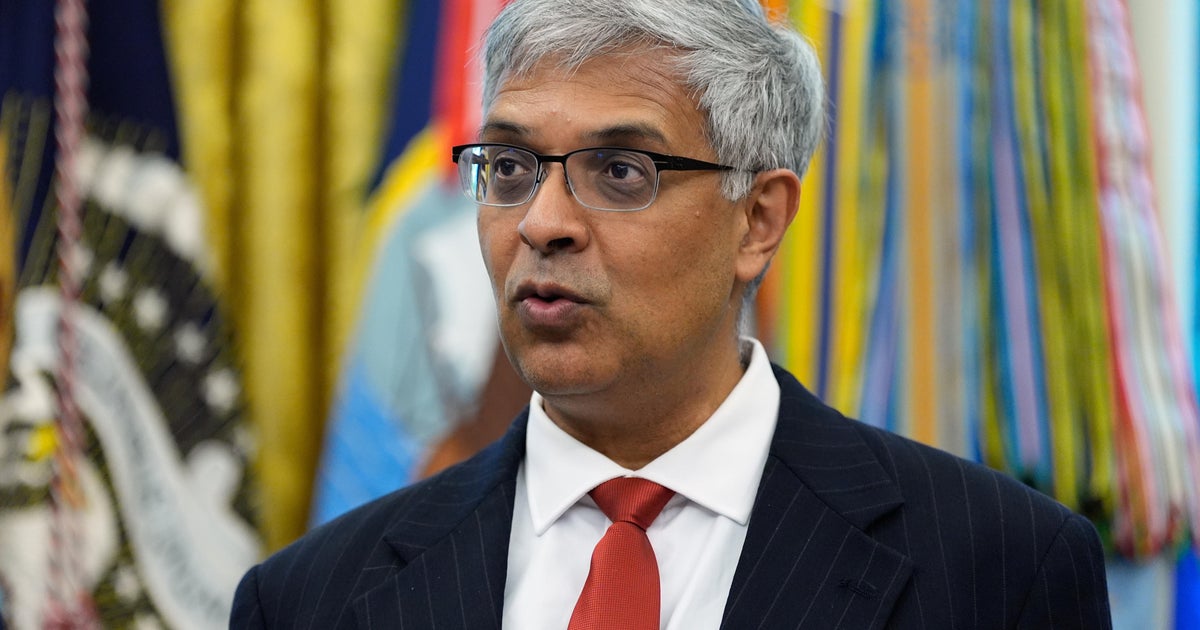

Jay Bhattacharya Takes on Dual Leadership Role at NIH and CDC
A New Chapter in Federal Health Leadership
In a surprising development that highlights the ongoing uncertainty within America’s public health infrastructure, Dr. Jay Bhattacharya, the current director of the National Institutes of Health, will now take on additional responsibilities as the temporary leader of the Centers for Disease Control and Prevention. According to two administration officials who spoke with CBS News, Bhattacharya will juggle both critical positions while President Trump searches for a permanent CDC director. This unusual arrangement comes at a time when the nation’s health agencies are experiencing significant upheaval, with leadership changes happening at a dizzying pace. The CDC has been operating under the guidance of an acting director, Jim O’Neill, who stepped into the role back in August. O’Neill himself was a replacement for Senate-confirmed CDC Director Susan Monarez, whose tenure lasted less than a month before she was removed from her position. This revolving door of leadership raises important questions about stability and continuity in an agency that plays a vital role in protecting Americans from disease outbreaks and other public health threats.
A Controversial Voice from the Pandemic Era
Dr. Bhattacharya is far from a conventional choice for leading the CDC, given his history as one of the most prominent critics of the agency’s COVID-19 response. During the darkest days of the pandemic, when most Americans were following stay-at-home orders and wearing masks in public spaces, Bhattacharya emerged as a leading voice of dissent. As a professor at Stanford Medical School, he didn’t just quietly harbor reservations about the public health measures being implemented nationwide—he actively and vocally opposed them. His criticism centered particularly on lockdowns, which he viewed as unnecessarily restrictive and potentially more harmful than helpful. He also expressed deep skepticism about mask mandates, questioning their effectiveness even as most public health officials championed them as essential tools in slowing the virus’s spread. Bhattacharya didn’t keep these views confined to academic circles; instead, he took to social media and various writing platforms to share his perspectives with a broader audience. This willingness to challenge the mainstream public health narrative made him a controversial figure—celebrated by some as a brave truth-teller willing to question authority, and criticized by others as undermining crucial public health messaging during a crisis.
Navigating the Vaccine Debate
The timing of Bhattacharya’s expanded role is particularly noteworthy given the current controversies swirling around vaccination policy in the United States. Just last month, the CDC made headlines when it scaled back its recommendations for childhood vaccines, a move that sent shockwaves through the medical community. Pediatricians and public health experts sounded alarms, expressing serious concerns that diseases which have been largely controlled through decades of successful vaccination programs might make devastating comebacks. These aren’t abstract worries—they’re grounded in the reality that when vaccination rates drop, preventable diseases can and do resurge. The medical community’s fears aren’t unfounded, as we’re already seeing evidence of this in real-time. The United States is currently experiencing its largest measles outbreak in decades, a troubling development for a disease that was once declared eliminated in this country thanks to widespread vaccination.
Walking a Careful Line on Vaccine Safety
In this charged environment, Bhattacharya recently faced questioning from Congress about vaccine safety and efficacy, and his responses revealed a careful balancing act. When asked about the measles vaccine during a Senate hearing earlier this month, he clearly stated that people should get vaccinated against the disease—a straightforward endorsement that contrasts with some of the more vaccine-skeptical voices in the current administration. More significantly, when questioned about the alleged link between vaccines and autism—a scientifically debunked theory that nonetheless continues to circulate widely—Bhattacharya provided an evidence-based response. “I have not seen a study that suggests any single vaccine causes autism,” he told the Senate panel, aligning himself with the overwhelming scientific consensus on this issue. This statement is particularly notable because it puts him at odds with President Trump and Health and Human Services Secretary Robert F. Kennedy Jr., both of whom have given credence to the autism-vaccine connection despite the lack of scientific support for this claim. Kennedy, in particular, has built much of his public profile on vaccine skepticism, making Bhattacharya’s testimony a subtle but significant divergence from his superiors’ positions.
The Challenge of Dual Leadership
Taking on leadership of both the NIH and CDC simultaneously is an extraordinary challenge that raises practical questions about how one person can effectively manage two of the nation’s most important health agencies. The NIH, with its massive budget and responsibility for funding medical research across the country, is a full-time job in itself. The CDC, meanwhile, is on the front lines of protecting Americans from infectious diseases, tracking outbreaks, issuing guidance to healthcare providers, and coordinating responses to public health emergencies. These are both complex organizations with different missions, cultures, and stakeholder groups. The NIH focuses primarily on advancing scientific knowledge and funding research that can lead to medical breakthroughs, while the CDC is more operationally focused on disease surveillance, outbreak response, and providing practical guidance to protect public health. Managing both simultaneously will require Bhattacharya to split his attention and energy between two demanding roles, each of which would typically consume all of a director’s time and focus.
What This Means for America’s Health Future
This leadership arrangement comes at a critical moment for American public health, as the nation grapples with questions about the proper role of government health agencies, the balance between individual freedom and collective health measures, and how to rebuild public trust in institutions that many Americans have grown skeptical of in recent years. Bhattacharya’s dual appointment signals a continued shift in how the Trump administration approaches public health governance, favoring leaders who have been critical of pandemic-era restrictions and traditional public health orthodoxy. Whether this approach will strengthen or weaken the nation’s ability to respond to future health threats remains to be seen. The tension between Bhattacharya’s evidence-based stance on vaccines and the vaccine skepticism of other administration officials creates an interesting dynamic that could play out in consequential ways as policy decisions are made. As the search for a permanent CDC director continues, the American public health system operates in a state of uncertainty, with temporary leadership at one of its most essential agencies and ongoing debates about the fundamental questions of how best to protect the nation’s health while respecting individual liberties and maintaining public trust.