


NYPD Harbor Unit Rescues Injured Bald Eagle from Frozen Hudson River
An Unexpected Discovery During a Routine Training Exercise
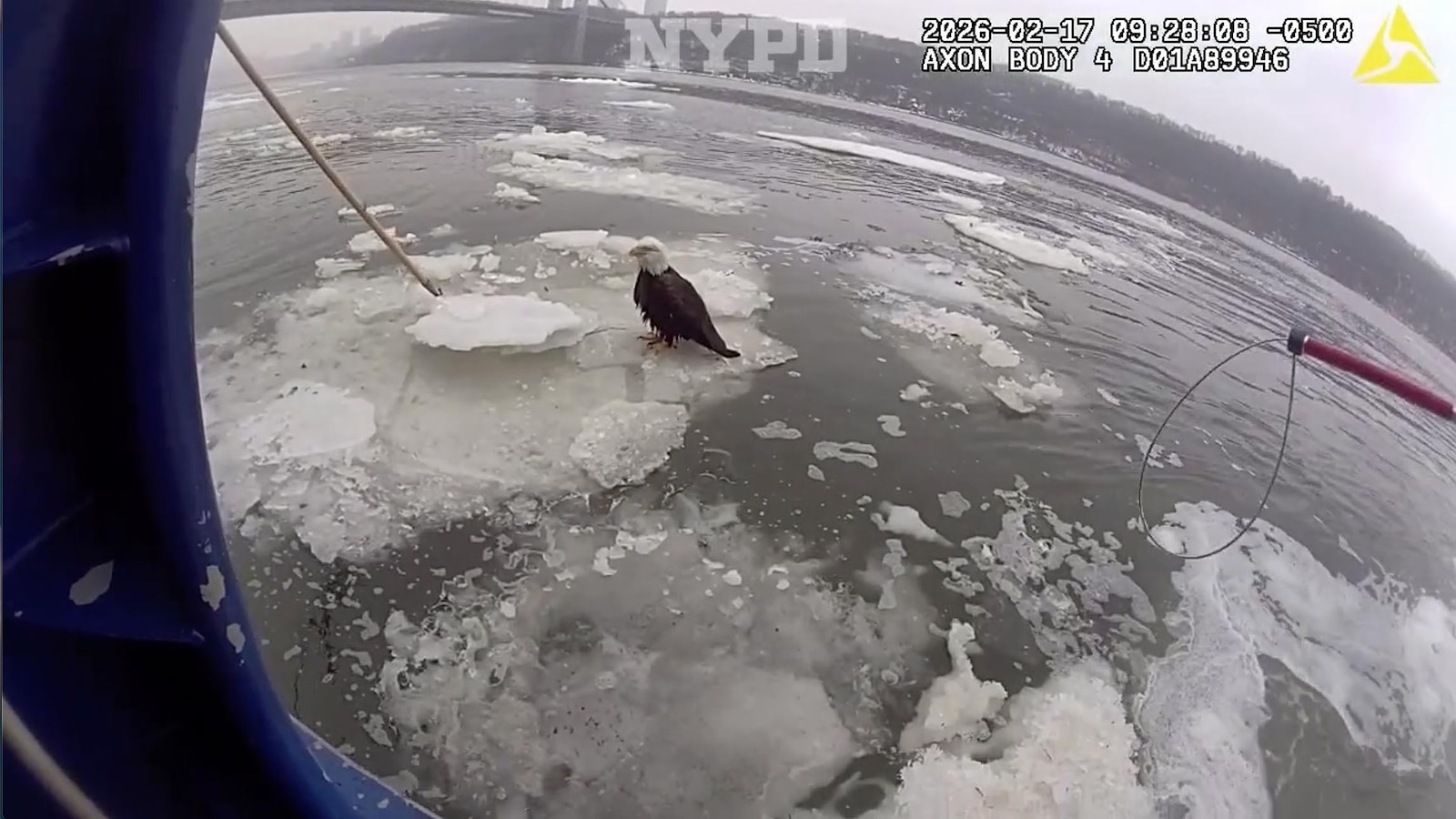
On a frigid Tuesday morning, Officer Michael Russo of the New York City Police Department’s Harbor Unit was conducting what seemed like a routine training exercise on the Hudson River. The 16-year veteran was surveying ice conditions when something caught his eye that would turn an ordinary day into an extraordinary rescue mission. Among the frozen debris typically trapped in the river’s icy grip—buoys, floats, and other maritime objects—Russo spotted something distinctly different. From a distance, he could make out a white head that didn’t quite match the usual suspects found stuck in the ice during cold snaps. As his vessel drew closer, the truth became clear: it was an American bald eagle, the nation’s iconic bird of prey, stranded on a floating piece of ice and in desperate need of help.
The discovery marked a historic moment for the Harbor Unit. While these experienced officers have dealt with countless rescue situations over the years—from distressed boaters and sick cruise ship passengers to the occasional dog that found itself in trouble on the city’s waterways—none had ever encountered a bald eagle in need of rescue. The majestic bird appeared injured, wet, and bloody, and unlike a healthy eagle that would have taken flight at the approach of a boat, this one remained on its icy perch, screeching in distress. It was clear to the officers that this magnificent creature was in serious trouble and couldn’t escape its predicament without human intervention.
Careful Planning and Expert Coordination
Recognizing the unique nature of this rescue and the protected status of bald eagles, the NYPD officers didn’t rush in unprepared. They immediately contacted the New York State Department of Environmental Conservation (DEC) to report the situation and seek guidance on how to proceed. Bald eagles are federally protected birds, and handling them requires special consideration and, typically, permits. Once the DEC gave them authorization to retrieve the bird, the officers faced their next challenge: figuring out exactly how to safely capture a large, injured bird of prey without causing it further harm or putting themselves at risk.
The officers quickly turned to research, looking up proper techniques for handling such a powerful creature. “They don’t really train you for handling a bald eagle,” Sergeant Michael Amello later told reporters with a touch of understatement, “but we made it work.” As their boat approached the stranded eagle, the team developed a strategy on the spot. They would use a catch noose to gently control the bird’s powerful wings and dangerous talons, preventing it from flapping or striking out during the rescue. The plan required coordination, nerve, and a delicate touch—qualities these seasoned Harbor Unit officers had developed through years of experience with unpredictable rescue situations.
A Delicate Rescue Operation
As the rescue operation unfolded, the officers were acutely aware of the risks involved. Bald eagles possess impressive talons—sharp, curved claws designed to catch and hold struggling fish and other prey. These formidable weapons, combined with a wingspan that can reach seven feet and a beak powerful enough to tear flesh, meant that even an injured eagle could potentially cause serious harm if it felt threatened. “It was impressive and kind of scary at the same time, being that close to a bald eagle,” Amello admitted. “The talons were pretty long.” The officers approached with appropriate caution, respect for the bird’s capabilities, and genuine concern for its wellbeing.
Officer Russo carefully deployed the catch noose to control the eagle’s wings and prevent it from using its talons defensively. Then Sergeant Amello took the crucial next step: placing a cloth over the bird’s head. This technique, commonly used with birds of prey, helps calm them by reducing visual stimuli that might cause panic or stress. The method proved effective. Once the cloth was in place and the eagle was gently brought aboard the patrol boat, the bird’s resistance faded. “Once we did that, it really didn’t give us a hard time,” Russo recalled. “I think it kind of knew that we were trying to help it.” Whether the eagle truly understood their intentions or simply lacked the strength to fight is unclear, but the officers chose to believe that some understanding passed between rescuers and rescued in that moment—a small comfort during a tense operation.
Awe and Respect for a National Symbol
Even in its weakened and injured state, the bald eagle commanded the officers’ respect and admiration. Detective Nicholas Martin, also with the Harbor Unit, spoke about the profound impression the bird made on the experienced team. “It’s an impressive creature. Even in its state, we were kind of taken back by how big it is and just the way it is, and the beauty of it,” Martin told reporters. “It was impressive, to say the least.” For these officers who spend their days patrolling New York City’s busy waterways, encountering one of America’s most iconic symbols of freedom and natural power in such an intimate way was a career highlight they wouldn’t soon forget.
The bald eagle holds special significance for Americans as the national bird, a symbol chosen by the Founding Fathers to represent strength, freedom, and resilience. Once endangered and driven to the brink of extinction by hunting, habitat loss, and the effects of DDT pesticide, bald eagles have made a remarkable comeback thanks to conservation efforts, including the ban on DDT and protections under the Endangered Species Act. Seeing one of these magnificent birds up close reminded the officers of why such efforts matter and gave them a personal connection to a broader conservation success story. The fact that this particular eagle was found injured on the Hudson River—a waterway that has itself undergone significant environmental recovery in recent decades—added another layer of meaning to the rescue.
Current Condition and Ongoing Care
After successfully bringing the injured eagle aboard, the Harbor Unit officers maintained custody of the bird until they could transfer it to wildlife experts. They coordinated with personnel from the New York State Department of Environmental Conservation to ensure a smooth handoff, keeping the eagle as calm and comfortable as possible during what must have been a disorienting and stressful experience for the wild bird. The eagle was then transported to The Raptor Trust, a specialized wild bird rehabilitation center located in Millington, New Jersey, where staff have the expertise and facilities needed to treat injured birds of prey.
The Raptor Trust released a statement on Wednesday acknowledging that the bald eagle was in their care but cautioning that the situation remained serious. “The bird is currently in very serious condition,” the center reported. “We are doing our best to keep the bird stable, and should it improve, we will do further diagnostics, x-rays and blood work to help determine a course of action going forward.” While initial reports from the NYPD indicated the bird was in stable condition, the rehabilitation center’s assessment suggested that the eagle’s injuries or illness were significant. The coming days would be critical in determining whether the bird could recover enough to eventually be released back into the wild or whether its injuries were too severe. Wildlife rehabilitators would need to identify the cause of the eagle’s distress—whether it suffered from trauma, illness, poisoning, or some combination of factors—before developing an appropriate treatment plan.
The rescue highlights both the unexpected challenges that law enforcement officers sometimes face and the importance of having wildlife rehabilitation resources available when wild animals find themselves in trouble in urban and suburban environments. For Officer Russo, Sergeant Amello, Detective Martin, and their colleagues in the NYPD Harbor Unit, Tuesday’s rescue was unlike anything in their training manuals, but their ability to adapt, seek expert guidance, and act decisively may have saved the life of a creature that represents the best of America’s natural heritage. As the bald eagle fights for recovery at The Raptor Trust, it has already accomplished something remarkable: reminding a group of New York City police officers—and through them, the public—of the wild beauty that still exists alongside our urban landscapes and the responsibility we all share to protect it.