

The Shooting Death of Alex Pretti: A Crisis of Credibility for the Trump Administration
Premature Conclusions and Internal Discontent
In the wake of the fatal shooting of Alex Pretti, a 37-year-old Minneapolis ICU nurse, by a U.S. Border Patrol agent, the Trump administration found itself mired in controversy—not just for the incident itself, but for how senior officials characterized it before any thorough investigation had taken place. Within hours of Pretti’s death, top administration figures issued sweeping statements that painted the deceased as a violent threat. The Department of Homeland Security claimed the Border Patrol agent fired “defensive shots” because Pretti was armed with a 9mm semiautomatic handgun and posed a mortal danger. DHS Secretary Kristi Noem went further, asserting that Pretti intended to “kill” agents and “inflict maximum damage.” Border Patrol Commander Gregory Bovino described Pretti’s alleged intentions as planning a “massacre” of federal agents, while White House deputy chief of staff Stephen Miller branded him a “would-be assassin.” These dramatic characterizations, made before investigators could establish the facts, have sparked significant internal frustration within DHS itself. Multiple sources with direct knowledge of the situation told CBS News that career officials within the department are deeply concerned about the damage these premature statements are causing to the agency’s credibility and reputation. One U.S. government official, speaking anonymously to discuss internal matters candidly, criticized the handling of public messaging around the deadly incident, noting that top DHS officials made claims unsupported by concrete evidence. “It’s unclear who at DHS thought it would be a good idea to make such claims before any facts were established, but it was a terrible miscalculation,” the official said, highlighting the growing unease among professionals who fear their agency’s reputation is being jeopardized by political considerations.
Contradictions Between Official Narratives and Video Evidence
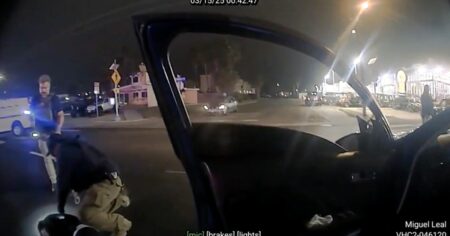
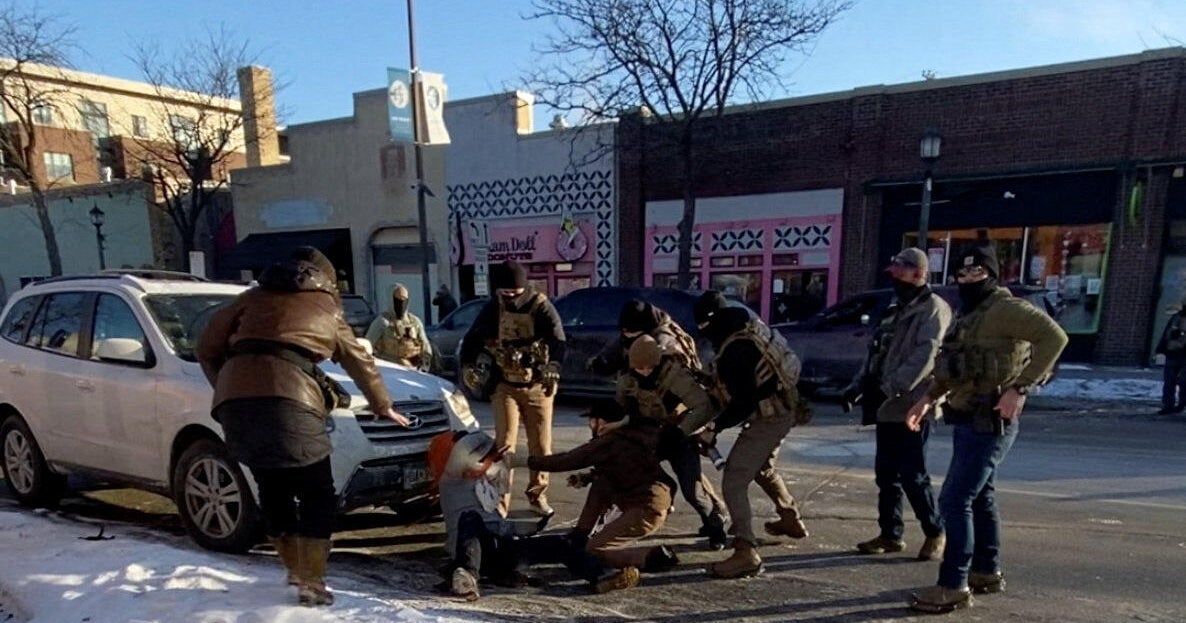
The administration’s early narrative has been significantly undermined by video footage of the incident and eyewitness accounts that tell a markedly different story than the one initially presented by senior officials. Videos reviewed by CBS News show Pretti standing in the middle of a street, holding up his phone toward Border Patrol agents—a posture suggesting he was documenting the scene rather than preparing an attack. The footage shows him being pushed back along with several other bystanders before being sprayed with a chemical agent. He was then wrestled to the ground by multiple agents and appeared to struggle as they attempted to bring his arms behind his back for restraint. It was at this point that he was shot multiple times. Critically, the videos do not show Pretti holding a gun in his hand before he was shot, directly contradicting DHS claims that he “approached” officers with a handgun and “violently resisted” when agents tried to disarm him. Minneapolis Police Chief Brian O’Hara confirmed that Pretti was a lawful gun owner with a valid permit to carry, raising questions about how and when his firearm became a factor in the confrontation. The disconnect between what administration officials claimed happened and what video evidence appears to show has become a central point of contention. A DHS official working on immigration enforcement expressed deep concern about the “self-inflicted reputational harm” caused by the “strong language” used by top officials following Pretti’s killing. “When we gaslight and contradict what the public can plainly see with their own eyes, we lose all credibility and it’s going to damage our reputation for generations,” the official said, requesting anonymity because they were not authorized to speak to the press. This sentiment reflects a broader anxiety among career professionals that political considerations are overriding established protocols for handling sensitive incidents.
Questionable Investigation Procedures and Obstruction Concerns
Beyond the messaging problems, the investigation itself has raised serious concerns about transparency and impartiality. In an unusual move that current and former agency officials described as highly irregular, ICE’s Homeland Security Investigations branch has taken the lead role in investigating the shooting, according to U.S. officials and FBI Director Kash Patel. This arrangement effectively means that one component of DHS—ICE—is tasked with investigating the actions of another DHS agency—Border Patrol. Typically, such incidents would be investigated by an outside entity to ensure objectivity and avoid conflicts of interest. The decision to keep the investigation within the same department has fueled suspicions about whether a truly independent assessment of the facts will be possible. Adding to these concerns, Minnesota state officials have reported being blocked from accessing evidence needed to conduct their own investigation into Pretti’s shooting. This mirrors what happened in the case of Renee Good, another U.S. citizen and Minneapolis resident who was shot and killed by an Immigration and Customs Enforcement officer less than three weeks before Pretti’s death. In Good’s case, as in Pretti’s, Trump administration officials made broad accusations early on, labeling Good a “domestic terrorist” and claiming she had sought to injure the ICE officer, though lawyers representing her family said she and her partner were simply observing ICE activity. The pattern of state officials being denied access to evidence has prompted legal action. Over the weekend, a federal judge issued an order barring DHS from altering or destroying evidence related to the Pretti incident, with a hearing scheduled to address these concerns. The judge’s intervention underscores the serious questions surrounding the handling of evidence and the investigation’s integrity.
Shifting Public Opinion and Political Fallout
The frustrations bubbling up inside DHS come at a particularly sensitive time, as public opinion toward President Trump’s aggressive deportation efforts has begun to shift noticeably. A CBS News poll conducted earlier this month revealed that Americans’ support for his deportation campaign had fallen to 46%, down significantly from 59% at the start of his administration. Even more striking, the poll found that 61% of those surveyed now believe immigration agents are being “too tough” in their enforcement activities. This change in public sentiment suggests that incidents like the shootings of Pretti and Good are having a tangible impact on how Americans view the administration’s immigration policies. The White House has responded to criticism by deflecting responsibility back to local officials. In a statement to CBS News, White House press secretary Karoline Leavitt said, “Nobody, including President Trump, wants to see people get shot or hurt.” She then pivoted to blaming Minnesota Governor Tim Walz and Minneapolis Mayor Jacob Frey, saying, “That’s exactly why Governor Walz and Mayor Frey need to allow local police to work with federal law enforcement to remove illegal alien criminals, murderers, and pedophiles from Minnesota.” This response illustrates the administration’s strategy of maintaining its hardline stance while attributing any negative consequences to local leaders who have been reluctant to cooperate fully with federal immigration enforcement. However, this approach does little to address the substantive concerns raised by the premature characterizations of Pretti or the questions surrounding the investigation’s independence and transparency.
The Human Cost and Community Impact
At the heart of this political and bureaucratic controversy is a profound human tragedy. Alex Pretti was a 37-year-old ICU nurse—a healthcare professional who had dedicated his career to saving lives. The circumstances of his death have devastated his family, friends, and community, and have further inflamed tensions in Minneapolis, which has become a focal point of the Trump administration’s nationwide immigration enforcement campaign. The deployment of federal agents to Minneapolis and the aggressive tactics employed have created an atmosphere of fear and uncertainty in immigrant communities and among their supporters. The shootings of both Pretti and Good, both U.S. citizens who were not targets of immigration enforcement, have amplified concerns that the scope of enforcement activities has expanded beyond stated goals and is putting bystanders at risk. A former senior Border Patrol official who maintains contact with current agency personnel offered insight into the morale among agents on the ground. Many, the former official said, still “believe in the overall effort” of immigration enforcement. “But what is being done is starting to lose them,” the former official said, noting that the “initial narrative” from DHS about the shooting “undermines our credibility.” The official added that agents “feel caught in the middle with harmful rhetoric on both sides,” suggesting that rank-and-file personnel are bearing the brunt of political decisions made at higher levels while simultaneously becoming targets of public anger over incidents they may not have been involved in.
A Critical Moment for Accountability and Reform
The death of Alex Pretti and the administration’s response to it represent a critical moment that goes beyond a single tragic incident. It raises fundamental questions about accountability, transparency, and the proper balance between effective law enforcement and respect for civil liberties and due process. A Border Patrol official who was granted anonymity to speak freely emphasized that the Trump administration should wait for a thorough investigation before making definitive statements about Pretti’s killing, calling the shooting “a horrible situation for everyone.” The official acknowledged that immigration agents are facing an “extremely difficult situation” in the field, citing instances of them being attacked or obstructed while performing their duties. This perspective highlights the genuine challenges that agents face and the real dangers that can arise during enforcement operations. However, the official also expressed frustration about how Border Patrol agents have been “beat up” by both sides of the political spectrum in recent years—first by some conservatives who accused them of being complicit in the crisis at the U.S. southern border under former President Joe Biden, and now by liberals angry over President Trump’s deportation crackdown. “We are being politicized and that’s not the job we signed up for,” the Border Patrol official said. This sentiment captures the predicament of career law enforcement professionals who find themselves at the center of highly charged political battles, expected to carry out policies that may conflict with their training, values, or understanding of appropriate enforcement procedures. The path forward requires a commitment to allowing investigations to proceed without political interference, ensuring that all available evidence is preserved and made accessible to appropriate authorities, and refraining from characterizing incidents before facts are established. For an administration that has made immigration enforcement a centerpiece of its agenda, these incidents serve as a sobering reminder that tactics matter, that words have consequences, and that maintaining public trust requires demonstrating that the truth matters more than political narratives.