


Trump Administration Defends Controversial Deportation Case Despite Supreme Court Order
Border Czar Maintains Stance on MS-13 Allegations
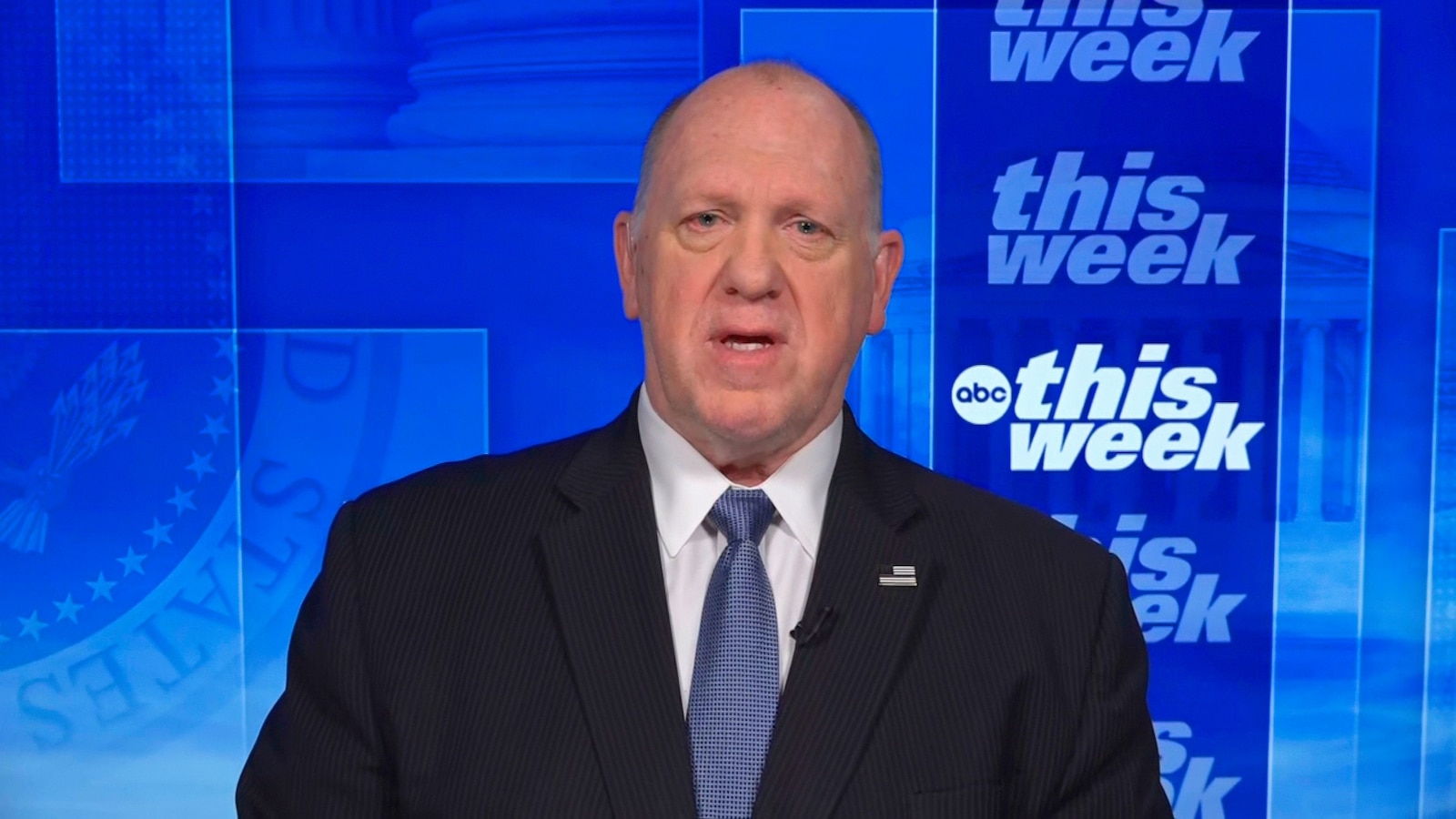
In a forthcoming interview with ABC News, Tom Homan, the White House border czar under President Trump, has doubled down on the administration’s handling of a controversial deportation case that has captured national attention. The case involves Kilmar Abrego Garcia, a Salvadoran national who the Justice Department acknowledges was wrongfully deported to a prison in El Salvador. Despite a unanimous Supreme Court order to “facilitate” Abrego Garcia’s return to the United States for trial, Homan has distanced himself from responsibility for the situation while maintaining that the deportation was justified. During his conversation with “This Week” co-anchor Jonathan Karl, which is set to air this Sunday, Homan characterized Abrego Garcia as a violent MS-13 gang member who posed a significant threat to American public safety and national security. However, these gang allegations remain hotly contested, with Abrego Garcia’s legal team and family members vehemently denying any MS-13 affiliation, and the matter continues to be disputed in ongoing court proceedings.
Evidence and Legal Questions Surround Gang Membership Claims
The foundation of the Trump administration’s argument rests on their assertion that Abrego Garcia is a dangerous gang member, yet the evidence supporting this claim appears thin when examined more closely. President Trump and his supporters have pointed to certain items of clothing as symbols of gang membership, but notably, this supposed evidence has not been formally presented in court since the current administration took over litigation of the case. This gap between public statements and courtroom evidence raises significant questions about the strength of the government’s position. Adding to the complexity of the situation is the fact that Abrego Garcia has never been convicted of any crime in the United States—a point emphasized by his wife, Jennifer Vasquez, who spoke to ABC News to defend her husband’s character and legal record. The absence of any criminal convictions stands in stark contrast to the administration’s portrayal of Abrego Garcia as a violent threat, creating a disconnect that legal experts and civil liberties advocates have found troubling. This discrepancy highlights the tension between national security concerns and individual rights to due process under the American legal system.
Administration Claims Limited Authority Despite Supreme Court Ruling
When pressed by Jonathan Karl about the Supreme Court’s unanimous decision ordering the administration to facilitate Abrego Garcia’s return to the United States, Homan offered what some might view as a curious response. He claimed that the Trump administration lacks both the right and the ability to bring Abrego Garcia back to American soil, arguing instead that the Salvadoran citizen falls under the jurisdiction of the El Salvador government. “I understand that ‘facilitate,’ but he’s also in the custody—he’s a citizen and a national of the country of El Salvador. El Salvador would certainly have to cooperate in that,” Homan explained during the interview. He further distanced himself from the legal intricacies of the case by stating, “But again, I’m out of the loop on that. I’m not an attorney. I’m not litigating this case. We’ll do whatever the law says we have to do, but I think and I stand by the fact [that] I think we did the right thing here.” This position appears to place the administration in a delicate situation—acknowledging a Supreme Court order while simultaneously suggesting limitations on their ability to comply with it. As of Friday, no active steps had been taken to bring Abrego Garcia back to the United States for his trial, despite the high court’s clear directive.
Senator’s El Salvador Visit Draws Republican Criticism
The case has taken on additional political dimensions following a trip to El Salvador by Democratic Senator Chris Van Hollen of Maryland, who met with Abrego Garcia during his visit this week. The senator’s decision to travel to Central America and personally engage with the detained man has drawn sharp criticism from Homan and other Republicans, who have questioned both the appropriateness and the funding of the trip. Homan didn’t hold back in his assessment, telling ABC News: “You know, what bothers me more than that is a U.S. senator traveled to El Salvador on taxpayer dime to meet with an MS-13 gang member, [a] public safety threat, terrorist.” However, Homan provided no evidence to support his claim that Van Hollen used taxpayer money for the journey. When ABC News reached out to Van Hollen’s office for clarification, a spokesperson explained that “the Senator traveled in his official capacity with bipartisan approval to follow up on the case of a constituent and conduct oversight of U.S. foreign assistance programs. He did fly commercial.” This response suggests that the trip had multiple purposes beyond just the Abrego Garcia case and followed proper protocols for congressional travel.
Border Enforcement and Political Accountability Debated
Homan expanded his criticism of Senator Van Hollen beyond just the El Salvador trip, using the opportunity to launch broader attacks on Democratic approaches to border security and immigration enforcement. He accused the Maryland senator of ignoring border issues during the Biden administration while now showing concern for what Homan characterized as a dangerous gang member. “What concerns me is Van Hollen never went to the border the last four years under Joe Biden,” Homan stated. “What shocks me is he’s remained silent on the travesty that happened on the southern border. Many people died, thousands of people died.” Homan also claimed that Van Hollen had failed to meet with victims of MS-13 violence in his own state, suggesting a misplaced sense of priorities. These remarks reflect the Trump administration’s broader strategy of portraying Democratic officials as soft on border security and immigration enforcement, while positioning themselves as the defenders of public safety. The accusations also attempt to shift the conversation away from questions about due process and constitutional rights to focus instead on border security concerns and alleged Democratic failures during the previous administration.
Constitutional Principles at Stake Beyond Individual Case
Upon returning to the United States from El Salvador, Senator Van Hollen addressed reporters and framed the Abrego Garcia situation in much broader terms than a single deportation case. “This case is not only about one man, as important as that is,” Van Hollen explained. “It is about protecting fundamental freedoms and the fundamental principle in the Constitution for due process that protects everybody who resides in America.” This statement captures what many legal scholars and civil rights advocates see as the central issue at stake—whether the government can bypass constitutional protections and due process requirements, even for non-citizens accused of serious crimes or gang affiliations. The Supreme Court’s unanimous decision to order Abrego Garcia’s return suggests that even the conservative-leaning high court recognized serious problems with how the case was handled. The conflict between the administration’s national security arguments and the judiciary’s insistence on constitutional procedures represents a fundamental tension in American governance. As the case continues to unfold, it will likely serve as an important test of the boundaries of executive power in immigration enforcement and the extent to which due process protections apply to non-citizens on American soil. The outcome may set precedents that extend far beyond this individual case, affecting how future administrations handle immigration enforcement and the rights of those caught up in the system.