

Democrats Draw Line in the Sand Over Immigration Enforcement Funding
Standing Firm on Homeland Security Reform
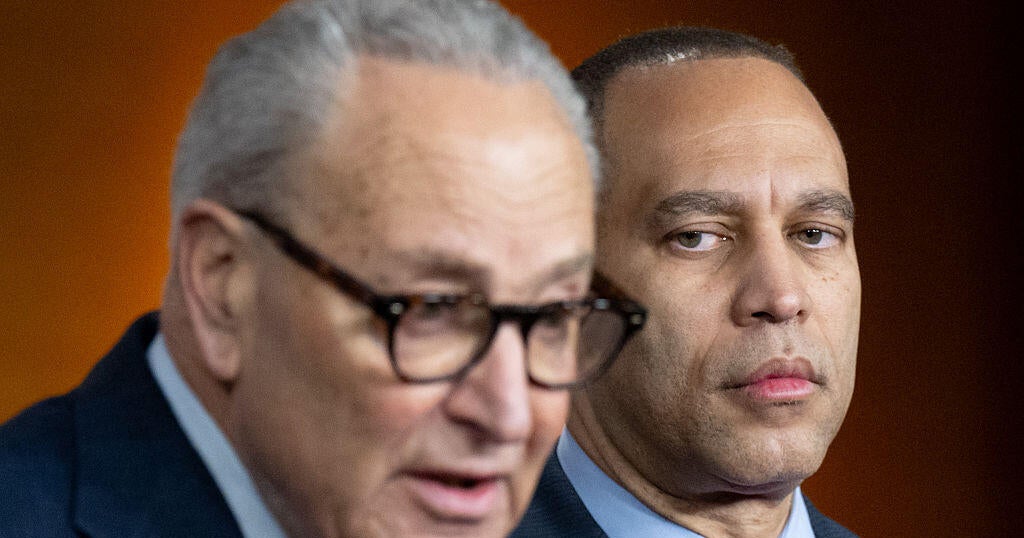
On Wednesday, Democratic congressional leaders gathered at the Capitol to make their position crystal clear: they won’t support funding for the Department of Homeland Security unless significant reforms are made to how immigration enforcement is conducted in America. House Minority Leader Hakeem Jeffries spoke with conviction, expressing deep concerns about how taxpayer money is currently being used. “Taxpayer dollars should be used to make life more affordable for everyday Americans, not to brutalize or kill them,” he stated firmly during the press conference. Jeffries didn’t mince words when describing the current state of immigration enforcement, declaring that ICE—Immigration and Customs Enforcement—is “completely and totally out of control.” He emphasized that while immigration enforcement is necessary, it must be conducted in a manner that is just, fair, and humane, qualities he believes are sorely lacking in current operations. Standing alongside Senate Minority Leader Chuck Schumer and other Democratic leaders, Jeffries made it clear that “dramatic changes” are needed at DHS, the umbrella agency that oversees both ICE and Customs and Border Protection. The unified front presented by Democratic leadership signals that this isn’t just political posturing—they’re prepared to make a stand on what they see as fundamental issues of human rights and proper government conduct.
The Ticking Clock on Government Funding
The political stakes couldn’t be higher as lawmakers face a rapidly approaching deadline. Just days earlier, the House had approved a funding package that kept most of the government running through September, but notably, it only extended funding for the Department of Homeland Security until February 13th. This strategic move essentially created a pressure point—a moment where Democrats could demand changes to immigration enforcement policies in exchange for their support of longer-term funding. Now, with that deadline looming, Democrats and Republicans find themselves in a high-stakes negotiation with the clock ticking down. The question on everyone’s mind is whether the two parties can reach an agreement on long-term funding or whether they’ll need to pass yet another short-term extension to keep the department operating. However, Democratic leaders have already signaled that they’re not inclined to support another temporary fix, making the prospect of a DHS shutdown increasingly likely if their demands aren’t met. This game of political chicken reflects the deep divisions over immigration policy that have characterized American politics for years, but the intensity of the current moment suggests something more fundamental is at stake.
What Democrats Are Demanding
The specific reforms outlined by Democratic leaders represent a comprehensive attempt to fundamentally change how immigration enforcement operates in America. Jeffries detailed “several demands” that he characterized as being made “on behalf of the American people,” framing these proposals as common-sense measures that most Americans would support. Among the key requirements are mandatory body cameras for federal agents conducting immigration enforcement—a proposal aimed at increasing accountability and transparency in how these agents interact with the public. Democrats are also insisting on requirements for judicial warrants before arrests can be made in homes and cars, a protection they argue is fundamental to American constitutional principles. Another demand addresses a practice that has generated considerable controversy: federal agents wearing masks during operations. Jeffries argued that agents should not be allowed to conceal their identities in an “arbitrary and capricious fashion,” suggesting that such practices evoke imagery of secret police rather than legitimate law enforcement. Perhaps most striking among the demands is the call for Congress to prevent the detention and deportation of American citizens—a response to reports of citizens being caught up in immigration enforcement sweeps. These proposals, according to Jeffries, represent just “some of the common-sense proposals” needed before Democrats would support a full-year appropriations bill for the department.
Unified Democratic Front with Broader Implications
Senator Chuck Schumer emphasized that Democrats in both chambers are presenting a united front on these issues. “Democrats, we have common-sense, tough objectives to rein in ICE,” he declared, adding pointedly, “And the Republicans need to get serious.” This unified messaging between House and Senate Democrats is strategically significant, as it demonstrates that leadership has successfully coordinated their caucuses around these specific demands. Schumer expanded on the list of reforms, adding calls for an end to roving patrols—immigration checkpoints and mobile enforcement operations that critics argue lead to racial profiling and create fear in immigrant communities. He also demanded independent oversight of immigration agents, reflecting concerns that current oversight mechanisms are inadequate to prevent abuses. His reference to “no secret police” reinforced the concerns about masked agents and unaccountable enforcement practices. These demands largely mirror proposals Schumer had articulated before the Senate’s vote on the most recent funding package, showing consistency in the Democratic position. Schumer announced that Democrats would soon release actual legislation detailing these demands, promising it would be ready “within the next 24 hours” and would be submitted jointly by House and Senate Democrats. “We’re united with the American people, we’re united as House and Senate Democrats,” Schumer stated, characterizing their position as aligned with public sentiment. He expressed hope that Republicans would “finally get serious” about addressing what he described as a crisis that is “turning America inside out in a way we haven’t seen in a very long time.”
Republican Response and Political Reality
The Republican response to these Democratic demands has been mixed, revealing the complexity of navigating immigration policy in a divided government. Some proposals have found more receptive audiences than others among Republican lawmakers. The use of body cameras, for instance, appears to have some Republican support, as does the idea of ending roving patrols—practices that even some conservatives acknowledge can be problematic. However, other proposals have proven more divisive, with Republicans pushing back on measures they view as hampering effective immigration enforcement or imposing unrealistic constraints on federal agents. Senate Majority Leader John Thune has been notably candid about the challenges ahead, acknowledging that reaching a comprehensive deal and successfully navigating it through both chambers before the February 13th deadline is an “impossibility.” This frank assessment reflects the political reality that even when there’s goodwill on both sides, the legislative process simply takes time—time that lawmakers don’t have before the current funding expires. Thune’s comments also suggest that Republicans recognize the difficulty of the position they’re in: Democrats appear willing to allow a DHS shutdown if their demands aren’t met, yet Republicans are reluctant to accept reforms they view as weakening immigration enforcement during an administration that has made border security a top priority.
The Road Ahead and Potential Consequences
As the deadline approaches, the political landscape suggests turbulent times ahead for the Department of Homeland Security and immigration enforcement more broadly. Democratic leaders have made clear they’re prepared to oppose another short-term funding extension for DHS, a position that makes a department shutdown increasingly probable if no agreement is reached. However, it’s important to understand what a “shutdown” would actually mean in practice. Immigration operations would largely continue operating because ICE and CBP received a substantial influx of funds through legislation passed last year—the One Big Beautiful Bill Act. This means that while a shutdown might create administrative headaches and affect some departmental functions, the core immigration enforcement activities that Democrats are criticizing would likely continue uninterrupted. This reality creates an interesting political dynamic: Democrats can make a stand on principle by refusing to fund DHS, but they may not achieve the practical outcome of actually stopping the enforcement practices they oppose. The coming days will test whether this standoff represents genuine conviction or political theater, and whether Americans will rally behind Democratic demands for reform or grow frustrated with what Republicans will undoubtedly characterize as Democrats playing politics with national security. What’s clear is that the debate over immigration enforcement has reached a critical juncture, with both parties seemingly entrenched in positions that reflect fundamentally different visions of what immigration enforcement should look like in America. The outcome of this funding fight may well set the tone for immigration policy debates for years to come.