


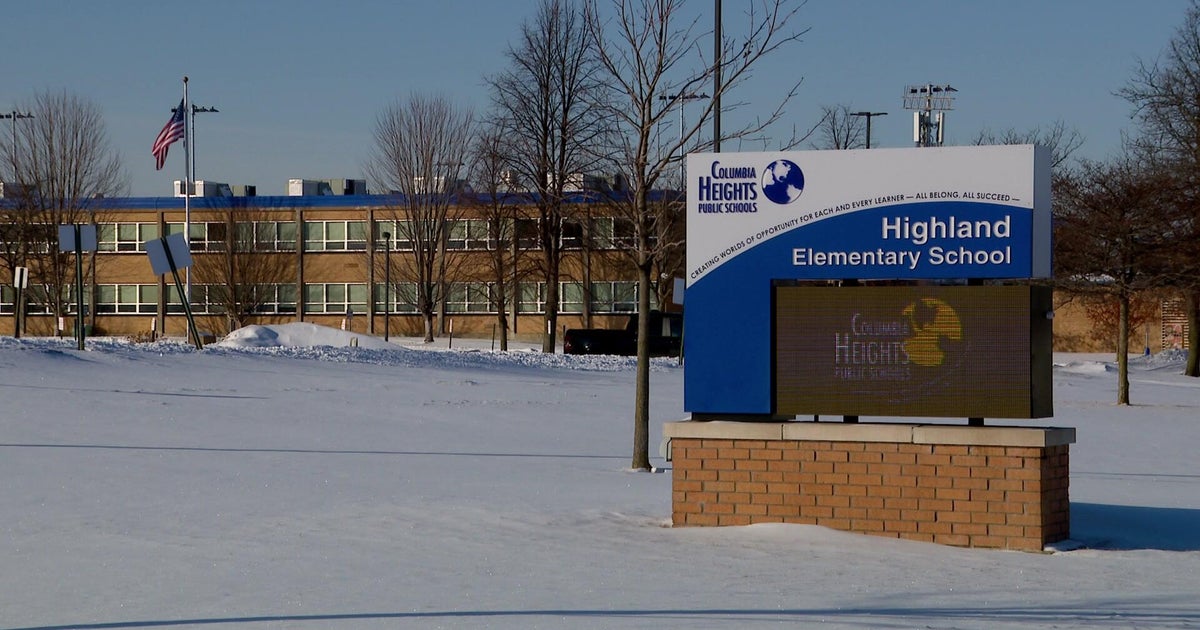

A Community in Crisis: The Detention and Release of Elementary School Children in Columbia Heights
The Heart-Wrenching Separation of a Fourth-Grader and Her Mother
In a story that has shocked educators and families across Minnesota, nine-year-old Elizabeth Zuna and her mother experienced something no child should ever have to endure. On what should have been an ordinary Monday morning—January 6th—as they made their way to school like countless other families, Immigration and Customs Enforcement (ICE) officers stopped them. Instead of arriving at her classroom in Columbia Heights, a Minneapolis suburb, Elizabeth found herself on a journey that would take her over 1,500 miles away from home to the Dilley Immigration Processing Center in extreme southeast Texas. For weeks, this fourth-grader sat in detention, separated from her father and her normal life, becoming an unwitting symbol of the human cost of aggressive immigration enforcement. Late Tuesday, school district Superintendent Zena Stenvik shared news that brought cautious relief to the community: federal authorities had agreed to release Elizabeth and her mother. However, the joy was tempered by uncertainty and continued concern, as complications including a measles outbreak at the detention facility raised questions about when—and in what condition—Elizabeth would actually return home.
A Detention Facility in Crisis and the Long Road Home
The reunion Elizabeth’s father has been desperately waiting for won’t happen immediately, and the reasons why add another layer of concern to an already troubling situation. The Dilley detention center where Elizabeth and her mother have been held is currently dealing with a measles outbreak—a highly contagious disease that poses serious health risks, especially to children. Superintendent Stenvik explained that this outbreak “may require a quarantine period,” meaning that even though Elizabeth has been approved for release, she might have to remain in Texas longer to ensure she hasn’t been exposed to or contracted the illness. The school district doesn’t currently know Elizabeth’s health status, leaving her family and school community to worry not just about her emotional wellbeing after weeks in detention, but also about her physical health. Despite these uncertainties, there is genuine relief that she will be coming home. “We are filled with joy at the anticipation of the family when Elizabeth’s father can once again be reunited with his daughter and wife,” Stenvik said in her statement. The acknowledgment of this father’s anguish—counting down the days until he can hold his daughter again—reminds us that behind the political debates about immigration policy are real families experiencing real trauma.
Not the First: The Case of Five-Year-Old Liam
Elizabeth’s detention wasn’t an isolated incident in Columbia Heights. Just weeks earlier, the same community was rocked by the detention of five-year-old Liam Conejo Ramos and his father. Liam’s case garnered significant attention and controversy, highlighting the increasingly aggressive immigration enforcement tactics being employed in communities across America. The kindergartener and his father were also taken to the Dilley facility in Texas, separated from their family and thrust into the uncertain world of immigration detention. Liam’s story had a relatively quicker resolution than Elizabeth’s—he and his father were released and returned home on a Sunday, just one day after a federal judge ordered ICE to free them. The fact that it took a federal judge’s order to return a five-year-old to his home speaks volumes about the current climate of immigration enforcement. When Liam walked through his front door, the relief was palpable throughout the Columbia Heights community. Yet Superintendent Stenvik was clear-eyed about the limited nature of this victory: “Having Liam return to his family has provided us with a glimmer of hope, but it is bittersweet.” The bitterness came from knowing that other children—four at the time, soon to be three with Elizabeth’s release—remained in detention at Dilley, their families incomplete, their educations interrupted, their childhoods marked by an experience no child should have.
A School District Under Siege
The trauma rippling through Columbia Heights schools extends far beyond the children who have been detained. Superintendent Stenvik revealed a staggering fact: dozens of parents of elementary school students have been taken by federal agents. Imagine being a teacher in this district, watching the parent pickup line thin out day by day. Imagine being a child in one of these classrooms, wondering if your mom or dad will be there when you get home, or if ICE agents will be waiting at your door. The anxiety and fear are so pervasive that the situation has even attracted those who want to exploit it. Just this week, Columbia Heights schools had to close for an entire day on Monday due to a racially and politically motivated bomb threat—an act of terrorism designed to further frighten an already traumatized community. The schools reopened on Tuesday, but the sense of safety that should characterize a learning environment has been shattered. Students are being taught mathematics and reading while processing the very adult reality that their classmates might disappear at any moment, that their parents might not come home, that the authorities are not there to protect them but might, in fact, be there to take their family members away. This is the environment in which educators in Columbia Heights are trying to teach, and in which children are trying to learn.
A Superintendent’s Plea for Humanity and Peace
In her statements throughout this crisis, Superintendent Stenvik has emerged as a voice of moral clarity and compassion. She hasn’t hidden behind bureaucratic language or political neutrality. Instead, she has spoken clearly about what she’s witnessing: injustice, terror, and the traumatization of children. “We have been very concerned about Elizabeth and our other students and families who are unjustly being held in detention centers,” she said late Monday. Her use of the word “unjustly” is significant—it’s a clear moral judgment about what’s happening to her students and their families. She went further, expanding her concern beyond just her own district: “We seek the full release of all children and unjustly detained parents from detention centers across our country.” Stenvik also called for “a diplomatic and peaceful solution to end this terror that the enhanced immigration enforcement is causing in our community, our state and our country.” Her use of the word “terror” to describe immigration enforcement activities is striking and deliberate. These are children being terrorized—there’s no other word for the fear that grips a community when parents are taken and children are detained. She noted that while many in the community are hoping to see a de-escalation of tensions and a reduction in ICE presence in the district, she hasn’t witnessed any such pullback. The enforcement continues, the fear persists, and the community remains on edge.
The Broader Questions This Crisis Raises
The detention of elementary school children like Elizabeth and Liam forces us to confront difficult questions about who we are as a society and what values truly guide our policies. When did it become acceptable to detain fourth-graders and kindergarteners? When did the journey to school become a potential entry point into the immigration detention system? What are the long-term psychological impacts on children—both those detained and those who witness their classmates disappearing—of this level of enforcement? The Columbia Heights situation also highlights the impossibility of separating immigration enforcement from education. Schools are supposed to be safe spaces where children learn and grow. They rely on trust—trust between students and teachers, between families and schools. When ICE agents are actively detaining parents on school runs and taking children into custody, that trust is destroyed. How can parents be expected to send their children to school when doing so might mean their family is torn apart? How can teachers build relationships with students when those students might be gone tomorrow, held in a detention facility 1,500 miles away? These aren’t abstract policy questions—they have immediate, concrete impacts on real children’s lives and educations. There’s also the question of proportionality and humanity in enforcement. Even those who support strict immigration policies might pause at the image of elementary school children being held in detention centers dealing with disease outbreaks. The fact that Elizabeth’s return is delayed because of a measles outbreak at the facility where she’s been held adds a public health dimension to an already troubling situation. As Columbia Heights awaits the return of Elizabeth and continues to cope with the detention of other students and dozens of parents, the community is grappling with trauma that will likely persist long after the immediate crisis passes. The joy of Elizabeth’s father when he finally holds his daughter again will be real, but so will the scars from their weeks of separation. This is the human cost of policy—measured not in statistics or talking points, but in the tears of children and the empty chairs in classrooms across Columbia Heights.